
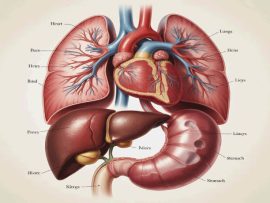

Abstract Venoarterial extracorporeal membrane oxygenation (VA-ECMO) is a life-saving therapy for refractory shock; however, gastrointestinal (GI) complications have been reported in up to 50% of these patients and contribute substantially..
Read More
Abstract Left ventricular assist device (LVAD) explant heart transplantation represents a metabolically vulnerable population with an increased risk for renal failure and mortality. Oxygen extraction ratio (O2ER), which integrates oxygen..
Read More
Abstract Despite decades of clinical experience, the physiological rationale for extracorporeal life support (ECLS) in acute respiratory distress syndrome (ARDS) remains incompletely defined. Existing trials have primarily evaluated ECLS as..
Read More
Abstract Antithrombin (AT) depletion is common in critical illness, and during venovenous extracorporeal membrane oxygenation (VV ECMO), blood–surface interactions further amplify coagulation and inflammation cascades. The prognostic value of baseline..
Read More
Abstract Objective Premature infants with congenital heart disease (CHD) face high perioperative mortality and neurological risk. We evaluated whether cardiopulmonary bypass timing independently influences mortality or neurologic injury in premature..
Read More
Abstract Background Extracorporeal membrane oxygenation (ECMO) represents one of the most ethically challenging and clinically complex therapies used in pediatric critical care. Despite limited guidance and substantial practice variability, center-level..
Read More
Abstract Background/Objectives: Preoperative anemia and iron deficiency increase transfusion risk in cardiac surgery. We evaluated outcomes associated with a Patient Blood Management (PBM) pathway and assessed the robustness of these..
Read More
Abstract Background Systemic inflammatory response syndrome (SIRS) is a significant postoperative complication in older patients leading to higher morbidity and mortality rates. This study investigates the predictive value of preoperative..
Read More
Abstract Background Intraoperative cell salvage is widely used in pediatric scoliosis surgery to reduce allogeneic transfusion requirements. However, its clinical effectiveness and economic impact remain uncertain. The objective of this..
Read More
Abstract Purpose Out-of-bed (OOB) mobility is often expected of patients bridged to lung transplantation (LTx) on venovenous (VV) extracorporeal membrane oxygenation (ECMO), but the course of listed patients who never..
Read More
Abstract Background Non-technical skills (NTS) such as teamwork, communication and leadership are essential for surgical safety, but their impact on patient outcomes is uncertain. This systematic review evaluated whether NTS..
Read More
Abstract Coronary artery bypass grafting (CABG) utilizing cardiopulmonary bypass (CPB) remains a cornerstone of treatment for advanced multivessel coronary artery disease. During the ischemic period, myocardial cells become injured and..
Read More
Abstract Background & Aims Postoperative renal failure remains a major determinant of morbidity and mortality after cardiac surgery, with limited preventive pharmacological options. Enoximone, a phosphodiesterase III inhibitor with inotropic..
Read More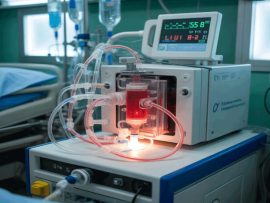
Abstract Background Post-decannulation management of residual extracorporeal membrane oxygenation (ECMO) circuit blood is an under-standardized issue in critical care and perioperative patient blood management. Whether residual circuit blood should be..
Read More
Abstract Extracorporeal membrane oxygenation (ECMO) is associated with a high risk of neurologic injury in pediatric patients, and early detection of injury is often challenging because the clinical examination is..
Read More
Abstract Introduction Myocardial injury is a significant contributor to 30-day mortality after cardiac surgery with cardiopulmonary bypass. We aimed to investigate the association between mean arterial pressure, norepinephrine use during..
Read More
Abstract Objectives Long-term outcomes of emergent extracorporeal membrane oxygenation (ECMO) initiated outside the operating room remain poorly defined. We evaluated long-term outcomes after emergent ECMO support outside the operating room..
Read More
Abstract I read with interest the systematic review and meta-analysis by Samaniego-Laguna et al., which addresses whether intraoperative hemoadsorption during cardiopulmonary bypass (CPB) reduces postoperative complications. The reported reduction in..
Read More
Abstract Coronary artery bypass grafting (CABG) utilizing cardiopulmonary bypass (CPB) remains a cornerstone of treatment for advanced multivessel coronary artery disease. During the ischemic period, myocardial cells become injured and..
Read More
Abstract Background/Objectives: Postoperative atrial fibrillation (POAF) is a common complication after cardiac surgery with cardiopulmonary bypass (CPB), increasing morbidity and prolonging hospitalization. This study aimed to develop and validate an..
Read More
Abstract Thoracoabdominal normothermic regional perfusion (TA-NRP) is increasingly adopted for cardiac allograft procurement in controlled donation after circulatory death (cDCD). In settings where ante-mortem femoral guidewire placement is permitted, peripheral..
Read More
Abstract In a recent edition of Anesthesiology, Wijk et al. examine the differential effect on the kidney of cardiopulmonary bypass (CPB) with flow rates of 2.4 L/min/m2 and 2.9 L/min/m2...
Read More
Abstract Extracorporeal membrane oxygenation (ECMO) provides heart/lung support for critically ill patients. While advances in research have improved the overall design and performance of ECMO circuits, complications such as hemolysis..
Read More
Abstract We read with interest the editorial by Bolliger et al. on heparin resistance. We report a bedside dilemma in a child who experienced cardiopulmonary arrest from septic pulmonary embolism..
Read More
Abstract Background/Objectives: Cardiopulmonary bypass (CPB) induces a systemic inflammatory response that may contribute to postoperative organ dysfunction. However, the effects of pulsatile and non-pulsatile CPB on the inflammatory response remain..
Read More
Abstract Purpose Ultrafiltration (UF) reduces dilution of all blood components during cardiopulmonary bypass (CPB), but its impact on coagulation performance remains unclear. We examined whether conventional UF mitigates the CPB-induced..
Read More
Abstract Introduction Extracorporeal membrane oxygenation (ECMO) provides life-sustaining gas exchange and haemodynamic support for critically ill patients with severe respiratory or circulatory failure. Paediatric patients supported on ECMO often represent..
Read More
Abstract Background and Objectives: Myocardial protection during on-pump coronary artery bypass grafting (CABG) limits ischaemic injury, particularly in patients with left main coronary artery disease (LMCAD), in whom severe proximal..
Read More
Abstract Failure of extracorporeal membrane oxygenation (ECMO) circuit components can precipitate abrupt hemodynamic or respiratory collapse; however, the evidence linking specific component malfunctions to patient harm remains sparse, and device-specific..
Read More
Abstract Background: Extracorporeal membrane oxygenation (ECMO) provides life support to patients undergoing cardiopulmonary surgeries when other interventions are ineffective. Unfractionated heparin (UFH) is routinely used during ECMO due to the..
Read More