
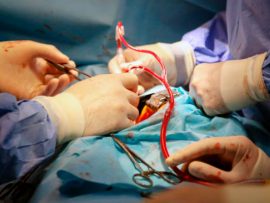

Abstract Background Over recent years, a number of enhanced recovery programs have appeared in first, adult colorectal surgery, and subsequently many other adult surgical specialties. Increasing interest in this approach..
Read More
Abstract We assessed the accuracy of Masimo O3™ regional cerebral oxygen saturation (rSO2) readings by comparing them with reference values and evaluated the relationship between rSO2 and somatic tissue oxygen saturation..
Read More
Abstract Few patients with coronavirus disease 2019–associated severe acute respiratory distress syndrome (ARDS) require veno-venous extracorporeal membrane oxygenation (VV-ECMO). Prolonged VV-ECMO support necessitates repeated oxygenator replacement, increasing the risk for..
Read More
Abstract Purpose. Cardiac surgery is characterized by a high risk of complications related to perioperative bleeding. Guidelines suggest the use of local algorithms based on perioperative point-of-care tests to assess and..
Read More
Abstract BACKGROUND: Hyperreninemia after cardiac surgery is associated with cardiovascular instability. Angiotensin II (AT-II) could potentially attenuate hyperreninemia while maintaining target blood pressure. This study assesses the association between AT-II..
Read More
Abstract Pediatric patients, especially neonates and infants, undergoing cardiac surgery, are at particularly high risk for developing surgical bleeding. After separation from cardiopulmonary bypass (CPB), excessive bleeding in children frequently..
Read More
90 years old patient with ascending aorta aneurysm and dissection undergone philadelphia operation and aortic wrapping with good post op course femoral artery and vein cannulation sternotomy and relasd aortopulmonay..
Read More
Patient with huge Left atrial myxoma and recent CVA myxoma partially was attached to the mitral valve annulus so i completely excised myxoma repaired with autologous pericardial patch. [gallery ids="28682,28686"]..
Read More
Perfusion training and service delivery in Thailand - Supapon Kulthinee International outreach of the ABCP - Ann Guercio, CCP Re-Entering the clinical perfusion - William Watson, CP Open discussion Joe..
Read More
GASOMETRIA NA CEC Prof. Elio Carvalho é Biomédico, Microbiologista e Perfusionista pela Unicamp, CLAP e SBCEC. É perfusionista do Hospital de Clínicas da Unicamp e Coordenador do Curso da Unicamp..
Read More
Central ECMO cannulation in patient with severe biventricular failure as well as lung failure with extension tube graft patient bilateral lower exterimities were completely occluded so peripheral cannulation were impossible..
Read More
Patient with annamalous coronary arteries both right and left coronary arteries from single right coronary ostia undergone reimplantation after separation from origin. [playlist ids="28654"] Dr.Sam Zeraatian Nejad Davani, CEO..
Read More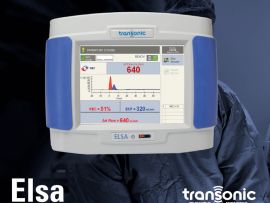
Over the last two years, Extracorporeal Membrane Oxygenation (ECMO) has emerged as a therapy for COVID-related Acute Respiratory Distress Syndrome (ARDS) and continues to be a successful therapy for ARDS..
Read More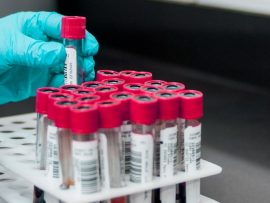
Abstract Introduction Preoperative autologous blood donation (PABD) can be used to reduce the exposure of allogeneic blood transfusion in patients undergoing elective surgery. Better blood management to avoid anaemia and reduce..
Read More
Abstract Introduction: Pediatric extracorporeal membrane oxygenation (ECMO) is a high risk, low-volume technology. Infrequency of this technology and associated complications may translate to unfamiliarity of identification and management of potentially..
Read More
Abstract Extracorporeal life support (ECLS) is a treatment for acute respiratory failure that can provide extracorporeal gas exchange, allowing lung rest. However, while most patients remain mechanically ventilated during ECLS,..
Read More
Abstract Viscoelastic hemostatic assay (VHAs) are whole blood point-of-care tests that have become an essential method for assaying hemostatic competence in liver transplantation, cardiac surgery, and most recently, trauma surgery..
Read More
Abstract Heart disease requires a surgical approach sometimes. Cardiac-surgery patients develop heart failure associated with ischemia induced during extracorporeal circulation. This complication could be decreased with anesthetic drugs. The cardioprotective..
Read More
Abstract Background Patients with cardiogenic shock or cardiac arrest undergoing venoarterial extracorporeal membrane oxygenation (V-A ECMO) frequently present with blood glucose levels out of normal range. The clinical relevance of..
Read More
Abstract BACKGROUND In the context of the coronavirus disease 2019 (COVID-19) pandemic, many retrospective single-centre or specialised centre reports have shown promising mortality rates with the use of extracorporeal membrane..
Read More
Abstract Background We investigated the myocardial protective effect of a moderate-potassium cold blood cardioplegic solution (K+, 10 mmol/L) in pediatric cardiac surgery. Methods Sixty-eight pediatric patients with congenital heart disease..
Read More
Abstract OBJECTIVES : To investigate Stone Heart Syndrome (SHS) as consequence of prolonged ischemic arrest in an experimental study on pigs in regards to onset of SHS and pathological changes...
Read More
Abstract Objective Peripherally inserted central catheters (PICCs), the most frequent central venous catheter, are used to provide medical treatments, although long-term PICC-related adverse outcomes are unknown in China. This study..
Read More
Abstract Introduction This study aims to determine the oxygenator impact on alterations of peramivir (PRV) in a contemporary neonatal/pediatric (1/4-inch) and adolescent/adult (3/8-inch) extra-corporeal membrane oxygenation (ECMO) circuit including the..
Read More
Abstract Objectives Calcium and magnesium are concentration-dependent pro- and anticoagulant cofactors, and magnesium behaves similarly to calcium in the presence of citrate. The authors hypothesized that magnesium can cause clot..
Read More
Abstract Where is the imperceptible difference? With great interest, we read the recent article by Whebell and colleagues [1] and were appealed by the beneficial effect of extracorporeal membrane oxygenation..
Read More
Dr. Mateo Ríos: Médico Pediatra. Cardiólogo Pediatra. Posgrado en Ecocardiografía fetal. Magister en electrofisiología. Actualmente trabaja en el Instituto de Cardiología Integral (Montevideo, Uruguay) en las siguientes..
Read More
Dr. Mateo Ríos: Médico Pediatra. Cardiólogo Pediatra. Posgrado en Ecocardiografía fetal. Magister en electrofisiología. Actualmente trabaja en el Instituto de Cardiología Integral (Montevideo, Uruguay) en las siguientes..
Read More
Dr. Mateo Ríos: Médico Pediatra. Cardiólogo Pediatra. Posgrado en Ecocardiografía fetal. Magister en electrofisiología. Actualmente trabaja en el Instituto de Cardiología Integral (Montevideo, Uruguay) en las siguientes..
Read More
Dr. Mateo Ríos: Médico Pediatra. Cardiólogo Pediatra. Posgrado en Ecocardiografía fetal. Magister en electrofisiología. Actualmente trabaja en el Instituto de Cardiología Integral (Montevideo, Uruguay) en las siguientes..
Read More