


Abstract The use of extracorporeal cardiopulmonary resuscitation (ECPR) to restore circulation during cardiac arrest is a time-critical, resource-intensive intervention of unproven efficacy. The current COVID-19 pandemic has brought additional complexity..
Read More
Abstract Objectives Bleeding is a common problem during adult extracorporeal membranes oxygenation (ECMO) support, requiring blood transfusion for correction of volume depletion and coagulopathy. The goal of this study is..
Read More
Abstract Background and Aim: Enhanced Recovery After Surgery (ERAS) protocols are a series of perioperative interventions well-established in improving the care and outcomes of patients. With recent emergence of studies..
Read More
Abstract Cardiopulmonary bypass causes a systemic inflammatory response reaction that may contribute to postoperative complications. One cause relates to the air/blood interface from the extracorporeal circuit. The modulatory effects of..
Read More
Abstract Background Antegrade cerebral perfusion (ACP), including unilateral and bilateral, is most commonly used for cerebral protection in aortic surgery. There is still no consensus on the superiority of the..
Read More
Abstract OBJECTIVES Cardiopulmonary bypass in cardiac surgery has been associated with several deleterious effects including haemodilution and systemic inflammation. Modified ultrafiltration (MUF) has been well established in paediatric cardiac surgery..
Read More
Abstract The SARS-CoV-2 pandemic has focused attention on prevention, restriction and treatment methods that are acceptable worldwide. This means that they should be simple and inexpensive. This review examines the..
Read More
Terapia de reemplazo renal con CytoSorb – Post-filtro Antes de la conexión de CytoSorb, el sistema de línea de entrada debe cebarse previamente con solución salina isotónica estéril sin aire...
Read More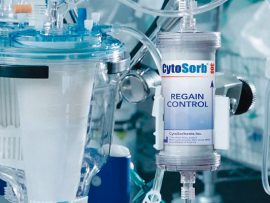
RRT with CytoSorb – Post Filter Before connecting CytoSorb the supply tubing system must be airlessly primed with sterile isotonic saline solution. • Under no circumstances should air enter the..
Read More
Terapia de reemplazo renal con CytoSorb – Pre-filtro Antes de la conexión de CytoSorb, el sistema de línea de entrada debe cebarse previamente con solución salina isotónica estéril sin..
Read More
RRT with CytoSorb – Pre Filter Before connecting CytoSorb the supply tubing system must be airlessly primed with sterile isotonic saline solution. • Under no circumstances should air enter the..
Read More
Exchange of the CytoSorb Adsorber Before connecting CytoSorb the supply tubing system must be airlessly primed with sterile isotonic saline solution. • Under no circumstances should air enter the CytoSorb..
Read More
Hemoperfusión with CytoSorb Before connecting CytoSorb the supply tubing system must be airlessly primed with sterile isotonic saline solution. [pdf-embedder url="https://perfusfind.com/wp-content/uploads/2021/02/Hemoperfusion-with-CytoSorb-Quick-Setup-Guide_compressed.pdf" title="Hemoperfusion with CytoSorb Quick Setup Guide_compressed"] https://youtu.be/cIzKmwSIGT8
Read More
ECMO with CytoSorb The preparation and use of CytoSorb must always be carried out under hygienic conditions. [pdf-embedder url="https://perfusfind.com/wp-content/uploads/2021/02/ECMO-with-CytoSorb-Quick-Setup-Guide_compressed.pdf" title="ECMO with CytoSorb Quick Setup Guide_compressed"] https://youtu.be/Wm8AU29Uc3Y
Read More
Cambio del CytoSorb Antes de la conexión de CytoSorb, el sistema de línea de entrada debe cebarse previamente con solución salina isotónica estéril sin aire. [pdf-embedder url="https://perfusfind.com/wp-content/uploads/2021/02/Cambio-del-CytoSorb-Guía-rápida-de-configuración_compressed.pdf" title="Cambio del CytoSorb..
Read More
Hemoperfusión con CytoSorb Antes de la conexión de CytoSorb, el sistema de tubos de entrada debe cebarse previamente con solución salina isotónica estéril sin aire. [pdf-embedder url="https://perfusfind.com/wp-content/uploads/2021/02/Hemoperfusión-con-CytoSorb-Guía-rápida-de-configuración_compressed.pdf" title="Hemoperfusión con..
Read More
ECMO con CytoSorbECMO con CytoSorb El tratamiento con CytoSorb se aplicó de forma prospectiva y se analizó de forma retrospectiva en el grupo de control, en los pacientes con..
Read More
CPB with CytoSorb – Intraoperative Use (video). Setup the cardiopulmonary bypass machine completely according to the operating instructions of the device manufacturer (including priming). [pdf-embedder url="https://perfusfind.com/wp-content/uploads/2021/02/CPB-with-CytoSorb-–-Intraoperative-Use-Quick-Setup-Guide_compressed.pdf" title="CPB with CytoSorb –..
Read More
CEC con CytoSorb - Uso intraoperatorio Preparar por completo la máquina cardiopulmonar según las instrucciones de uso del fabricante (incluyendo el cebado). [pdf-embedder url="https://perfusfind.com/wp-content/uploads/2021/02/CEC-con-CytoSorb-Uso-intraoperatorio-Guía-rápida-de-configuración_compressed.pdf" title="CEC con CytoSorb – Uso intraoperatorio..
Read More
Abstract Objective Remote (RIPC) exerts effects in models of cerebral . The authors tested the hypothesis that RIPC decreases the incidence of and prevents deterioration of short-term postoperative cognitive function in isoflurane-fentanyl-anesthetized patients undergoing..
Read More
Abstract The Fontan operation places the systemic and pulmonary circulations in series, driven by a single ventricular chamber. It has become the treatment strategy of choice for palliating single-ventricle congenital..
Read More
Abstract Background Heparin dosage for anticoagulation during cardiopulmonary bypass (CPB) is commonly calculated based on the patient's body weight. The protamine–heparin ratio used for heparin reversal varies widely among institutions..
Read More
Abstract The cardiovascular consequences of cocaine use are numerous and can be severe, with mechanisms of cardiotoxicity unique to cocaine that include sympathomimetic effects, blockade of sodium and potassium channels,..
Read More
Abstract Hemolysis is a common complication of extracorporeal membrane oxygenation (ECMO) support and is associated with increased mortality. Frequent monitoring of markers of hemolysis is performed at ECMO centers. We..
Read More
Abstract Aim: The aim of this study was to ascertain if a score, directly derived from CPB records, could correlate to major postoperative outcomes. Methods: An additive score (QualyP Score)..
Read More
Abstract Ischaemic preconditioning is one of several different techniques that have been proposed to render the heart more resistant to ischaemia/reperfusion injuries. A significant reduction of troponin release is ‘proof..
Read More
Abstract Objectives: The armamentarium of cardiac surgery continues to expand, and the cardiac intensivist must be familiar with a broad spectrum of procedures and their specific management concerns. In the..
Read More
Abstract Objectives: Extracorporeal lung support is currently used in the treatment of patients with severe respiratory failure until organ recovery and as a bridge to further therapeutic modalities. The aim..
Read More
Abstract Background: Glucose–insulin–potassium (GIK) administration during cardiac surgery inconsistently improves myocardial function, perhaps because hyperglycemia negates the beneficial effects of GIK. The hyperinsulinemic normoglycemic clamp (HNC) technique may better enhance..
Read More
Abstract Excessive haemodilution and the resulting anaemia during CPB is accompanied by a decrease in the total arterial oxygen content, which may impair tissue oxygen delivery. Hyperoxic ventilation has been..
Read More