


Patient with coarctation and adjacent to coarct pseudo aneurysm with high gradient undergone median sternotomy as well as innominate artery cannulation then commencement of hypothermia with simultaneous antegrade cerebral perfusion..
Read More
Step by step Aortic And Mitral Valve replacement as well as CABG in patient with both valve stenosis you can see access to mitral valve trans aortic which can help..
Read More
Abstract A 55-year-old patient experiencing severe coronavirus disease 19 (COVID-19) related acute refractory respiratory failure requiring venovenous extracorporeal membrane oxygenation (VV-ECMO) support, with femoro-femoral approach, suddenly developed both signs of..
Read More
Abstract Venovenous extracorporeal membrane oxygenation (VV-ECMO) has been used during the COVID-19 pandemic to support patients with the most severe cases of COVID-19 acute respiratory distress syndrome (ARDS). The earliest..
Read More
Abstract Aim Cardioplegia is one of the most studied fields of myocardial protection during cardiac surgery. However, the most effective cardioplegia for protection in adult cardiac surgery remains unknown. Method PubMed and other..
Read More
O III Perfusionando conta com a participação de profissionais incríveis. Será um dia inteiro de imersão na perfusão sem sair de casa. Liga Nacional de Perfusão
Read More
Congenital Heart Academy
Read More
Step by step aortic valve replacement and transaortic mitral valve repair in patient with severe aortic stenosis and mitral valve calcification undergone just simple incision aortotomy and both valve repair..
Read More
Patient with severe sepsis and mitral valve bacterial endocarditis undergone CPB and surgery and usage of HA380 cytokines reduction filter with very impressive postoperative course and level of interleukins as..
Read More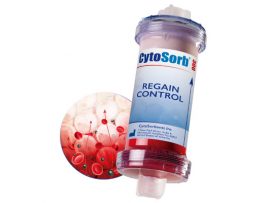
This case reports on a 67-year-old male patient, who was admitted to hospital suffering from a severe immunological response following his 2nd COVID-19 vaccination. [pdf-embedder url="https://perfusfind.com/wp-content/uploads/2022/05/CoW_19_2022_E_web_compressed.pdf"]
Read More
How do you know when it’s time to take your ECMO program to the next level? Though COVID-19 cases may be dropping for the time being, the need for ECMO..
Read More
Abstract Objective Myocardial damage occurs in up to 25% of coronavirus disease 2019 (COVID-19) cases. While veno-venous extracorporeal life support (V-V ECLS) is used as respiratory support, mechanical circulatory support..
Read More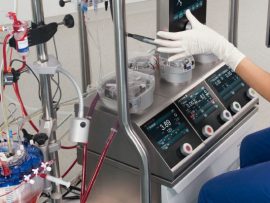
Abstract Cardiac surgery is typically attributed with a significant risk of intraoperative blood loss and allogeneic blood transfusions. Intraoperative blood loss, allogenic blood transfusions, high dose anticoagulation requirement, and interactions..
Read More
Abstract Objective To estimate the effect of extracorporeal membrane oxygenation (ECMO) compared with conventional mechanical ventilation on outcomes of patients with covid-19 associated respiratory failure. Design Observational study. Setting 30 countries across five..
Read More
Abstract Objectives Disruptive intraoperative behavior has detrimental effects to clinicians, institutions, and patients. How clinicians respond to this behavior can either exacerbate or attenuate its effects. Previous investigations of disruptive..
Read More
Abstract Background In cardiac surgery, the association between hypotension during specific intraoperative phases or vasopressor-inotropes with adverse outcomes remains unclear. This study’s hypothesis was that intraoperative hypotension duration throughout the..
Read More
Abstract Background: Cardiac surgery often represents the only treatment option in patients with infective endocarditis (IE). However, IE surgery may lead to a sudden release of inflammatory mediators, which is..
Read More
Abstract The incidence of acute kidney injury following cardiac surgery (CSA-AKI) is up to 30%, and it places patients at an increased risk of death. The Leicester score (LS) is..
Read More
Abstract Various factors may lead to coagulation disturbances following cardiopulmonary bypass and surgery for congenital heart disease. In addition to the risks associated with the administration of allogeneic blood products,..
Read More
Abstract Extracorporeal cardiopulmonary resuscitation (eCPR) can improve survival in selected patients with cardiac arrest (CA). In this meta-analysis, we evaluated factors associated with short-term survival and favorable neurologic outcome (FNO)..
Read More
Abstract Background Neonates with critical congenital heart disease (CCHD) undergoing cardiac surgery with cardiopulmonary bypass (CPB) are at risk of brain injury that may result in adverse neurodevelopment. To date,..
Read More
Abstract Background: Vasoplegic syndrome is associated with increased morbidity and mortality in patients undergoing cardiac surgery. This retrospective, single-center study aimed to evaluate the effect of early use of methylene..
Read More
Abstract AIMS OF THE STUDY: Minimally invasive extracorporeal circulation (MiECC) is an established alternative to conventional extracorporeal circulation (CECC) in coronary artery bypass graft surgery (CABG), but data on its use in cardiac reoperations..
Read More
Abstract Background Venoarterial extracorporeal membrane oxygenation (V-A ECMO) with femoral access has gained wide acceptance in the treatment of critically ill patients. Since the patient´s cardiac output (CO) can compete..
Read More
Abstract OBJECTIVES : To investigate Stone Heart Syndrome (SHS) as consequence of prolonged ischemic arrest in an experimental study on pigs in regards to onset of SHS and pathological changes...
Read More
Abstract Background We evaluated the impact of pediatric heart-allocation policy changes over time and the approval of the Berlin ventricular assist device (VAD) on waitlist (WL) outcomes for children with..
Read More

Hoje iniciamos o Desafio da Gaso!! Três dias para falarmos deste exame tão importante no hospital e no laboratório!!! Hoje iremos falar sobre: - Importância da Gasometria. - Qual o..
Read More
Part of my presentation at AATS 2022 that I miss due to Marital Law.
Read More
On pump beating CABG in patient with LVEF 10 percent and severe PASP HTN with sequencing distal then first proximal anastomoses technique and despite severe MR no future for MR..
Read More