


Abstract Background: The aim of this study was to assess the long-term outcomes of patients treated with intra-aortic balloon pump (IABP) alone and in combination with extracorporeal membrane oxygenation (ECMO),..
Read More
Abstract Background Cardiopulmonary bypass (CPB) is essential in open-heart surgery but is associated with systemic inflammatory response syndrome and organ-specific complications, which can worsen patient outcomes. In low-resource settings, limited..
Read More
Abstract Acute kidney injury (AKI) remains one of the most frequent complications after cardiac surgery and is associated with nearly 40% mortality at 5 years (). These concerning outcomes have..
Read More
Abstract Cardiac surgery-associated acute kidney injury (CSA-AKI) is a frequent and severe complication of open-heart surgery. Although oxidative/inflammatory mechanisms are known to contribute to its pathophysiology, the circulating factors involved..
Read More
Abstract In a randomized controlled trial, Jain et al. () demonstrated that administration of a fixed 250 mg dose of protamine following cardiopulmonary bypass (CPB) resulted in lower total protamine dose compared..
Read More
Whether you’re an experienced ECMO clinician or looking to grow your program, we’d love to have you join us for three days of education, innovation, and collaboration. 📅 January..
Read More
The scarcity of viable donor organs remains a restrictive bottleneck in thoracic transplantation. To expand the donor pool, transplant networks increasingly utilize "extended-criteria" or marginal donor lungs. However,..
Read More
Preoperative Diagnosis: Malignant lung tumor of the right lung with extensive invasion into the Right Pulmonary Artery (RPA) and the right-sided superior and inferior pulmonary veins. Procedure..
Read More
Abstract Background Neonatal cardiac surgery is associated with high morbidity and mortality. Perioperative metabolic stress may result in distinct metabolic phenotypes associated with adverse clinical outcomes. Objectives The purpose of..
Read More
Abstract High-pressure excursions (HPE) during cardiopulmonary bypass (CPB) are rare but potentially life-threatening events linked to coagulation activation, inflammation. Known risk factors include male sex, large body surface area (BSA),..
Read More
Abstract Objectives To compare myocardial protection afforded by three single-dose cardioplegic solutions — Custodiol (HTK), del Nido (DN) and modified del Nido (MDN) — in adult elective cardiac surgery. Design Double-blind randomised..
Read More
Abstract Objective: To describe surgical outcomes, in-hospital mortality, and variables associated with mortality in pediatric patients with congenital heart disease (CHD) at a national referral center in México over 14..
Read More
Abstract BACKGROUND: Vasoplegic shock is distributive shock that follows cardiopulmonary bypass, characterized by hypotension, low systemic vascular resistance, and catecholamine resistance despite preserved or elevated cardiac output. Reported incidence ranges..
Read More
Abstract BACKGROUND: Fibrinogen/albumin ratio (F/A ratio) has been proposed as a prognostic factor for different outcomes in different clinical settings, including cardiovascular interventions. However, few studies address the F/A ratio..
Read More
Abstract Background/Objectives: Postoperative complications following adult cardiac surgery are biologically interrelated, yet most machine learning models predict single outcomes. We developed an explainable multi-output model integrating routinely collected clinical variables..
Read More
Abstract Importance Cyanotic congenital heart diseases, which occur in approximately 0.2% of live births in the United States, have high mortality rates if untreated, but survival to adulthood is common with..
Read More
Abstract Postoperative cognitive dysfunction (POCD) is a frequent complication of cardiac surgery. The present study aimed to quantify changes in Mini‑Mental State Examination (MMSE) scores following on‑pump cardiac surgery and..
Read More
Abstract Background: Discussions continue on the ideal priming fluid in adult cardiac surgery. The purpose of this prospective study was to evaluate the effects of different types of priming fluids..
Read More
Abstract Aortic manipulation and prolonged ischemia during cardiopulmonary bypass remain major drivers of perioperative complications. Optimizing clamping strategies is crucial to minimize iatrogenic blood loss and improve recovery profiles within..
Read More
Abstract This “Pro” argument supports the routine incorporation of point-of-care viscoelastic testing (VET) into perioperative bleeding management algorithms for all cardiac surgery patients. This group of patients remains among the..
Read More
Abstract Introduction Uncertainty remains regarding whether the time of day that cardiac surgery is performed affects postoperative outcomes or if the observed variation can be explained by patient or surgical..
Read More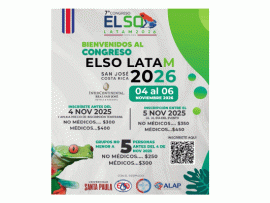
Estimada comunidad global de ECMO Nos sentimos honrados de invitarlos al VII Congreso ELSO LATAM, la principal reunión de profesionales y expertos en el campo del Soporte Vital Extracorpóreo (ECLS)..
Read More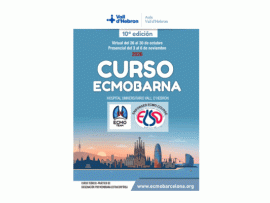
Presentación Nos complace presentar la décima edición de ECMOBARNA, un programa de formación consolidado como una referencia nacional e internacional en soporte vital extracorpóreo (ECLS/ECMO). A lo largo de estos..
Read More
Abstract Traditional methods of heart transplantation utilizing allografts from donors after circulatory death (DCD) involve 2 periods of ischemia and 2 ischemia reperfusion injuries (IRI). Both ischemia and IRI are..
Read More
Abstract Conventional cardiopulmonary bypass (cCPB) remains fundamental to modern cardiac surgery, yet its associated hemodilution, blood–air interaction, inflammatory activation, coagulation disturbance, and microembolic burden continue to affect perioperative organ protection..
Read More
Abstract Background Female patients have a higher incidence and greater severity of neurocognitive decline (NCD) after cardiac surgery. We investigated whether sex hormones play a role in this difference. Methods..
Read More
Abstract Objective Postoperative acute kidney injury (AKI) after cardiac surgery is a major complication that worsens patient outcomes and increases healthcare costs. This study aimed to investigate the association between..
Read More
Abstract Neurological injury remains a major concern during neonatal aortic arch surgery. Near-infrared spectroscopy (NIRS) is commonly used to monitor cerebral oxygenation but does not provide direct quantitative information on..
Read More
Abstract A critical aspect of cardiopulmonary bypass (CPB) is achieving full anticoagulation to prevent thrombosis and consumptive coagulation (CCA). Systemic anticoagulation with heparin during CPB should be completely neutralized by..
Read More
Abstract Background Preoperative intravenous iron has become increasingly popular as a strategy to optimize hemoglobin before major surgery. However, its potential benefit in non-anaemic patients undergoing cardiac surgery remains unclear...
Read More