
Tetralogy of Fallot (TOF) with pulmonary atresia cyanotic form
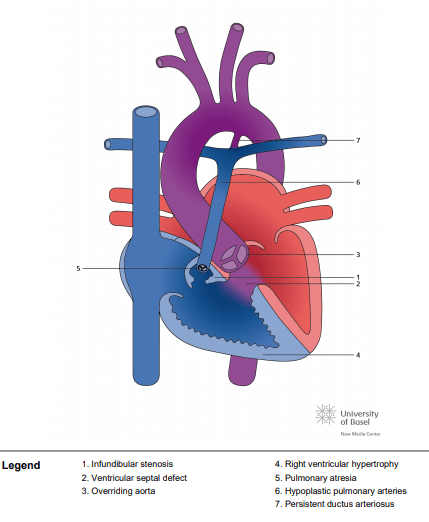

Tetralogy of Fallot (TOF) with pulmonary atresia is a more severe form of TOF, a type of heart defect. It’s a congenital condition, which means it’s something a baby is born with.
Babies who have TOF with pulmonary atresia have five heart abnormalities:
- Ventricular septal defect (VSD)
- Overriding aorta: This means the aorta is moved toward the right side of heart, just over the VSD.
- Thickened right ventricle. The right ventricle becomes thicker than normal from pumping blood against resistance.
- Complete pulmonary obstruction. In TOF, the pulmonary valve is narrowed, but in children with TOF with pulmonary atresia, there is no pulmonary valve at all to connect the right ventricle to the lungs. This means blood must find its way to the lungs through other, smaller arteries.
- Abnormal pulmonary arteries. These arteries may develop abnormally to help move blood to the lungs, but this can vary widely from child to child. In some children, they’re essentially normal, except for the fact that they are connected to the aorta rather than to the right ventricle. These abnormal pulmonary arteries are referred to as major aortopulmonary collateral arteries (MAPCAs).