


Abstract Objectives: Most post-cardiotomy (PC) extracorporeal membrane oxygenation (ECMO) runs last less than 7 days. Studies on the outcomes of longer runs have provided conflicting results. This study investigates patient..
Read More
Abstract Venoarterial extracorporeal membrane oxygenation (VA-ECMO) has been increasingly used to treat refractory cardiogenic shock (CS) or cardiac arrest (CA) over the past decades. Peripheral VA-ECMO increases left ventricular (LV)..
Read More
Abstract Background In lung transplantation (LTx) surgery, veno-arterial extracorporeal membrane oxygenation (VA-ECMO) can provide mechanical circulatory support to patients with cardiopulmonary failure. However, the use of heparin in the administration..
Read More
Abstract Aims This study evaluated how well serial pulse pressure (PP) and PP adjusted by the vasoactive inotropic score (VIS) predicted venoarterial extracorporeal membrane oxygenation (VA-ECMO) weaning success and clinical..
Read More
Abstract Patients undergoing veno-arterial extracorporeal membrane oxygenation (VA-ECMO) typically suffer from cardiogenic pulmonary edema and lung atelectasis, which can exacerbate right ventricular (RV) dysfunction through an increase in lung elastance..
Read More
Abstract Refractory septic shock is associated with a high risk of death. Circulatory support in the form of veno-arterial extracorporeal membrane oxygenation (VA ECMO) may function as a bridge to..
Read More
Abstract Mortality in infarct-related as well as heart failure-associated cardiogenic shock remains high, reaching 40–50% depending on the etiology and severity of cardiogenic shock. Percutaneous active mechanical circulatory support devices..
Read More
Abstract Weaning and liberation from VA ECMO in cardiogenic shock patients comprises a complex process requiring a continuous trade off between multiple clinical parameters. In the absence of dedicated international..
Read More
Abstract Over the past decade, veno-arterial extracorporeal membrane oxygenation (VA-ECMO) has expanded rapidly as a salvage strategy to provide temporary circulatory and respiratory support allowing cardiac function recovery or bridging..
Read More
Abstract The objective was to investigate the outcomes of concomitant venoarterial extracorporeal membrane oxygenation (ECMO) and left ventricular unloading with Impella (ECPELLA) compared with ECMO alone to treat patients affected..
Read More
Abstract Venoarterial extracorporeal membrane oxygenation (VA ECMO) has become a standard of care for severe cardiogenic shock, refractory cardiac arrest and related impending multiorgan failure. The widespread clinical use of..
Read More
Abstract Introduction Veno-arterial extracorporeal membrane oxygenation (V-A ECMO) improves end-organ perfusion in cardiogenic shock but may increase afterload, which can limit cardiac recovery. Left ventricular (LV) unloading strategies may aid..
Read More
Abstract Limb ischaemia is a clinically relevant complication of venoarterial extracorporeal membrane oxygenation (VA ECMO) with femoral artery cannulation. No selective distal perfusion or other advanced techniques were used in..
Read More
Abstract Unfractionated heparin, administered during venoarterial extracorporeal membrane oxygenation to prevent thromboembolic events, largely depends on plasma antithrombin for its antithrombotic effects. Decreased heparin responsiveness seems frequent on extracorporeal membrane..
Read More
Abstract The utilization of temporary mechanical circulatory support (tMCS) has increased significantly over the last 40 years for stabilization of salvageable patients; however, there has not been much improvement in..
Read More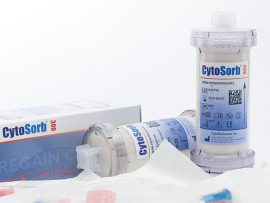
Abstract Background: The purpose of this investigation was to evaluate the impact of venoarterial extracorporeal membrane oxygenation (VA–ECMO) integrated hemoadsorption on the reversal of multiorgan and microcirculatory dysfunction, and early..
Read More
Abstract Background Reliable predictors of outcomes in venoarterial extracorporeal membrane oxygenation (VA-ECMO) therapy are limited. While elevated lactate levels over time have been linked to outcomes in cardiogenic shock (CS),..
Read More
Abstract Venoarterial extracorporeal membrane oxygenation (VA-ECMO) shunts venous blood to the systemic arterial circulation to provide end-organ perfusion while increasing afterload that may impede left ventricle (LV) ejection and impair..
Read More
Abstract Purpose: Venoarterial extracorporeal membrane oxygenation (V-A ECMO) can be used to support severely ill patients with cardiogenic shock. While age is commonly used in patient selection, little is known..
Read More
Abstract Veno-arterial extracorporeal membrane oxygenation (VA-ECMO) is a powerful hemodynamic support strategy for patients with cardiogenic shock and out-of-hospital cardiac arrest (OHCA). Given that significant proportions of patients presenting with..
Read More
Abstract Background The utilization of extracorporeal life support (ECLS) for intraoperative support during lung transplantation has increased over the past decade. Although veno-arterial extracorporeal membrane oxygenation (VA-ECMO) has recently emerged..
Read More
Abstract Problem Despite advances in Venoarterial Extracorporeal Membrane Oxygenation (VA-ECMO), a significant mortality rate persists due to complications. The non-physiological blood flow dynamics of VA-ECMO may lead to neurological complications..
Read More
Abstract Septic shock, a global health concern, boasts high mortality rates. Research exploring the efficacy of venoarterial extracorporeal membrane oxygenation (VA-ECMO) in septic shock remains limited. Our study aimed to..
Read More
Abstract Veno-arterial extracorporeal membrane oxygenation (V-A ECMO) is increasingly used to treat refractory cardiogenic shock, despite randomized clinical trials reporting no difference in outcomes., Although traditional ECMO pumps maintain a constant flow..
Read More
Abstract Cardiogenic shock (CS) is a critical clinical syndrome characterized by inadequate tissue perfusion and oxygen delivery resulting from severe heart dysfunction, leading to multi-organ failure. Diagnostic criteria include hypoperfusion..
Read More
Abstract Background Bleeding and thrombotic complications compromise outcomes in patients undergoing percutaneous mechanical circulatory support (pMCS) with veno-arterial extracorporeal membrane oxygenation (V-A ECMO) and/or microaxial flow pumps like the Impella™...
Read More
Abstract Background Monitoring fluid therapy is challenging in patients assisted with Veno-arterial ECMO. The aim of our study was to evaluate the usefulness of capillary refill time to assess the..
Read More
Abstract Extracorporeal membrane oxygenation (ECMO) is often associated with disturbances in acid/base status that can be triggered by the underlying pathology or the ECMO circuit itself. Extracorporeal membrane oxygenation is..
Read More
Abstract Background The present article describes three cases of patients in cardiogenic shock (CS) with previous cardiac surgery that made them initially inoperable. Perioperative support with veno-arterial extracorporeal membrane oxygenation..
Read More
Abstract Purpose: The outcomes of immunocompromised patients with cardiogenic shock treated with venoarterial extra‑corporeal membrane oxygenation (VA‑ECMO) are seldom documented, making ECMO candidacy decisions challeng‑ing. This study aims (1) to..
Read More