


Abstract Objectives Patients admitted to ICUs are frequently exposed to disrupted light–dark cycles due to limited daylight exposure and inappropriate electrical lighting in terms of intensity, duration, timing, and spectral..
Read More
Abstract Introduction Intensive care units (ICUs) represent high-risk environments for adverse events (AEs). Preventing these events requires a solid understanding of their epidemiology based on standardized and validated methodologies. The..
Read More
Abstract Background In the Intensive Care Unit (ICU), clinicians frequently make complex, high-stakes judgments, where inaccuracies can profoundly affect patient outcomes. This perspective examines human judgment error in ICU settings,..
Read More
Abstract Background Non-technical skills (NTS) are social, cognitive and psychological skills that are related to safety and efficiency in the healthcare process. These skills have an important role in the..
Read More
Abstract Background Early rehabilitation in an intensive care unit (ICU) can shorten the ICU stay and reduce the associated risks and costs. However, mobilization has been shown to be slower..
Read More
Abstract Background Despite the extensive volume of research published on checklists in the intensive care unit (ICU), no review has been published on the broader role of checklists within the..
Read More
Abstract Background Little is known about how the role of the extracorporeal membrane oxygenation (ECMO) specialist (ES) impacts intensive care unit (ICU) staff retention. Our facility allows staff ICU registered..
Read More
Abstract Background Due to staffing changes at scheduled intervals and decreases in essential staff in the evenings, late intensive care unit (ICU) arrivals may be at risk for suboptimal outcomes...
Read More
Abstract Objective To explore the experiences of clinical and non-clinical staff in an intensive care unit regarding the perceived benefits and drawbacks of using in situ simulation as a training..
Read More
Abstract The use of mechanical circulatory support using percutaneous ventricular assist devices (pVAD) has increased rapidly during the last decade without substantial new evidence for their effect on outcome. In..
Read More
Abstract Background Prolonged post-surgery intensive care unit (ICU) stay for congenital heart disease (CHD) has been explored in the pediatric population. However, there is limited data for adult CHD (ACHD),..
Read More
Abstract Background Patients with critical illness can lose more than 15% of muscle mass in one week, and this can have long-term detrimental effects. However, there is currently no synthesis..
Read More
Abstract Background Low postoperative mixed venous oxygen saturation (SvO2) values have been linked to poor outcomes after cardiac surgery. The present study was designed to assess whether SvO2 values of < 60%..
Read More
Abstract This special issue entitled “Machines that save lives” provides a state-of-the-art update by the most renowned world experts on extracorporeal organ support (ECOS) machines and monitoring devices used to..
Read More
Abstract An extracorporeal membrane oxygenation (ECMO) program is an important component in the management of patients with COVID-19, but it is imperative to implement a system that is well-supported by..
Read More
Abstract Multiple organ failure following a septic event derives from immune dysregulation. Many of the mediators of this process are humoral factors (cytokines), which could theoretically be cleared by direct..
Read More
Abstract Background: The utilization of extracorporeal membrane oxygenation (ECMO) has increased rapidly around the world. Being an overall low-volume high-cost form of therapy, the effectiveness of having care delivered in segregated..
Read More
Abstract Objectives This study aimed at investigating the effects of an extracorporeal membrane oxygenation (ECMO) service on Burnout syndrome (BOS) development in the intensive care unit (ICU). Design The authors..
Read More
Abstract Prolonged non-contact camera-based monitoring in critically ill patients presents unique challenges, but may facilitate safe recovery. A study was designed to evaluate the feasibility of introducing a non-contact video..
Read More
Abstract Objectives This study aimed at investigating the effects of an extracorporeal membrane oxygenation (ECMO) service, on Burnout syndrome (BOS) development in the intensive care unit (ICU). Design We conducted..
Read More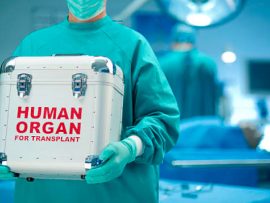
Central Message DCD heart transplant has not been routinely utilized in the United States. We describe a low cost, reproducible method for DCD heart procurement using NRP allowing for distant..
Read More
Abstract OBJECTIVES: Patients in the pediatric cardiac ICU are frequently exposed to pharmacologic and environmental factors that predispose them to sleep disturbances and may increase the risk of delirium. In..
Read More
Abstract Introduction (ICU)-acquired weakness is developed by 40%–46% of patients admitted to ICU. Different studies have shown that Early Mobilisation (EM) is safe, feasible, cost-effective and improves patient outcomes in..
Read More
Abstract Context and Aims: To describe current fluid and vasopressor practices after cardiac surgery in Australia and New Zealand cardiothoracic intensive care units (ICU). Design and Setting: This web-based survey was conducted..
Read More
Abstract Background: The prevalence of delirium and its association with long-term outcomes of extracorporeal membrane oxygenation (ECMO) therapy have not yet been identified. We aimed to investigate the prevalence of delirium..
Read More
Abstract Objectives Patients after cardiac surgery with (CPB) require a stay in the ICU postoperatively. This study aimed to investigate the incidence of prolonged length of stay (LOS) in the ICU..
Read More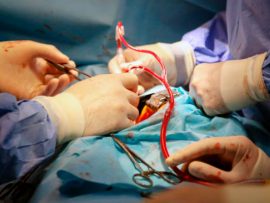
Abstract Background: Patients with acute type A aortic dissection are usually transferred to the intensive care unit (ICU) after surgery. Prolonged ICU length of stay (ICU-LOS) is associated with higher level..
Read More
Abstract The coronavirus disease 2019 (COVID-19) pandemic has increased the number of patients who require extracorporeal membrane oxygenation (ECMO). To manage the demand for ECMO, Japan ECMOnet for COVID-19 was..
Read More
Abstract Purpose: To evaluate the daily values and trends over time of relevant clinical, ventilatory and laboratory parameters during the intensive care unit (ICU) stay and their association with outcome..
Read More
Abstract Purpose: Among acute respiratory distress syndrome (ARDS) patients in intensive care units, the efficacy of lung recruitment maneuver (LRM) use is uncertain taking into account the most recent randomized..
Read More