


Abstract Introduction Extracorporeal membrane oxygenation (ECMO) can cause blood water loss due to insensible perspiration via oxygenators and plasma leakage. The accurate quantification of water loss is crucial for maintaining..
Read More
Abstract Background Liberal administration of crystalloid fluid is often required to maintain adequate tissue perfusion when treating life-threatening conditions. Current knowledge indicates that either overhydration or underhydration can promote..
Read More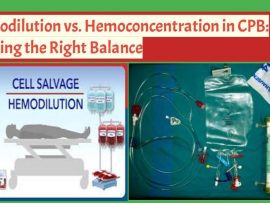
Introduction Cardiopulmonary bypass (CPB) introduces significant alterations in blood composition due to the priming solution, fluid shifts, and extracorporeal circulation. Hemodilution and hemoconcentration represent two opposing strategies, each with distinct..
Read More
Abstract Adequate fluid management in the in paediatric patients is essential for restoring and maintaining homeostasis and ensuring adequate . A well-designed infusion regimen is crucial for preventing severe complications such as hyponatraemic encephalopathies...
Read More
Abstract Purpose After cardiac surgery, fluid bolus therapy (FBT) with 20% human albumin may facilitate less fluid and vasopressor administration than FBT with crystalloids. We aimed to determine whether, after..
Read More
Abstract Objective Patients undergoing heart surgery are at high risk of postoperative fluid accumulation due to long procedures and cardiopulmonary bypass. In the present study, we sought to investigate the..
Read More
Abstract Recent in vitro studies have investigated the effects of hemoadsorption therapy on endothelial function in sepsis showing a reduction in markers of endothelial dysfunction, but, to this day, there..
Read More
Abstract BACKGROUND Unbalanced fluid solutions cause metabolic acidosis and could be associated with impaired coagulation and increased blood loss. OBJECTIVE To investigate whether the use of a balanced colloid compared..
Read More
Abstract Background Fluid overload associates with poor outcomes after neonatal cardiac surgery, but consensus does not exist for the most clinically relevant method of measuring fluid balance (FB). While weight..
Read More
Abstract Importance In cardiac surgery, albumin solution may maintain hemodynamics better than crystalloids and reduce the decrease in platelet count and excessive fluid balance, but randomized trials are needed to compare..
Read More
Abstract Objective after cardiac surgery can be difficult to assess, often requiring invasive measurements. Bioelectrical impedance vector analysis (BIVA) is based on patterns of resistance (R) and reactance (Xc), corrected..
Read More
Abstract Purpose We compared a restrictive fluid management strategy to usual care among critically ill patients with acute kidney injury (AKI) who had received initial fluid resuscitation. Methods This multicenter..
Read More
Renal Function, AKI, and Fluid Balance for the Perfusionist - 2.0
Read More
Renal Function, AKI, and Fluid Balance for the perfusionist.
Read More
Abstract Introduction: The use of cardiopulmonary bypass (CPB) leads to increased fluid filtration and edema. The use of artificial colloids to counteract fluid extravasation during cardiac surgery is controversial. Beneficial..
Read More
Abstract Background: Early fluid expansion could prevent postoperative organ hypoperfusion. However, excessive fluid resuscitation adversely influences multiple organ systems. This retrospective, observational study aimed to investigate the relationship between early..
Read More