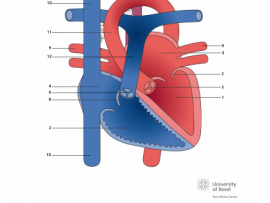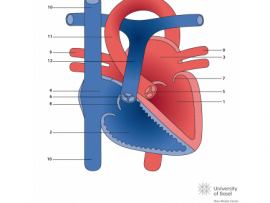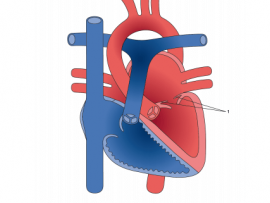

Supravalvar mitral ring is a circumferential ridge or membrane arising from the left atrial wall overlying the mitral valve and frequently attached to the mitral valve. Variable in thickness and extent,..
Read More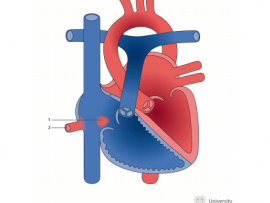
Background Sinus venosus defect (SVD) is an unusual type of interatrial communication (IAC) and is virtually always associated with partial anomalous pulmonary venous drainage (PAPVD) of the right pulmonary veins..
Read More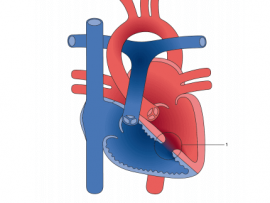
A ventricular septal defect (VSD) is a communication between the interventricular chambers. Muscular ventricular septal defects have exclusively muscular borders and are more likely to be multiple. Their location and..
Read More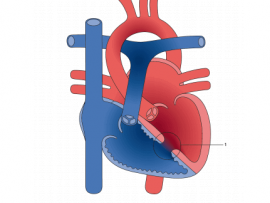
A ventricular septal defect (VSD) is an opening in the interventricular septum, causing a shunt between ventricles. Large defects result in a significant left-to-right shunt and cause dyspnea with feeding..
Read More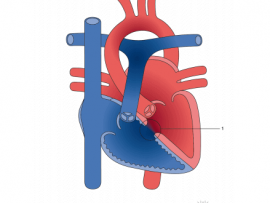
Perimembranous ventricular septal defects (VSDs) are located in the left ventricle outflow tract beneath the aortic valve. They are the most common subtype in the United States, occurring in 75-80% of..
Read More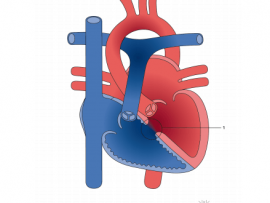
Perimembranous ventricular septal defects (VSDs) are located in the left ventricle outflow tract beneath the aortic valve. They are the most common VSD subtype in the United States, occurring in 75-80% of cases. Defects may extend into..
Read More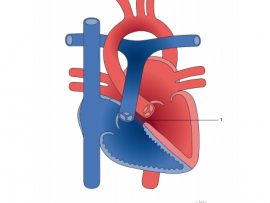
Doubly committed subarterial ventricular septal defect (VSD) is a unique type of VSD, located beneath the aortic and pulmonary valves, accounting for about 5–7% of all VSD autopsy findings. It is also called supracristal or infundibular VSD..
Read More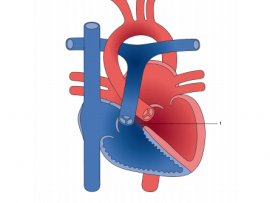
Background: The morphology of ventricular septal defects (VSDs) that are doubly committed and juxtaarterial places the patient at risk for aortic valvar prolapse and aortic valvar insufficiency (AI). Surgical repair of..
Read More
Atrioventricular septal defects (AVSD) are a relatively common family of congenital heart defects. Also known as atrioventricular canal defects or endocardial cushion defects, they account for about 5 percent of..
Read More
Female infant; born on term with 2.6 kg, normal delivery. Mother; fourth pregnancy, denied the use of medication during pregnancy. Presented respiratory discomfort at birth, evolving with neonatal infection and..
Read More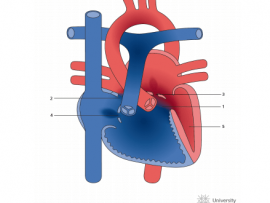
Background: Management of right-dominant atrioventricular septal defect (AVSD) remains a challenge given the spectrum of ventricular hypoplasia. The purpose of this study was to assess whether reported echocardiographic indices and additional..
Read More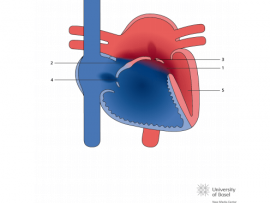
Unbalance in atrioventricular septal defect can be found in more than one anatomic level and in different degrees at each level. The definition of “unbalance” has historically been focused in..
Read More
Repair for tetralogy of Fallot (TOF) with complete atrioventricular septal defect (CAVSD) has been reported with good early and intermediate outcomes. Morbidity, however, remains significantly high. To date, repair of..
Read More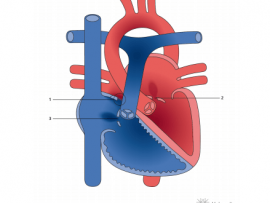
Atrioventricular (AV) septal defect consists of an ostium primum type atrial septal defect and a common AV valve, with or without an associated inlet (AV septal type) ventricular septal defect..
Read More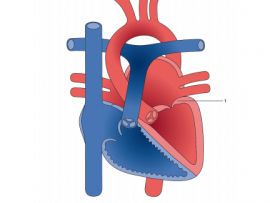
syndrome is a unique form of left-sided heart disease characterized by aortic outflow , dilated , dysplastic/incompetent mitral valve, and a restrictive/intact . Patients with this constellation of abnormalities have been managed in..
Read More
Congenital (MS) results from a variety of anatomic anomalies in the pediatric population, and it is commonly associated with parachute (PMV),, an abnormality in which the mitral valve (MV) chordae insert into a..
Read More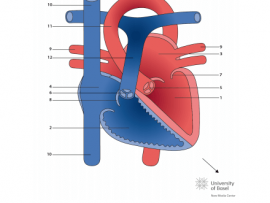
In levocardia, the heart is predominantly in the left hemithorax with a leftward apex. In , the heart is predominantly in the right hemithorax. Primary dextrocardia is defined as a condition in..
Read More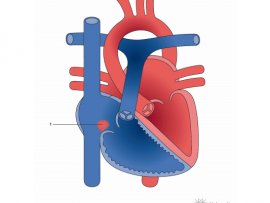
Inferior sinus venosus defects (SVDs) are rare imperfections located in the inferior portion of the atrial septum, leading to an overriding inferior vena cava (IVC) and an interatrial connection. These..
Read More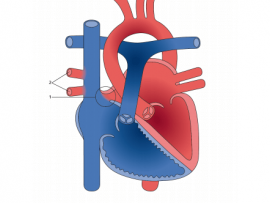
Partial anomalous venous connection (PAPVC) is a rare congenital heart disease where the blood flow from one or more pulmonary veins (but not all) returns to the right atrium or systemic venous circulation and is..
Read More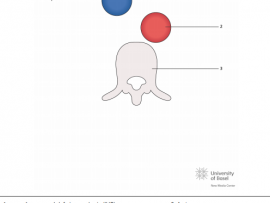
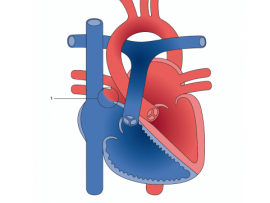
Surgical repair of sinus venosus defect (SVD) with partial anomalous pulmonary venous connection (PAPVC) to the superior vena cava (SVC) or the right atrium (RA) should avoid long term complications..
Read More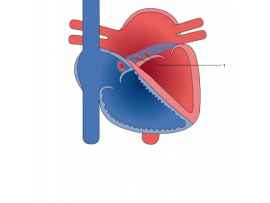
Sinus venosus defects (SVDs), originally described in 1858, represent about 2%–10% of all atrial septal defects. The remainder is composed of ostium secundum (70%), ostium primum (20%) and unroofed coronary sinus (<1%)..
Read More
The unroofed coronary sinus is a spectrum of cardiac anomalies in which part or all of the common wall between the coronary sinus and the left atrium is absent. Most..
Read More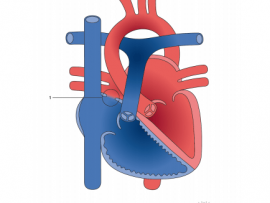
What is it? A "hole" in the wall that separates the top two chambers of the heart. This defect allows oxygen-rich blood to leak into the oxygen-poor blood chambers in..
Read More
Part 1 – Introduction and Morphology Part 2 - Surgical Strategies Part 3 - Can We Improve Outcomes Before Birth? Part 4 - Immediate Care After Birth Part 5 -..
Read More
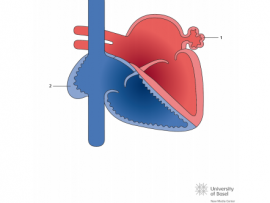
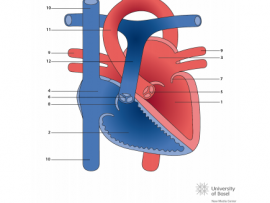
Visceroatrial situs refers to the position and configuration of the cardiac atria, the tracheobronchial tree, and the thoracoabdominal viscera. Accurate determination of situs is essential because anomalies of situs are..
Read More