


Abstract Objective Cognitive impairment is a common neurologic complication after cardiac surgery with cardiopulmonary bypass (CPB). This study evaluated postoperative cognitive function to determine predictors of cognitive dysfunction, including intraoperative..
Read More
Abstract Objective: Postoperative delirium (POD) is common after cardiac surgery. We have previously identified plasma sodium concentration and the volume of infused fluids during surgery as possible risk factors. Both..
Read More
Abstract Dampening of the arterial line waveform during surgery is always a major concern for the operating team. During cardiovascular surgery the etiology may be very serious and require immediate..
Read More
Abstract Objectives The basic materials and structure of a hemoconcentrator incorporated into cardiopulmonary bypass (CPB) circuits are similar to those of hemodialyzers. Gravity drainage hemodiafiltration (GHDF) is an easy-to-use intraoperative..
Read More
Abstract Objective is a common after cardiac surgery with (CPB). This study evaluated postoperative cognitive function to determine predictors of cognitive dysfunction, including intraoperative cerebral regional tissue (rSO2). Design A prospective observational . Setting..
Read More
Abstract Metabolism management plays an essential role in extracorporeal technologies. There are different metabolic management devices integrated to extracorporeal devices; the most commonly used and accepted metabolic target in adult..
Read More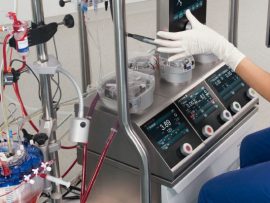
Abstract Background: New era of cardiac surgery aims to provide an enhanced postoperative recovery through the implementation of every step of the process. Thus, perfusion strategy should adopt evidence-based measures..
Read More
Abstract Introduction We hypothesized that perioperative fibrinogen level, platelet count, and rotational thromboelastometry (ROTEM) data values decrease in proportion to cardiopulmonary bypass (CPB) time, particularly in patients who underwent deep..
Read More
Abstract Background: Ventricular fibrillation (VF) is a common arrhythmia that occurs after the release of aortic cross-clamp (ACC) in patients undergoing cardiopulmonary bypass (CPB) surgery. Repeated defibrillation and long duration..
Read More
Abstract Background The adverse effects of cardiopulmonary bypass during open cardiac surgery, including hemodilution, seem to be inevitable, especially for patients who generally have a relatively lower BMI with relatively..
Read More
Abstract Objectives To compare the effects of 3 ventilation strategies during cardiopulmonary bypass (CPB) on arterial oxygenation and postoperative pulmonary complications (PPCs). Design A prospective, randomized, controlled study. Setting A..
Read More
Abstract Cardiopulmonary bypass (CPB) is a complex biomechanical engineering undertaking and an essential component of cardiac surgery. However, similar to all complex bioengineering systems, CPB activities are prone to a..
Read More
Abstract Currently 30-day mortality is commonly used as a quality indicator for cardiac surgery; however, prediction models have not included the role of cardiopulmonary bypass (CPB). We hypothesized that reproducing..
Read More
Abstract Background Cardiac surgery is performed worldwide. Most types of cardiac surgery are performed using cardiopulmonary bypass (CPB). Cardiac surgery performed with CPB is associated with morbidities. CPB needs an..
Read More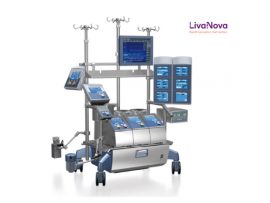
Abstract Objective Over the last two decades there has been an increase in the number of cardiac implantable electronic devices and consequently, there has also been an increased need for..
Read More
Abstract Background Many studies explored the impact of ventilation during cardiopulmonary bypass (CPB) period with conflicting results. Functional residual capacity or End Expiratory Lung Volume (EELV) may be disturbed after..
Read More
Abstract Cardiopulmonary bypass (CPB) depletes endogenous Vitamin C and generates oxidative stress in cardiac surgery. This study aimed to clarify whether Vitamin C supplementation reduces oxidant production and improves erythrocyte..
Read More
Abstract Background Myocardial protection during operations with cardiopulmonary bypass (CPB) and aortic cross clamping is vital. For this purpose, Del Nido (DN) and Custodiol cardioplegia (CC) solutions are used for..
Read More
Abstract Objectives: To determine the effect of intraoperative antifibrinolytics, including tranexamic acid (TXA), aminocaproic acid (EACA), or aprotinin, on bleeding in children undergoing cardiac surgery with cardiopulmonary bypass (CPB). Data..
Read More
Abstract The inflammatory response in cardiac surgery using extracorporeal circulation (ECC) has been widely discussed in the literature with analysis on cytokines released in humans. To mitigate this response mainly..
Read More
Abstract Cardiopulmonary bypass (CPB) is a common procedure carried out to provide a fluid free and motionless work field at the time of cardiac surgical procedures. To achieve CPB, cannulation..
Read More
Abstract Objectives The objectives of this study were to evaluate the incidence and to identify risk factors for acute kidney injury (AKI) in neonates undergoing cardiopulmonary bypass (CPB) with a..
Read More
Abstract Objectives The study objectives were to describe the incidence, risk factors, and outcomes of acute kidney injury after cardiopulmonary bypass in Jamaica. Method We performed a review of the..
Read More
Abstract The surgical correction of congenital heart disease using haemodilution and hypothermia with cardiopulmonary bypass (CPB) may expose patients to tissue ischaemia and initiate a systemic inflammatory response, increasing the..
Read More
Abstract The use of heparin for anticoagulation has changed the face of cardiac surgery by allowing a bloodless and motionless surgical field throughout the introduction of cardiopulmonary bypass (CPB). However,..
Read More
Abstract Background This study aims to investigate the effect of cardiopulmonary bypass on antibody titers in patients vaccinated against the severe acute respiratory syndrome-coronavirus 2 (SARS-CoV-2) undergoing cardiac surgery with..
Read More
Abstract Context: Viscoelastic hemostatic assays (VHA) are commonly used to identify specific cellular and humoral causes for bleeding in cardiac surgery patients. Cardiopulmonary bypass (CPB) alterations to coagulation are observable on..
Read More
Abstract This article introduces management algorithms to support operators in choosing the best strategy for metabolic management during cardiopulmonary bypass using artificial intelligence systems. We developed algorithms for the identification..
Read More
Abstract Vasoplegic syndrome (VS) is a common complication following cardiovascular surgery with cardiopulmonary bypass (CPB), and its incidence varies from 5 to 44%. It is defined as a distributive form..
Read More
Abstract Background Insufflation of carbon dioxide (CO2) into the operative field to prevent cerebral or myocardial damage by air embolism is a well known strategy in open-heart surgery. However, here..
Read More