


Abstract Introduction: According to different authors, cardiac surgery-associated acute kidney injury (CSA-AKI) incidence can be as high as 20–50%. This complication increases postoperative morbidity and mortality and impairs long-term kidney..
Read More
Abstract OBJECTIVES The use of cardiopulmonary bypass (CPB) in cardiac surgery is a major risk factor for postoperative bleeding. We hypothesized that consumptive coagulopathy and haemodilution influence the coagulation factors;..
Read More
Abstract Cardiopulmonary bypass (CPB) provides cerebral oxygenation and blood flow (CBF) during neonatal congenital heart surgery, but the impacts of CPB on brain oxygen supply and metabolic demands are generally..
Read More
Abstract Direct true lumen through aortic for during surgery for acute Stanford type A was reported by Jacob, followed by Conzelmann who used a tourniquet to snag the . Since 2013, Samurai cannulation, a modified version..
Read More
Abstract Background: This study investigated the clinical outcomes at the minimum and maximum levels of hematocrit (HCT) during cardiopulmonary bypass (CPB) in low-risk patients undergoing coronary artery bypass graft (CABG)..
Read More
Abstract BACKGROUND: Arterial hyperoxemia may cause end-organ damage secondary to the increased formation of free oxygen radicals. The clinical evidence on postoperative lung toxicity from arterial hyperoxemia during cardiopulmonary bypass..
Read More
Abstract Background Heparin resistance is a common complication of surgical patients requiring anticoagulation, such as those undergoing cardiopulmonary bypass (CPB). Treatments to address heparin resistance include supplementation of antithrombin (AT)..
Read More
Abstract Patients undergoing coronary revascularization with extracorporeal circulation or cardiopulmonary bypass (CPB) may develop several biochemical changes in the microcirculation that lead to a systemic inflammatory response. Surgical incision, post-CPB..
Read More
Abstract Objective. To evaluate the effect of NO added to the sweep gas of the oxygenator during cardiopulmonary bypass (CPB) on the liver and kidneys in pigs. Methods. An experiment..
Read More
Abstract Background The use of cardiopulmonary bypass (CPB) is almost inevitable in cardiac surgery. However, it can cause complications, including hemolysis. Until now, there have not been any standards for..
Read More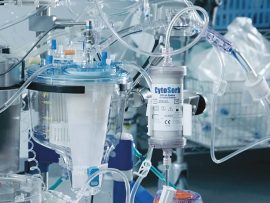
Abstract Introduction: Cardiopulmonary bypass (CPB) is a vital component of many cardiac surgeries, but it can trigger systemic inflammatory responses, leading to post-operative complications. The CytoSorb filter, a cytokine adsorber, has..
Read More
OBJECTIVES Cardiopulmonary bypass (CPB) management may potentially play a role in the development of new-onset atrial fibrillation (AF) after cardiac surgery. The aim of this study was to explore this..
Read More
Abstract Background Hypersensitivity reactions to heparin are uncommon conditions but pose a serious clinical problem for patients requiring cardiopulmonary bypass. Bivalirudin is a reversible direct thrombin inhibitor that can be..
Read More
Abstract Background: The so-called Low Cardiac Output Syndrome (LCOS) is one of the most common complications in pediatric patients with congenital heart disease undergoing corrective surgery. LCOS requires high..
Read More
Abstract Background Adults undergoing heart surgery are particularly vulnerable to respiratory complications, including COVID‐19. Immunization can significantly reduce this risk; however, the effect of cardiopulmonary bypass (CPB) on immunization status..
Read More
Abstract Cardiopulmonary bypass (CPB) has revolutionized cardiac surgery but poses challenges such as hemodynamic instability and adverse clinical outcomes. Achieving optimal perfusion during CPB ensures adequate oxygen delivery to vital..
Read More
Abstract Background The perioperative risk factors that cause severe morbidity and prolongation of postoperative hospital stay after cardiac surgery should be determined. Various scores have been used to predict morbidity..
Read More
Abstract The two hypnotic agents currently used for the maintenance of general anesthesia during cardio-pulmonary bypass (CPB) are propofol and sevoflurane. Propofol can be administered directly in the cardiotome of..
Read More
Abstract Targeted oxygen delivery during cardiopulmonary bypass (CPB) has received significant attention due to its influence on patient outcomes, especially in mitigating acute kidney injury. While it has gained popularity..
Read More
Abstract Background Patients with simultaneous relevant internal carotid artery stenosis and coronary artery heart or valve disease represent a high-risk collective with respect to cerebral or cardiovascular severe events when..
Read More
Abstract Congenital heart disease (CHD) represents one of the most common congenital malformations, affecting greater than 40,000 births annually in the United States, many of which require surgery during the..
Read More
Abstract Purpose: Cardiopulmonary bypass (CPB) is a nonphysiological procedure in which inflammatory reactions and oxidative stress are induced, hormones and hemodynamic parameters are affected, and circulation is maintained outside the body...
Read More
Abstract Background Cardiac surgery with cardiopulmonary bypass is associated with systemic inflammation. Ultrafiltration used throughout the cardiopulmonary bypass time, continuously, is hypothesized to be an immunomodulatory therapy. Methods A systematic..
Read More
Abstract Background Cardiopulmonary bypass (CPB) is frequently employed for cardiac surgery, and selecting a suitable priming fluid is a prerequisite for CPB. Currently, the commonly used priming fluids in clinics..
Read More
Abstract Cardiac surgery using cardiopulmonary bypass (CPB) provokes a systemic inflammatory response. This is mainly triggered by contact activation of blood by artificial surfaces of the extracorporeal circuit. Although often..
Read More
Abstract Background: Acute kidney injury after pediatric cardiac surgery is a common complication with few established modifiable risk factors. We sought to characterize whether indexed oxygen delivery during cardiopulmonary bypass..
Read More
Abstract Background: Simulator training is important for teaching perfusion students fundamental skills associated with CBP before they start working in the clinic. Currently available high-fidelity simulators lack anatomic features that..
Read More
Abstract Background and aims: Cardiopulmonary bypass (CPB) utilized for cardiac surgeries has been associated with significant mortality and adverse outcomes. The benefits of incorporating nitric oxide (NO) into the CPB..
Read More
Abstract Objectives Clarify the prognostic value of the Johns Hopkins Hospital Nutrition Support (JHHNS) score on clinical outcomes in older patients undergoing with (CPB). Design A retrospective observational study. Setting A teaching..
Read More
Abstract Introduction: The aim of this study was to determine the effect of fresh frozen plasma (FFP) for priming of cardiopulmonary bypass (CPB) circuit on rotational thromboelastometry (ROTEM) and transfusion in..
Read More