


Abstract Background The optimal arterial cannulation strategy for establishing antegrade cerebral perfusion during aortic arch surgery remains a subject of ongoing debate. Our meta-analysis compares outcomes between axillary artery (AxA)..
Read More
Abstract Background The optimal cerebral protection strategy during complex aortic surgery remains controversial, and various brain monitoring modalities are used to provide different information to improve cerebral protection. This study..
Read More
Abstract Background Despite the widespread adoption of selective antegrade cerebral perfusion (SACP) for neonatal aortic arch reconstruction, significant variability in techniques persists across institutions, thus reflecting limited supporting data and..
Read More
Abstract Background Selective antegrade cerebral perfusion, via unilateral antegrade cerebral perfusion (uACP) or bilateral antegrade cerebral perfusion (bACP) approaches, is used in aortic arch surgery to protect the brain during..
Read More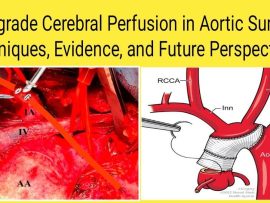
1. Introduction Aortic arch surgery presents significant neurologic risks due to the potential for cerebral ischemia during circulatory arrest. Traditional methods such as deep hypothermic circulatory arrest (DHCA) provided limited..
Read More
Abstract Background Deep hypothermic circulatory arrest is the standard approach for the surgical repair of acute type A aortic dissection. This study aimed to evaluate the feasibility and outcomes of..
Read More
Abstract Background Systemic hypothermia with bilateral antegrade selective cerebral perfusion (ASCP) is the preferred cerebral protective strategy for type A aortic dissection surgery. The optimal ASCP flow rate remains uncertain..
Read More
Abstract OBJECTIVES This study investigates the impact of bilateral antegrade cerebral perfusion (ACP) time on outcomes in aortic arch surgery. METHODS In total, 961 patients underwent either hemiarch (n = 385) or..
Read More
Abstract Background Cerebral protection strategies have been investigated since the introduction of aortic arch surgery and have been modified over the centuries. However, the cerebral protective effects of unilateral and..
Read More
Abstract Background Aortic aneurysms involving the proximal aortic arch, which require hemiarch-type repair, typically require circulatory arrest with antegrade cerebral perfusion. Left carotid antegrade cerebral perfusion (LCP) via distal arch..
Read More
Abstract OBJECTIVES The aim of this study was to examine whether perioperative changes in cerebral blood flow (CBF) relate to postoperative neurological deficits in patients undergoing aortic arch surgery involving..
Read More
Abstract The ability to provide antegrade cerebral and systemic perfusion simultaneously may negate the requirement for any prolonged period of circulatory arrest during complex aortic arch reconstruction procedures, depending on..
Read More
Abstract Background Selective antegrade cerebral perfusion (SACP) is adopted as an alternative to deep hypothermic circulatory arrest (DHCA) during aortic arch surgery. However, there is still no preclinical evidence to..
Read More
Abstract Background: In the context of complex aortic surgery, despite the wide consensus about the use of moderate hypothermia in association with antegrade selective cerebral perfusion (ASCP), its bilateral administration is..
Read More
Abstract Background Cerebral circulatory arrest times >40 minutes during have previously been shown to be associated with increased morbidity and mortality. The purpose of this study was to redefine what would..
Read More
Abstract Objective We aimed to determine the effects of selective antegrade compared with other perfusion strategies on indices of cerebral blood flow, oxygenation, cellular stress, and mitochondrial function. Methods One-week-old piglets..
Read More
HYPOTHERMIC CIRCULATORY arrest combined with selective cerebral perfusion commonly is employed to permit surgical repair of the ascending and transverse aorta. A variety of perfusion techniques are employed, including retrograde..
Read More
Abstract Background We designed a prospective randomized clinical study to compare unilateral and bilateral antegrade cerebral perfusion (ACP) under moderate hypethermia in open distal aortic hemiarch replacement in ascending aortic..
Read More