


Abstract While writing this editorial, we learned that Professor Luciano Gattinoni—a giant in our field—had passed away. “Giant” seems an inadequate descriptor for a physician-scientist whose profound insights have fundamentally..
Read More
Abstract Background Veno-venous extracorporeal membrane oxygenation (VV-ECMO) is a supportive therapy for acute respiratory failure with increased risk of packed red blood cells (PRBC) transfusion. Blood cell salvage (BCS) aims..
Read More
Abstract Introduction This study aimed to identify characteristics associated with survival during and post Extra Corporeal Membrane Oxygenation (ECMO) therapy, in patients with acute respiratory distress syndrome (ARDS) during the..
Read More
Abstract Background: Veno-venous extracorporeal membrane oxygenation (VV-ECMO) is a critical intervention for patients with severe lung failure, especially acute respiratory distress syndrome (ARDS). The weaning process from ECMO relies largely..
Read More
Abstract Introduction Extracorporeal membrane oxygenation (ECMO) is a vital intervention for acute respiratory distress syndrome (ARDS), yet its efficacy with coronavirus disease 2019 (COVID-19) remains unknown. This study compared the..
Read More
Abstract Purpose: Veno-venous extracorporeal membrane oxygenation (VV-ECMO) is an integral part of the management algorithm of patients with severe respiratory failure refractory to evidence-based conventional treatments. Right ventricular injury (RVI)..
Read MoreAbstract Building solid evidence in intensive care medicine is challenging, mostly due to patient heterogeneity and concomitant treatment interactions. In the context of acute respiratory distress syndrome (ARDS), only two..
Read More
Introduction Managing acute respiratory distress syndrome (ARDS) poses significant challenges due to its heterogeneous nature. As of 2024, the updated global definition of ARDS now includes patients receiving noninvasive ventilation..
Read More
Abstract Purpose The development of acute kidney injury (AKI) after the acute respiratory distress syndrome (ARDS) reduces the chance of organ recovery and survival. The purpose of this study was..
Read More
Abstract In the initial phases of veno-venous extracorporeal membrane oxygenation (VV ECMO) support for severe acute respiratory distress syndrome (ARDS), ultraprotective controlled mechanical ventilation (CMV) is typically employed to limit..
Read More
Abstract Acute respiratory distress syndrome (ARDS) comprises 10–30% of critical care admissions worldwide []. ARDS outcomes have improved secondary to ventilatory strategies that may potentially mitigate ventilator-induced lung injury []...
Read More
Abstract Background: Acute respiratory distress syndrome (ARDS) presents a significant challenge in critical care settings, characterized by compromised gas exchange, necessitating in the most severe cases interventions such as veno-venous extracorporeal..
Read More
Abstract Target values for arterial carbon dioxide tension (PaCO2) in extracorporeal membrane oxygenation (ECMO) for acute respiratory distress syndrome (ARDS) are unknown. We hypothesized that lower PaCO2 values on ECMO would..
Read More
Abstract In critically ill patients with moderate to severe acute respiratory distress syndrome (ARDS) receiving invasive mechanical ventilation, prone positioning for 16 hours/day has been shown to confer significant mortality..
Read More
Abstract The development of new right ventricular (RV) dysfunction after cannulation to venovenous (VV) extracorporeal membrane oxygenation (ECMO) and its association with worse outcomes is increasingly recognized in adult patients,..
Read More
Abstract Extracorporeal membrane oxygenation (ECMO) is often used in acute respiratory distress syndrome (ARDS) with refractory hypoxemia. There is limited literature highlighting the development of right ventricular (RV) failure while..
Read More
Abstract Background Pulmonary shunt refers to the passage of venous blood into the arterial blood system bypassingthe alveoli-blood gas exchange. Pulmonary shunt is defined by a drop in the physiologic..
Read More
Abstract Veno‐venous extracorporeal membrane oxygenation (VV-ECMO) in severe acute respiratory distress syndrome (ARDS) can be lifesaving. In these cases, the complex brain-lung crosstalk might lead to a form of acute..
Read More
Abstract Background Extracorporeal membrane oxygenation (ECMO) is a rescue therapy in patients with severe acute res‑piratory distress syndrome (ARDS) secondary to COVID‑19. While bleeding and thrombosis complicate ECMO, theseevents may..
Read More
Abstract Background The use of extracorporeal membrane oxygenation (ECMO) for patients with acute respiratory distress syndrome (ARDS) has increased substantially. With modern trials supporting its efficacy, ECMO has become an..
Read More
Abstract Background The impact of mechanical ventilation on the survival of patients supported with veno-venous extracorporeal membrane oxygenation (V-V ECMO) due to severe acute respiratory distress syndrome (ARDS) remains still..
Read More
Abstract Background: This study aimed to investigate the effects of prone position ventilation treatment on patients with acute respiratory distress syndrome (ARDS) after cardiac surgery. Methods: Clinical data were collected from 93..
Read More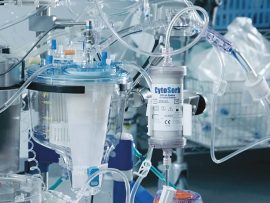
Abstract Background: Acute respiratory distress syndrome (ARDS) is often a consequence of a dysregulated immune response; therefore, immunomodulation by extracorporeal cytokine removal has been increasingly used as an adjuvant therapy, but..
Read More
Abstract Objectives: To describe clinical characteristics, mechanical ventilation strategies, and outcomes in patients with severe acute respiratory distress syndrome (ARDS) during weaning from venovenous extracorporeal membrane oxygenation (VV ECMO). Design: Retrospective, multicenter cohort..
Read More
Abstract Rationale: Blood flow rate affects mixed venous oxygenation (SvO2) during venovenous extracorporeal membrane oxygenation (ECMO), with possible effects on the pulmonary circulation and the right heart function. Objectives: We..
Read More
Abstract Pulmonary echinococcosis is a parasitic infection that accounts for 20% of the infected cases with echinococcosis. Patients may present after a cyst rupture associated with a variety of complications,..
Read More
Abstract Background Extracorporeal membrane oxygenation (ECMO) is increasingly used to support patients with severe acute respiratory distress syndrome (ARDS). The impact of ECMO on long-term outcomes of patients with severe..
Read More
Abstract Background: This document updates previously published Clinical Practice Guidelines for the management of patients with acute respiratory distress syndrome (ARDS), incorporating new evidence addressing the use of corticosteroids, venovenous extracorporeal..
Read More
Abstract Severe acute hypercapnia is independently associated with increased adverse effects and intensive care unit mortality in mechanically ventilated patients. During the severe acute respiratory syndrome coronavirus 2 (COVID-19) pandemic,..
Read More
This case reports on an 53-year-old female patient who was admitted to the hospital with an 8 day history of fever and chills, loose stools, vomiting, severe weakness, and reduced..
Read More