


Abstract Vasoplegia syndrome is a specific form of vasodilatory shock encountered in patients who undergo cardiac surgery, most commonly with cardiopulmonary bypass, which is characterized by severe hypotension in the..
Read More
Abstract Background: A virtual simulated placement (VSP) is a computer-based version of a practice placement. COVID-19 drove increased adoption of web-based technology in clinical education. Accordingly, the number of VSP..
Read More
Abstract Objective: This study aimed to identify disruptions perceived by operating theatre staff to improve concentration, patient safety and quality of care. Methods: A survey of 156 medical staff at..
Read More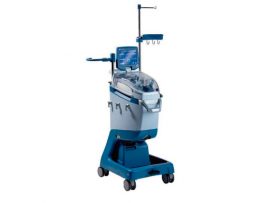
Abstract Introduction: Blood transfusion is associated with adverse clinical and surgical outcomes. Strategies like the Patient Blood Management program, which includes blood cell salvage, contribute to reducing the use of..
Read More
We present an enhanced percutaneous decannulation technique for a patient undergoing veno-arterial extracorporeal membrane oxygenation. This innovative approach uses two distinct percutaneous vascular devices, offering a more reliable and more..
Read More
This video demonstrates the technique of open cut down femoral vessel cannulation for cardiopulmonary bypass during minimally invasive procedures using the semi-Seldinger technique. The information and views presented on..
Read More
Implantation of Syncardia Total Artificial Heart in Patient with severe biventricular failure with the usage of CPB as well as Bicaval toal inflow cannulation and aortic cross clamp without usage..
Read More
Abstract Objective To review and compare the frequency of thrombus and adverse events in patients treated with heparin or bivalirudin systemic anticoagulation strategies supported on combined venoarterial extracorporeal membrane oxygenation..
Read More
Abstract Background Veno‑venous extracorporeal membrane oxygenation (VV‑ECMO) is associated with a high transfusion burden. While trials have concluded that red blood cell (RBC) storage does not impact patient morbidity and..
Read More
Abstract There are conflicting clinical data on whether the use of a distal perfusion catheter (DPC) is beneficial for reducing the risk of limb ischemia in peripheral venoarterial extracorporeal membrane..
Read More
Abstract Heparin, a high alert anticoagulant medication, is commonly used in medical settings in preventing and treating thrombotic events. However, its administration carries inherent risks for medication errors, bleeding complications..
Read More
Abstract Purpose The evidence supporting the benefit on clinical outcomes of prone positioning during veno-venous extracorporeal membrane oxygenation (V-V ECMO) for acute hypoxemic respiratory failure remains inconclusive. We aimed to..
Read More
Abstract The storing of dry-assembled and primed extracorporeal membrane oxygenation (ECMO) circuits is common practice and endorsed by the Extracorporeal Life Support Organization (ELSO) for up to 30 days. We..
Read More
Abstract Introduction & aim Intraoperative adverse events (iAEs) increase postoperative complications, which are devastating to patients and costly to healthcare systems. To optimise patient outcomes, the WHO Surgical Safety Checklist (WHO..
Read More
Abstract Objectives To summarize evidence regarding intravenous angiotensin II administration in critical illness and provide an updated understanding of its effects on various organ dysfunction and renin-angiotensin system (RAS) biomarkers...
Read More
Abstract Objective The use of an intra-aortic balloon pump (IABP) has been suggested to unload the left ventricle while on venoarterial extracorporeal membrane oxygenation (VA-ECMO) for cardiogenic shock (CS), leading..
Read More
Abstract Extracorporeal membrane oxygenation (ECMO) traditionally has been used under deep sedation and mechanical ventilation. However, recent advancements have led to the development of awake ECMO strategies, allowing patients to..
Read More
Abstract Introduction: In life-threatening conditions like severe acute respiratory distress syndrome (ARDS), rescue interventions like extracorporeal membrane oxygenation (ECMO) should be initiated urgently to resolve an otherwise potentially adverse clinical outcome...
Read More
https://youtube.com/shorts/g8DxvRC9P5Y?feature=share [playlist ids="49848"] Dr.Sam Zeraatian Nejad Davani, CEO of rockingham medical research ADKWA center as well as Head of IUMS transplant and cardiovascular surgery department. ..
Read More
Lung Harvest in Patient with Unilateral PAPVC. Dr.Sam Zeraatian Nejad Davani, CEO of rockingham medical research ADKWA center as well as Head of IUMS transplant and cardiovascular surgery department...
Read More
Lung Harvest in Patient with multiple rib fractures and usage of. Dr.Sam Zeraatian Nejad Davani, CEO of rockingham medical research ADKWA center as well as Head of IUMS transplant..
Read More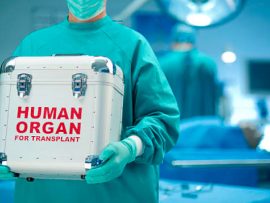
Abstract Donation after circulatory death (DCD) is driving the increase in deceased organ donors in the United States. Normothermic regional perfusion (NRP) and ex situ machine perfusion (es-MP) have been..
Read More
Abstract In neonates with pulmonary hypertension (PH) supported on veno-venous extracorporeal membrane oxygenation (VV-ECMO), keeping the ductus arteriosus (DA) open ensures a high cardiac output of well-oxygenated blood through the..
Read More
Abstract Venovenous extracorporeal membrane oxygenation is the most commonly used mode of support in pre-lung transplant recipients. In patients who experience right ventricular dysfunction, venopulmonary ECMO is an excellent option..
Read More
Abstract Objectives: Previous studies have shown that inaccurate peripheral oxygen saturation (SpO2) readings compared with arterial oxygen saturation (SaO2) may occur in extracorporeal membrane oxygenation (ECMO) patients. We hypothesized that..
Read More
Abstract Purpose: The Placenta Accreta Spectrum (PAS) poses a significant obstetric challenge, often leading to life-threatening hemorrhage during delivery. Intraoperative Cell Salvage (IOCS) is a promising but insufficiently studied blood conservation..
Read More
Abstract The operating room is often viewed as a high-stakes, technical, and intensely specialized environment. While clinical precision and technological advancements have greatly improved surgical outcomes, one critical element remains..
Read More
Abstract Protamine is widely used after catheter ablation to achieve hemostasis. Anaphylaxis to protamine is a rare but severe complication. A 49-year-old male patient underwent catheter ablation of symptomatic long-standing..
Read More
Abstract Introduction Cardiac arrest in the emergency department (ED) is a rare event. Prior studies have used dedicated cardiac arrest registries, but few have leveraged “big data” from electronic healthcare..
Read More
Abstract We established a compact machine perfusion system for whole blood perfusion of rat liver by making use of oxygenation filters as an artificial lung. Livers removed from rats were..
Read More