


Abstract Background Antiphospholipid syndrome (APS) is an autoimmune prothrombotic disorder that is frequently associated with systemic lupus erythematosus (SLE). Cardiac surgery in patients with APS presents unique challenges because activated..
Read More
I. PRE-PROCUREMENT PREPARATION (DCD CONTEXT) 1. Donor Selection and Planning •Confirm controlled DCD donor (Maastricht Category III). •Review: •Warm ischemic time (WIT) thresholds •Functional warm ischemia (fWIT) •Hemodynamics prior..
Read More
Abstract Background Fibrinogen concentrate may reduce allogeneic blood product transfusion in cardiac surgery patients with bleeding associated with acquired hypofibrinogenemia. The European Society of Anaesthesiology and Intensive Care (ESAIC) has..
Read More
Abstract In magnetically levitated rotodynamic blood pumps (RPBs), the impeller position depends on a balance of electromagnetic and fluid dynamic forces. The aim of this study was to describe the..
Read More
Abstract The utilisation of cardiopulmonary bypass (CPB) during cardiac surgery is often associated with complex haemostatic perturbations, frequently manifesting as a paradoxical risk of both bleeding and thrombosis. This is..
Read More
Abstract Objectives: To derive and externally validate supervised machine learning (ML) models predictive of cardiac surgery-associated acute kidney injury (CS-AKI). Design: Retrospective cohort analysis. Setting: Multicenter (4), cardiac surgical centers..
Read More
Abstract Wars and crises have historically acted as powerful catalysts for advances in cardiovascular surgery. Throughout the twentieth and twenty-first centuries, periods of armed conflict and global emergencies have driven..
Read More
Abstract In extracorporeal life support and perfusion, progress has rarely followed the neat, linear hierarchy of evidence promoted by traditional evidence-based medicine. The randomized controlled trial (RCT) remains the proclaimed..
Read More
Abstract Objectives To compare the effects of total intravenous anesthesia (TIVA) versus volatile anesthesia on systemic inflammation and early postoperative cognitive recovery in pediatric patients undergoing cardiac surgery with cardiopulmonary..
Read More
Abstract Background: Hypoplastic left heart syndrome (HLHS) is a severe and complex congenital heart defect characterized by the underdevelopment of the left-sided cardiac structures. Management of HLHS typically involves multiple staged..
Read More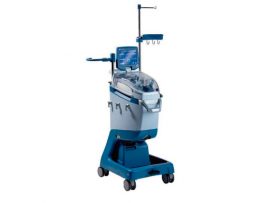
Abstract Objectives To evaluate whether platelet function is preserved after intraoperative autotransfusion using the Same system, a device designed to retain both red blood cells and platelets in patients undergoing..
Read More
Abstract Aim To determine the prevalence of persistent critical illness (PerCI) after cardiac surgery, describe the characteristics, trajectory, and outcomes of these patients, identify risk factors, and develop predictive risk..
Read More
Abstract Objectives Acute type A aortic dissection is a life-threatening condition with evidence suggesting a role for environmental triggers, particularly cold exposure. However, the impact of subjective, or derived thermal..
Read More
Abstract Background: Hemodynamic management in veno-arterial extracorporeal membrane oxygenation (V-A ECMO) is inherently complex, as extracorporeal circulation profoundly alters preload, afterload, ventriculo-arterial coupling and tissue perfusion. This review summarizes current..
Read More
Abstract Purpose of review To provide an updated overview of hemostatic disturbances and anticoagulation management during extracorporeal membrane oxygenation (ECMO), emphasizing the mechanisms underlying the dual risk of bleeding and..
Read More
Abstract Background The impact of the duration of invasive mechanical ventilation (IMV) before venovenous extracorporeal membrane oxygenation (VV ECMO) on patient outcomes in COVID-19 remains unclear. Methods and setting Data..
Read More
Abstract Introduction: The use of cardiopulmonary bypass (CPB) is necessary during the repair of most congenital heart disease (CHD). The surface area of the CPB circuit and the volume of..
Read More
Abstract Importance Levosimendan may facilitate weaning from venoarterial extracorporeal membrane oxygenation (VA-ECMO) and improve survival, but supporting evidence remains limited. Objective To assess whether early administration of levosimendan reduces the time to..
Read More
Abstract Neuroleptic malignant syndrome (NMS) is a rare, life-threatening hypermetabolic reaction to dopamine-antagonist drugs that may progress to profound rhabdomyolysis, extreme hyperkalemia, and cardiac arrest (CA). Evidence guiding extracorporeal cardiopulmonary..
Read More
Abstract Extracorporeal membrane oxygenation (ECMO), a specialized medical technology that temporarily assumes the function of the heart and lungs, allows the body time to recover from severe respiratory failure. Although..
Read More
Abstract Background Neurological complications during Extracorporeal membrane oxygenation (ECMO) can result in long-term cognitive deficits. This exploratory study aimed to determine the association between continuous EEG (cEEG) findings and neurological..
Read More
Abstract Unfractionated heparin has long been the conventional anticoagulant for pediatric mechanical circulatory support (MCS). As bivalirudin has gained traction in ventricular assist devices (VAD) management, its role in extracorporeal..
Read More
Abstract Objectives To investigate the potential contribution of tissue oxygenation prediction in cardiac surgery–associated acute kidney injury (CSA-AKI) using near-infrared spectroscopy (NIRS) and serum lactate level measurements. Design A retrospective..
Read More
Abstract Background Using neuromonitoring during general anaesthesia provides insights into the effects of anaesthetics on the brain. We focus on the performance of the processed EEG indices NarcotrendR (NCT) and Burst..
Read More
Algorithmic Step-by-Step Technique for Combined Heart and Lung Procurement Technique of Dr. Sam Zeraatiannejaddavani, MD ⸻ I. Fundamental Principles Combined heart and lung procurement is a physiology-driven, time-sensitive operation..
Read More
Faten Farid Awdallah: Critical care consultants at king Abdullah medical city, holly capital. Critical care ass professor at national heart institute, Egypt
Read More
Abstract Critically ill patients rescued with extracorporeal membrane oxygenation (ECMO) are at risk for devastating complications, including stroke and intracerebral hemorrhage (ICH). Despite an appreciation of some clinical risk factors, we..
Read More
Abstract Purpose of review The process of weaning from venovenous extracorporeal membrane oxygenation (V-V ECMO) is a critical step in the recovery of patients with severe acute respiratory distress syndrome..
Read More
Abstract Objectives Acute kidney injury (AKI) occurs in 19–42% of patients with cardiac surgery under cardiopulmonary bypass (CPB). Clarifying their landscape of immune cells may help discover the mechanisms and..
Read More
Abstract Background The Association between hyperoxia and mortality in patients receiving extracorporeal membrane oxygenation (ECMO) remains controversial. This study aimed to systematically evaluate the impact of arterial hyperoxia on mortality..
Read More