

Abstract Background: Dosing albumin to normalize colloid osmotic pressure is an underutilized strategy within the application of cardiopulmonary bypass. The negative sequelae of third-spacing and edema post-bypass are well known..
Read More
Abstract Objective: To evaluate inflammatory biomarkers and lipidomic profiles in tracheal aspirates (TA) of infants with congenital heart disease (CHD), by pulmonary blood flow (Qp) high/low grouping at the time..
Read More
Abstract Background: Hemofiltration during pediatric cardiopulmonary bypass (CPB) is essential to mitigate hemodilution, inflammatory responses, and postoperative complications. Conventional ultrafiltration (CUF) is widely practiced, but novel methods such as subzero..
Read More
Abstract Introduction del Nido cardioplegia had not been commercially available in the United Kingdom prior to the DESTINY trial, a multi-centre individually randomised controlled trial to evaluate whether del Nido..
Read More
Abstract Introduction: The global prevalence of morbid obesity is increasing, presenting challenges in cardiac surgery. Morbid obesity (body mass index ≥40 kg/m2) is associated with a high burden of cardiometabolic comorbidities..
Read More
Abstract Objectives To identify a critical cardiopulmonary bypass (CPB) duration threshold predictive of a complicated postoperative course after elective cardiac surgery in the absence of technical complications and to find..
Read More
Abstract Background: Allogenic blood product transfusion has well-documented risks and adverse outcomes. To limit perioperative transfusions for neonates and infants undergoing cardiac surgery, our institution launched a blood conservation program..
Read More
Abstract Introduction Vasoplegic syndrome (VS) is a severe complication after cardiac surgery with cardiopulmonary bypass (CPB), characterised by vasodilation, hypotension and vasopressor dependence. Endothelial dysfunction, dysregulated nitric oxide signalling, inflammation..
Read More
Abstract Objective We aimed to compare postoperative clinical outcomes between minimally invasive extracorporeal circulation (MiECC) and conventional extracorporeal circulation (CECC) in patients undergoing cardiac surgery. Methods We performed a meta-analysis..
Read More
Abstract Profound, transient hypotension refractory to α1-agonists and increased bypass flow during cardioplegia administration (intermittent vasoplegia) is a well-recognized yet unexplained phenomenon in cardiac surgery. Retrograde cardioplegia has been shown..
Read More
Abstract Objectives To evaluate the association between selective antegrade cerebral perfusion (SACP) flow ranges and early clinical outcomes in a large cohort of patients undergoing aortic arch surgery. Methods We..
Read More
Abstract Up to 40% of cardiac surgery patients present with preoperative anemia, which is associated with significant risks and management challenges. This review highlights the increased perioperative risk attributable to..
Read More
Abstract Introduction Cardiopulmonary bypass (CPB) provokes a systemic inflammatory response with important consequences for infants and children undergoing repair of congenital heart disease [, , ]. Inflammation engages overlapping coagulation..
Read More
Abstract Myocardial protection during cardiopulmonary bypass relies on intermittent administrations of cardioplegia without continuous, tissue‑level feedback on myocardial oxygen supply and mitochondrial metabolic status. Extended near‑infrared spectroscopy (eNIRS) can enable..
Read More
Abstract The gut microbiome has emerged as an important regulator of cardiovascular physiology through interconnected metabolic, immune, inflammatory, and endocrine pathways. Although the gut–heart axis has been extensively investigated in..
Read More
Abstract Background We conducted a technical feasibility and safety study of intraureteric renal negative pressure treatment (rNPT) in patients with chronic kidney disease undergoing elective cardiac surgery with cardiopulmonary bypass..
Read More
Abstract Background and Objectives Acute normovolemic hemodilution (ANH) is an established patient blood management strategy in cardiac surgery, but its effects on postoperative inflammatory biomarkers remain unclear. In this study,..
Read More
Abstract Background Venoarterial (VA) extracorporeal membrane oxygenation (ECMO) is used to support refractory cardiogenic shock (CS) but may increase peripheral afterload. Invasive hemodynamic measurement and cardiopulmonary congestion during VA ECMO..
Read More
Abstract Background Patients who undergo tandem extracorporeal membrane oxygenation (ECMO) and continuous renal replacement therapy (CRRT) have a high risk of metabolic disturbances, malnutrition, and fluid imbalances. ECMO/CRRT tandem therapy..
Read More
Abstract Purpose Tolvaptan sodium phosphate (TSP; Samtas®, Otsuka Pharmaceutical, Tokyo, Japan) is a novel intravenous aquaretic diuretic; however, evidence for its use in patients after cardiac surgery is limited. We..
Read More
Abstract Extracorporeal membrane oxygenation (ECMO) is standard for cardiogenic shock, but outcomes remain limited. The BreathMo adult ECMO system with a maglev pump and a low-pressure drop oxygenator was developed...
Read More
Abstract Objectives Diabetes and peri-operative hyperglycaemia are associated with increased morbidity and mortality following cardiac surgery. Despite this, specific guidance on peri-operative glycaemic management during cardiac surgery is lacking in United..
Read More
Abstract Oxidative stress injury is a critical complication during long-term extracorporeal membrane oxygenation (ECMO) support and is further aggravated in critically ill patients with diabetic metabolic comorbidities. Nevertheless, conventional ECMO..
Read More
What the review examined The investigators searched PubMed, the Cochrane Library, Web of Science, Embase, and ClinicalTrials.gov, with a final search on February 9, 2026. The review followed JBI and..
Read More
Abstract Objectives To investigate whether cardiopulmonary bypass (CPB)-induced platelet dysfunction is associated with dysregulated autophagic flux in patients undergoing cardiac surgery. Design Prospective, single-center observational study. Setting A tertiary university..
Read More
Abstract Background Autotransfusion devices concentrate white blood cells (WBCs) within the washed product that may lead to undesirable clinical effects when reinfused to the patient. This quality improvement project evaluated..
Read More
Abstract Background The effects of hollow fiber membrane (HFM) configuration on hemodynamic characteristics, oxygen transfer performance, and thrombosis risk in oxygenators are not clear, and the present study was accomplished..
Read More
Abstract Background This review aims to provide a concise summary of hemodynamic considerations and the pharmacology and current evidence of vasoactive support, including inotropes and vasopressors, during extracorporeal membrane oxygenation..
Read More
Abstract Background: Del Nido cardioplegia (DNC) has extensively been used for pediatric population undergoing cardiac surgery. However, its use in adult cardiac surgeries have been limited thus, its benefits are..
Read More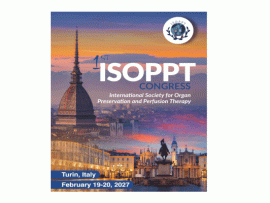
International Society for Organ Preservation and Perfusion Therapy (ISOPPT) 1st isoppt congress Date: February 19th-20th, 2027 Venue: Turin, Italy CONGRESS PRESIDENT: Renato Romagnoli
Read More