
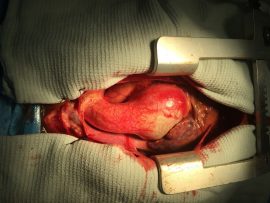

Abstract Background Postoperative complications in patients with acute type A aortic dissection (ATAAD) significantly affect their prognosis. This study investigates the association between cardiopulmonary bypass(CPB) weaning time and postoperative adverse..
Read More
Abstract Introduction Significant blood loss (≥ 500 mL) during spinal surgery is common and linked to greater transfusion requirements and worse outcomes. Preoperative tools for risk stratification and individualized blood-management strategies..
Read More
Abstract Background The purpose of this descriptive study was to characterize the utilization and outcomes of CPB after trauma. Methods This is an AAST-sponsored retrospective (2011-2021) multicenter (32 centers) study..
Read More
Abstract Accurate, continuous assessment of regional tissue perfusion remains a significant clinical challenge, as most existing modalities are invasive, indirect, or impractical for routine monitoring. Near-infrared spectroscopy (NIRS) has been..
Read More
Abstract Porcine livers have the potential to support liver function via extracorporeal liver cross-circulation (ELC) until recovery or transplantation. To assess the functional integrity of both native human and porcine..
Read More
Abstract Background: The prognostic value of preoperative hemoglobin A1c (HbA1c) in patients undergoing cardiac surgery remains uncertain. This study investigated the association between preoperative HbA1c levels and the risk of..
Read More
Abstract Objectives To evaluate the feasibility, safety, and early outcomes of a standardized operating room extubation (ORE) protocol implemented for elective cardiac surgery patients requiring cardiopulmonary bypass. Design A prospective..
Read More
Abstract Background/Objectives: Cardiopulmonary bypass (CPB) facilitates complex cardiac surgery but can damage erythrocyte membranes, impairing microcirculation and oxygen transport. Standard rheological tests assess overall blood properties but fail to define..
Read More
Abstract Objectives To monitor temporal changes in total and unbound remimazolam concentrations during cardiac surgery requiring cardiopulmonary bypass (CPB). Design Single-center, prospective, observational study. Setting Operating rooms of a university..
Read More
Abstract Hemostasis depends on the coordinated interaction between platelets, coagulation factors, endothelium, and shear forces. Current point-of-care (POC) assays evaluate isolated components of haemostasis or operate under nearly static conditions,..
Read More
Abstract ‘Liquid-like’ solid surfaces that overcome the limitations of lubricant-infused slippery surfaces, have garnered attention as passive antibiofouling coatings for biomedical applications. However, lack of intrinsic bioactivity limits its ability to..
Read More
Abstract Due to the similar size ratios, adult porcine models are suitable for cardiovascular and circulatory physiology studies on extracorporeal circulation. As standard, the connection to the cardiopulmonary bypass (CBP)..
Read More
Abstract In patients with or at risk of acute circulatory failure, capillary refill time (CRT) has emerged as a prognostic indicator, with data linking prolonged CRT to mortality and adverse..
Read More
Abstract Antithrombin (AT), a glycoprotein, plays a key role in anticoagulation by inhibiting coagulation proteases. It is also the primary mediator of heparin's anticoagulant effect, with heparin binding amplifying AT..
Read More
Abstract Background This study aimed to investigate the predictive value of the red cell distribution width-to-platelet ratio (RPR) for cardiac surgery-associated acute kidney injury (CSA-AKI). Methods A retrospective analysis of..
Read More
Abstract Background: The Prognostic Nutritional Index (PNI) is a tool that combines serum albumin levels and lymphocyte count to assess a patient's nutritional and immune status. Malnutrition, often undetected in coronary..
Read More
Abstract Background Patients with acute coronary syndrome requiring coronary artery bypass graft surgery while on ticagrelor face a high risk of perioperative bleeding because of its strong antiplatelet effect. The..
Read More
Abstract Background Refractory cardiac arrest remains a major challenge in children, with poor survival despite advances in cardiopulmonary resuscitation (CPR). Extracorporeal cardiopulmonary resuscitation (ECPR), defined as rapid deployment of extracorporeal..
Read More
Abstract BACKGROUND: Rotational thromboelastometry (ROTEM) is widely used for point-of-care coagulation testing to reduce blood transfusions. Accurate interpretation of ROTEM data is crucial and requires substantial training. This study investigates..
Read More
Abstract Objectives To develop a multimodal pediatric critical care datamart supporting predictive modeling and decision support tool development, integrating high-resolution physiologic and clinical data and future clinical deployment. Materials and..
Read More
Abstract Objective To assess how tranexamic acid (TXA) influences the renal outcomes of cardiovascular surgical patients. Design Systematic review and meta-analysis of randomized controlled trials (RCTs). Setting The operating room...
Read More
Abstract Objectives Goal-directed perfusion strategies during cardiopulmonary bypass typically target indexed oxygen delivery thresholds to reduce acute kidney injury and other complications. This delivery-only paradigm may not fully reflect patient-specific..
Read More
Abstract In cases of severe cardiopulmonary failure, extracorporeal membrane oxygenation (ECMO) may be temporarily used as a life-saving support for cardiac and/or lung function. Operating under non-physiological flow conditions, characterized..
Read More
Abstract Background Enhanced Recovery After Cardiac Surgery (ERACS) has become the standard of care for selected patients. This study evaluated the evolution of the Leipzig concept in a specialized postanaesthesia..
Read More
Abstract Objective So far, evidence is scarce regarding the impact of rewarming temperature on bleeding after cardiac surgery under cardiopulmonary bypass (CPB). We seek to evaluate how rewarming temperature affects..
Read More
Abstract OBJECTIVES Extracorporeal membrane oxygenation (ECMO) is a life-saving therapy for severe cardiopulmonary failure, but structured training remains constrained by costs, logistics, and the absence of validated high-fidelity simulators. This..
Read More
Abstract Background Pediatric cardiac surgery with cardiopulmonary bypass (CPB) is associated with systemic inflammation. This trial aimed to determine whether continuous high-exchange ultrafiltration during CPB has a clinical immunomodulatory effect...
Read More
Abstract Introduction Small animal models are indispensable in cardiovascular research. This scoping review aims to provide an overview of contemporary rat models for extracorporeal life support (ECLS) after global ischaemia...
Read More
Abstract Objective: To evaluate whether systemic anticoagulation therapy affects the survival of adult patients receiving venovenous extracorporeal membrane oxygenation (VV-ECMO) for acute respiratory distress syndrome (ARDS). Design: Multicenter retrospective study...
Read More
Abstract We reported two cases of posterior placenta previa managed with elective cesarean delivery and adjunctive autologous platelet-rich plasma (PRP) gel. Twelve milliliters of PRP gel were used to cover..
Read More