
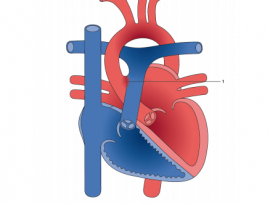

Aortopulmonary window (APW) or aortopulmonary septal defect, first described by Elliotson in third decade of last century,[] is a cardiac abnormality that results from abnormal communication between the proximal aorta..
Read More
Lipomatous hypertrophy of the interatrial septum (LHIS) is a benign cardiac mass characterised as a non-encapsulated mass of fatty tissue that infiltrates the atrial septum. ⠀ Although once described as..
Read More
Spontaneous echocardiographic contrast (SEC): is a phenomenon of discrete reflections appearing in the blood inside the cardiac chambers, cavities or vessels without previous injection of echocontrast media or fluids containing..
Read More
Lambl's excrescences are usually described as filiform (threadlike) fronds. They were first described by Vilem Dusan Lambl, a Bohemian physician. They occur, by definition, along valve closure lines, where minor..
Read More
Ehlers-Danlos syndromes (EDS) are a group of rare inherited conditions that affect connective tissue. There are several types of EDS that may share some symptoms, these include joint hypermobility, stretchy..
Read More
Abstract Hyperthermic intraperitoneal chemotherapy (HIPEC) has been shown to be an effective treatment for peritoneal tumors; whether preventive HIPEC after radical resection for T4 stage colon adenocarcinoma could decrease peritoneal..
Read More
Abstract Total anomalous pulmonary venous connection (TAPVC) is a rare congenital cardiac malformation, and prenatal detection of TAPVC malformation remains a challenging. TAPVC can be easily missed or misdiagnosed in..
Read More
Aula sobre fisiologia da CEC. Os principais pontos que diferenciam o paciente em CEC de outros pacientes! Prof. Elio Carvalho é Biomédico, Microbiologista e Perfusionista pela Unicamp, CLAP e SBCEC...
Read More
CONGENITAL CARDIAC ANESTHESIA : UPDATE 2020 Description WORLDWIDE WEBINAR - in Collaboration with Congenital Cardiac Anesthesia Society. Congenital Heart Academy
Read More
TRANSPOSITION OF THE GREAT ARTERIES: UPDATE 2020 Congenital Heart Academy
Read More
TRUNCUS ARTERIOSUS: dall'anatomia all'età adulta. RELATORI: Aspetti Anatomici Dott. Paola Francalanci Ospedale Pediatrico Bambino Gesù - Roma Diagnosi clinico strumentale Dott. Elio Caruso Centro Cardiologico Pediatrico del Mediterraneo..
Read More
Abstract This review provides a comprehensive overview of the past 25+ years of research into the development of left ventricular assist device (LVAD) to improve clinical outcomes in patients with..
Read More
Abstract Congenital long QT syndrome (LQTS) is characterised by heart rate corrected QT interval prolongation and life-threatening arrhythmias, leading to syncope and sudden death. Variations in genes encoding for cardiac..
Read More
[pdf-embedder url="https://perfusfind.com/wp-content/uploads/2021/05/CribSheet-PE-1.91_compressed.pdf" title="CribSheet PE 1.91_compressed"] Pulmonary Embolism Treatment Overview
Read More
Abstract A wide QRS complex tachycardia (WCT) is defined as a tachycardia with QRS duration of >120 ms. Distinguishing between the different potential causes of a WCT can have important..
Read More
Abnormal aortic valve development is one of the most threatening congenital heart diseases. Like a thief in the night, the patient might be struck by endocarditis after a visit to..
Read More
Aortic stenosis refers to a condition that causes obstruction to blood flow between the left ventricle and the aorta. There are a variety of causes, including muscular obstruction below the..
Read More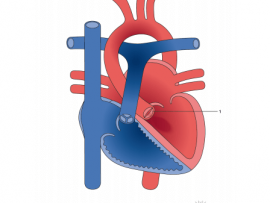
Bicuspid aortic valve (BAV) is the most common congenital cardiac abnormality, affecting approximately 1%-2% of the general population. (1,2) Adverse cardiac outcomes related to the valve and/or root (3) put..
Read More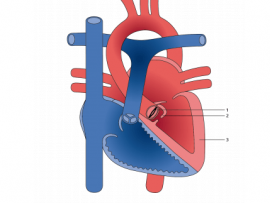
Subvalvular aortic stenosis (SAS), also called subaortic stenosis, is a rare disorder seen in infants. In most cases, it involves the presence of a membrane that is typically muscular just..
Read More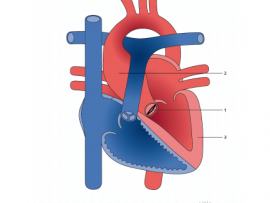
Bicuspid aortic valve (BAV) is the most common congenital cardiac abnormality, occurring in 0.5%-1.4% of the population; this anomaly is sporadically transmitted genetically by an autosomal-dominant pathway, with a 3:1..
Read More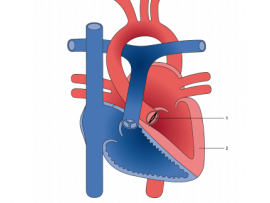
Bicuspid aortic valve (BAV) and congenital aortic stenosis are two types of heart defects that may be present at birth. They can occur separately or together. In some cases, bicuspid aortic valve causes another condition called aortic valve..
Read More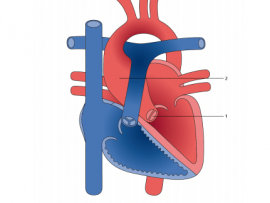
Congenital bicuspid aortic valve is a relatively rare malformation. It is reported that the presence of this anomaly predisposes the patient to development of true aortic aneurysms or dissecting aortic..
Read More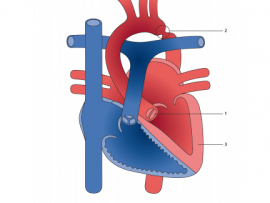
Bicuspid aortic valve (BAV) is the most common congenital heart defect with a prevalence of 1–2% and most commonly BAV is found in males with a rate of 1:2 varying..
Read More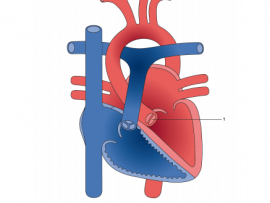
The aortic valve allows oxygen-rich blood to flow from the heart to the aorta. It prevents the blood from flowing back from the aorta into the heart when the pumping..
Read More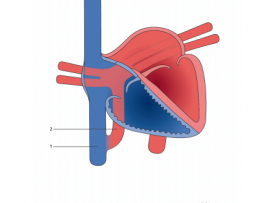
Total anomalous pulmonary venous connection (TAPVC) is a very rare congenital heart disease (CHD), reported in 1-2.6% of all congenital heart disease (-). The onset can be abrupt with cardiopulmonary..
Read More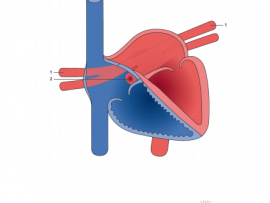
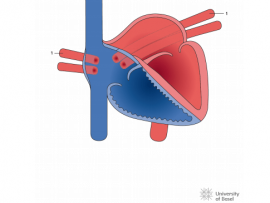
Total anomalous pulmonary venous connection (TAPVC) develops when the primordial pulmonary vein fails to unite with the plexus of veins surrounding the lung buds. In 1959, Darling and associates[] proposed..
Read More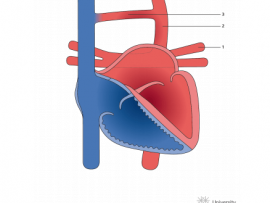
In this type of TAPVR, the pulmonary veins first come together behind the heart and then drain upwards to an abnormal “vertical vein.” This vertical vein joins the innominate vein which connects to the right superior vena cava and drains to the..
Read More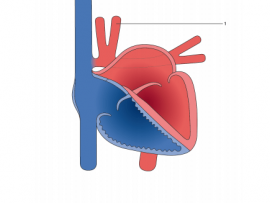
Anomalous pulmonary venous connection (APVC) is an uncommon congenital anomaly in which pulmonary venous blood flows directly into the right side of the heart or into the systemic veins. The..
Read More