


Abstract Microcirculatory disturbances are commonplace after cardiopulmonary bypass. Postoperative atrial fibrillation (POAF) occurs in nearly 30% of patients undergoing conventional cardiac surgery. Landiolol, a short-acting i.v. beta blocker, could reduce..
Read More
Abstract Patients with the coronavirus disease 2019 (COVID-19) sometimes develop refractory respiratory failure and may require venovenous extracorporeal membrane oxygenation (VV-ECMO). It is known that the severe acute respiratory syndrome..
Read More
Abstract In this issue of BMJ Quality and Safety, Jorro-Barón and colleagues report the findings of a stepped-wedge cluster randomised trial (SW-CRT) to evaluate the implementation of the I-PASS handover system among..
Read More
Abstract Introduction: The superiority of pulsatile perfusion during cardiopulmonary bypass remains controversial. We analyzed the frequency-domain characteristics and organ protection of pulsatile and nonpulsatile flow in adult patients with valvular..
Read More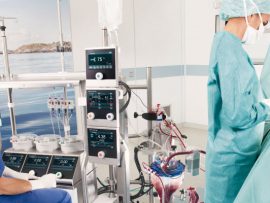
Abstract Objective: Mesenchymal stromal cells have important immunomodulatory and neuroprotective properties. The aim of this study was to evaluate the feasibility of mesenchymal stromal cell administration into a cardiopulmonary bypass..
Read More
Abstract Systemic inflammatory responses in patients undergoing extracorporeal membrane oxygenation (ECMO) contribute significantly to ECMO-associated morbidity and mortality. In recent years, the number of type 2 diabetes mellitus patients has..
Read More
Abstract Clotting, anticoagulation, platelet consumption, and poor platelet function are major factors in clinical extracorporeal circulation (ECC). We have shown that nitric oxide-releasing (NOReL) coatings prevent thrombosis in a rabbit..
Read More
Prone positioning (PP) has shown benefits in patients with refractory hypoxemia from acute respiratory distress syndrome (ARDS).1 The EOLIA trial demonstrated extracorporeal membrane oxygenation (ECMO) can be used for patients with..
Read More
Abstract Background Cardiomyopathies in advanced stages and highly complex congenital heart disease may not be amenable to therapy or surgical correction thus being indicated pediatric heart transplant. In this study,..
Read More
Abstract Treatment of end-stage heart failure has markedly evolved. With only a limited number of available heart transplants (24 in 2012) in our institution, mechanical circulatory support (MCS) has become..
Read More
Abstract Purpose Intravascular fluids are a necessary and universal component of cardiac surgical patient care. Both crystalloids and colloids are used to maintain or restore circulating plasma volume and ensure..
Read More
Abstract Left ventricular assist devices (LVAD) have become an established mode of treatment in bridging patients with advanced heart failure to cardiac transplantation. In certain groups of patients LVADs have..
Read More
Abstract Major surgery induces hemostatic changes related to surgical stress, tissue destruction, and inflammatory reactions. These changes involve a shift of volume from extravascular space to intravascular and interstitial spaces,..
Read More
Abstract Purpose of review Patients with congenital heart disease have a number of risk factors for the development of chronic kidney disease (CKD). It is well known that CKD has..
Read More
Abstract Background Preoperative anemia and transfusion are associated with worse outcomes. This study aims to identify the prevalence of preoperative anemia, transfusion rates on surgery day, and predictors of transfusion..
Read More
Abstract Venoarterial extracorporeal membrane oxygenation (VA ECMO) is used to provide cardiopulmonary support in cardiogenic shock; however, high extracorporeal flow may increase left ventricular (LV) afterload leading to LV distention..
Read More
Abstract Objective This study aimed to explore the influence of coronary artery bypass grafting (CABG) on both postoperative cognitive dysfunction and quality of life (QoL) and the association between the two..
Read More
Abstract Cardiopulmonary bypass (CPB) exposes blood to artificial surfaces, which induces a systemic inflammatory activation.This may contribute to hypotension during CPB. A perceived difference between two membrane oxygenators was noted...
Read More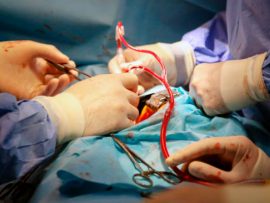
Never Change a Flowing System? The Effects of Retrograde Flow on Isolated Perfused Lungs and Vessels
Abstract Retrograde perfusion may occur during disease, surgery or extracorporeal circulation. While it is clear that endothelial cells sense and respond to changes in blood flow, the consequences of retrograde..
Read More
Abstract Circulating compounds such as drugs and nutritional components might adhere to the oxygenator fibers and tubing during ECMO support. This study evaluated the amount of nutritional supplements adsorbed to..
Read More
Abstract The COVID-19 pandemic significates an enormous number of patients with pneumonia that get complicated with severe acute respiratory distress syndrome (ARDS), some of them with refractory hypercapnia and hypoxemia..
Read More
Abstract Background: Delirium is a frequent complication after cardiac surgery and is associated with a higher incidence of morbidity and mortality and a prolonged hospital stay. However, knowledge of the variables..
Read More
Abstract Acute type A aortic dissection (ATAAD) is a life-threatening event that requires immediate surgical treatment. Improvements in surgical treatment, graft technology, organ protection and imaging techniques have led to..
Read More
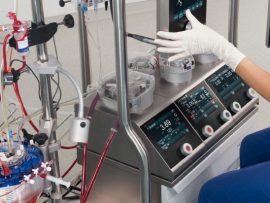
Abstract OBJECTIVES Cardiopulmonary bypass in cardiac surgery has been associated with several deleterious effects including haemodilution and systemic inflammation. Modified ultrafiltration (MUF) has been well established in paediatric..
Read More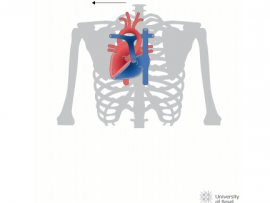
Dextroposition of the : The heart is displaced to the right (from its usual location in the left chest). There is no anatomic alteration in the heart itself, just in its location...
Read More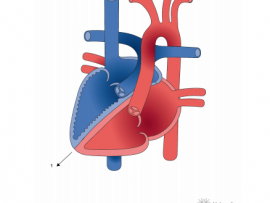
Dextrocardia is a rare congenital disorder in which the heart resides on the right side of the thoracic cavity. It is often associated with other development anomalies and, in most..
Read More
Unroofed coronary sinus syndrome (URCS) is a rare cardiac anomaly in which a communication occurs between the coronary sinus and the left atrium as a result of the partial or..
Read More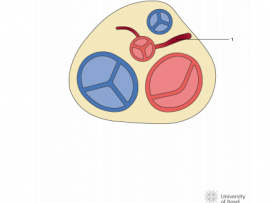
Coronary artery fistulas (CAFs) are abnormal communications of coronary arteries whereby venous circuits bypass the normal capillaries within the myocardium. CAFs are rare, and most affected patients are asymptomatic. However,..
Read More