


This case reports on a 63-year-old male patient (pre-existing conditions: arterial hypertension, obesity, type 2 diabetes mellitus) who was transferred from the normal ward to the medical intensive care unit..
Read More
Disclaimer These guidelines describe useful and safe practice for extracorporeal life support (ECLS, ECMO) but these are not necessarily consensus recommendations. These guidelines are not intended as a standard of..
Read More
Abstract A systematic approach to transoesophageal echocardiography (TOE) is essential to ensure that no pathology is missed during a study. In addition, a standardised approach facilitates the education and..
Read More
Abstract There have been significant advances in the field of echocardiography with the introduction of a number of new techniques into standard clinical practice. Consequently, a ‘standard’ echocardiographic examination has..
Read More
Abstract Objective Left ventricular (LV) twist is a major component of ventricular mechanics reflecting the helical orientation of cardiac fibres and compensating for afterload mismatch. However, it is not known whether..
Read More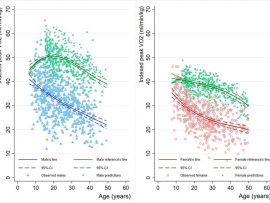
Abstract Objectives This study aimed to provide a perspective for the interpretation of exercise capacity (peakVO2) in patients with repaired Tetralogy of Fallot (patients with rTOF) by describing the course of..
Read More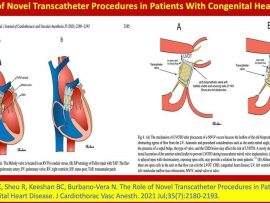
Abstract The development of percutaneous structural interventions in patients with acquired heart disease is happening at an exponential rate, and some of this technology is being used to treat patients..
Read More
Abstract Extracorporeal membrane oxygenation (ECMO) is a therapy used in severe cardiopulmonary failure. Blood is pumped through an artificial circuit exposing it to nonphysiologic conditions, which promote platelet activation and..
Read More
En este video voy a hablar del gasto cardiaco y como obtenerlo por medio del ecocardiograma. In this video I am going to talk about the cardiac output and how..
Read More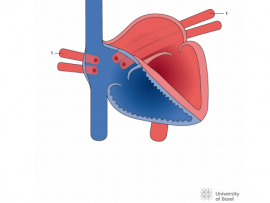
Total anomalous pulmonary venous return (TAPVR) is a rare congenital malformation in which all four pulmonary veins do not connect normally to the left atrium. Instead the four pulmonary veins..
Read More

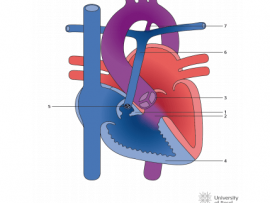
with is a more severe form of TOF, a type of heart defect. It’s a congenital condition, which means it’s something a baby is born with. Babies who have TOF with..
Read More

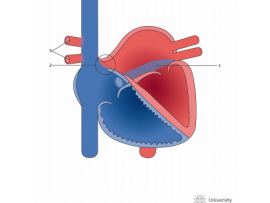
The most common venous abnormality of the thorax is persistent left superior vena cava (PLSVC), incidence being less than 0.5%. However, with congenital heart disease, it is about 6.1%. When..
Read More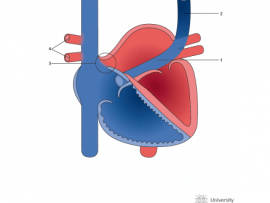
The most common venous abnormality of the thorax is persistent left superior vena cava (PLSVC), incidence being less than 0.5%. However, with congenital heart disease, it is about 6.1%. When..
Read More
Tricuspid atresia is a birth defect of the tricuspid valve, which is the valve that controls blood flow from the right atrium (upper right chamber of the heart) to the..
Read More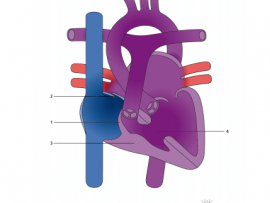
The normal pumping chambers of the heart (the ventricles) must have an inflow valve to let blood in, a good-sized pumping chamber and an outflow to allow blood to exit the..
Read More
Tricuspid atresia is a birth defect of the tricuspid valve, which is the valve that controls blood flow from the right atrium (upper right chamber of the heart) to the..
Read More
Tricuspid atresia is a birth defect of the tricuspid valve, which is the valve that controls blood flow from the right atrium (upper right chamber of the heart) to the..
Read More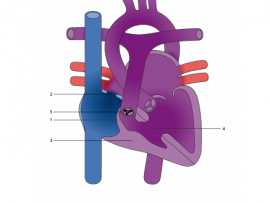
Tricuspid atresia is a birth defect of the tricuspid valve, which is the valve that controls blood flow from the right atrium (upper right chamber of the heart) to the..
Read More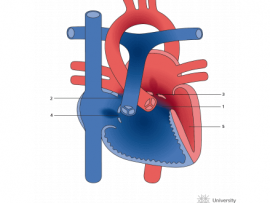
The term “unbalance” has been used for decades in atrioventricular septal defect (AVSD) to describe a lack of symmetry between left and right sides of the heart. Even though we..
Read More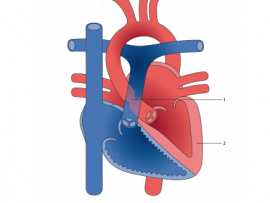
Supravalvular aortic stenosis(SVAS) is a congenital heart defect. As the name suggests, SVAS means the section of the aorta located just above the aortic valve is narrowed. SVAS accounts for..
Read More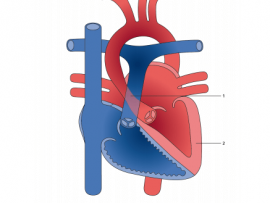
Supravalvular aortic stenosis(SVAS) is a congenital heart defect. As the name suggests, SVAS means the section of the aorta located just above the aortic valve is narrowed. SVAS accounts for..
Read More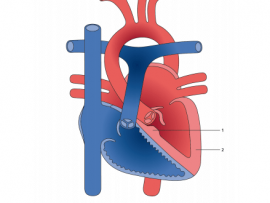
Subvalvular aortic stenosis (SAS) is the second most common type of aortic stenosis, accounting for 14% of left ventricular outflow tract (LVOT) obstruction, with valvular aortic stenosis being the most..
Read More
Subvalvular aortic stenosis (SAS) is the second most common type of aortic stenosis, accounting for 14% of left ventricular outflow tract (LVOT) obstruction, with valvular aortic stenosis being the most..
Read More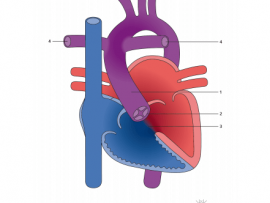
In patients with a TAC only one vessel originates from the heart chambers. Generally the common vessel (truncus) overrides a ventricular septal defect. Depending on the origin of the pulmonary..
Read More