
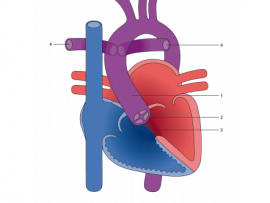

In patients with a TAC only one vessel originates from the heart chambers. Generally the common vessel (truncus) overrides a ventricular septal defect. Depending on the origin of the pulmonary..
Read More
In patients with a TAC only one vessel originates from the heart chambers. Generally the common vessel (truncus) overrides a ventricular septal defect. Depending on the origin of the pulmonary..
Read More

Situs inversus (also called situs transversus or oppositus) is a in which the major are reversed or from their normal positions. The normal arrangement of internal organs is known as . Although cardiac problems are more common, many..
Read More
Sinus of Valsalva aneurysm (SOVA) is an abnormal dilatation of the aortic root located between the aortic valve annulus and the sinotubular junction. This occurs as a consequence of the..
Read More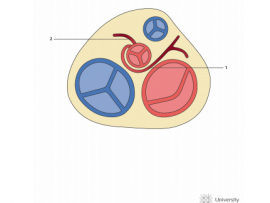
Single coronary artery is a rare congenital anomaly with a quoted incidence of 0.024% to 0.06% (), and may be associated with sudden cardiac death after exercise and angina. We..
Read More
Single coronary artery is a rare congenital anomaly with a quoted incidence of 0.024% to 0.06% (), and may be associated with sudden cardiac death after exercise and angina. We..
Read More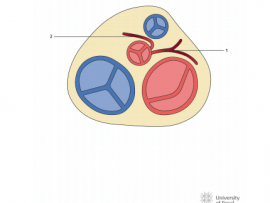
Single coronary artery is a rare congenital anomaly with a quoted incidence of 0.024% to 0.06% (), and may be associated with sudden cardiac death after exercise and angina. We..
Read More
Single coronary artery is a rare congenital anomaly with a quoted incidence of 0.024% to 0.06% (), and may be associated with sudden cardiac death after exercise and angina. We..
Read More
Single coronary artery is a rare congenital anomaly with a quoted incidence of 0.024% to 0.06% (), and may be associated with sudden cardiac death after exercise and angina. We..
Read More
Single coronary artery is a rare congenital anomaly with a quoted incidence of 0.024% to 0.06% (), and may be associated with sudden cardiac death after exercise and angina. We..
Read More
Single coronary artery is a rare congenital anomaly with a quoted incidence of 0.024% to 0.06% (), and may be associated with sudden cardiac death after exercise and angina. We..
Read More
Transposition is the condition in which the great arteries take origin from the ventricles in reverse position across (“trans”) the ventricular septum: the aorta from the right ventricle and the..
Read More
A sinus of valsalva aneurysm (SOVA) is an abnormal dilatation of the aortic root located between the aortic valve annulus and the sinotubular junction. It occurs as a consequence of..
Read More
Aneurysms of the sinus of Valsalva are extremely rare. Ruptured aneurysms of the sinus of Valsalva are frequently associated with other congenital defects, particularly with ventricular septal defect, aortic valve..
Read More
Congenital heart diseases that cause obstruction of the right ventricular outflow tract are often difficult to diagnose. We report the case of a 49-year-old man who presented with long-standing shortness..
Read More
Congenital heart diseases that cause obstruction of the right ventricular outflow tract are often difficult to diagnose. We report the case of a 49-year-old man who presented with long-standing shortness..
Read More

Partial anomalous pulmonary venous connection (PAPVC) is a rare congenital cardiac defect. As the name suggests, in PAPVC, the blood flow from a few of the pulmonary veins return to..
Read More
Background There is a high mortality in infants with right atrial isomerism (RAI). However, less is known about outcome in older children with RAI. This study sought to evaluate those..
Read More
The term “atrioventricular septal defect” (AVSD) covers a spectrum of congenital heart malformations characterised by a common atrioventricular junction coexisting with deficient atrioventricular septation. In ostium primum atrial septal defect..
Read More
Abstract Background and Objectives Heparin-induced thrombocytopenia (HIT) is an antibody-mediated condition that leads to thrombocytopenia and possible thrombosis. Patients with HIT who require cardiac surgery pose a challenge as high..
Read More
Abstract Postoperative coagulopathic bleeding is common in cardiac surgery and is associated with increased morbidity and mortality. Ideally, real-time information on in-vivo coagulation should be available. However, up to now..
Read More
Abstract Objectives: Evaluating whether there is a clinical benefit of using extracorporeal cytokine adsorption therapy in two indications. Design: Systematic review. Setting: Search on four databases, Medline, Embase, The Cochrane..
Read More
Abstract Objective Dysregulation of local nitric oxide (NO) synthetases occurs during and reperfusion associated with , (DHCA), and reperfusion. Rapid fluctuations in local occurring in neonates and infants probably contribute to inflammation-induced microglial activation..
Read More
This case reports on a 53-year-old female patient who was transferred from the isolation ward to the Medical Intensive Care Unit due to progressive respiratory deterioration in the context of..
Read More
Abstract Cardioplegia is used to induce cardiac arrest in order to facilitate cardiac surgery in patients supported by cardiopulmonary bypass. It is administered directly into the coronary vessels after the..
Read More
Abstract Background The effectiveness and safety of non-heparin anticoagulants for the treatment of heparin-induced thrombocytopenia (HIT) are not fully established, and the optimal treatment strategy is unknown. In a systematic..
Read More
Abstract Purpose: Purpose: Condensation that clogs the hollow fibers of the oxygenation and accumulation of plasma leaks reduces oxygenated lung capacity. In this study, artificial We evaluated whether monitoring changes..
Read More
Abstract Introduction: The contribution of fluid temperature to the effect of crystalloid fluid bolus therapy (FBT) in post-cardiac surgery patients is unknown. We evaluated the hemodynamic effects of FBT with..
Read More