
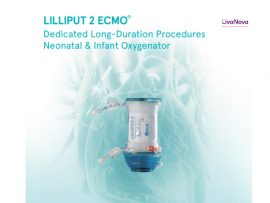

Abstract Artificial membrane lungs are composed of hollow fiber membranes. Blood flows with low velocities in the membrane bundle, forming a laminar boundary layer near the membrane surfaces that limits..
Read More
Abstract Artificial intelligence (AI) is rapidly emerging in healthcare, yet applications in surgery remain relatively nascent. Here we review the integration of AI in the field of surgery, centering our..
Read More
Abstract The lungs were long thought to be sterile until technical advances uncovered the presence of the lung microbial community. The microbiome of healthy lungs is mainly derived from the..
Read More
Finger photopletysmography detects early acute blood loss in compensated blood donors: a pilot study
Abstract Objective. Diagnosis of incipient acute hypovolemia is challenging as vital signs are typically normal and patients remain asymptomatic at early stages. The early identification of this entity would affect..
Read More
Abstract Right ventricular failure (RVF) is a significant cause of mortality in patients undergoing left ventricular assist device (LVAD) implantation. Although right ventricular assist devices (RVADs) can treat RVF in..
Read More
Abstract Background The outcomes of several randomized trials on extracorporeal cardiopulmonary resuscitation (ECPR) in patients with refractory out-of-hospital cardiac arrest were examined using frequentist methods, resulting in a dichotomous interpretation..
Read More
Abstract Background Perioperative myocardial injury (PMI) is associated with increased mobility and mortality after noncoronary cardiac surgery. However, limited studies have developed a predictive model for PMI. Therefore, we used..
Read More
Abstract Background: Acute respiratory distress syndrome (ARDS) presents a significant challenge in critical care settings, characterized by compromised gas exchange, necessitating in the most severe cases interventions such as veno-venous extracorporeal..
Read More
Abstract Background. Withdrawal of life-sustaining therapy (WLST) performed in the circulatory determination of death (DCD) donors leads to cardiac arrest, challenging the utilization of the myocardium for transplantation. The rapid..
Read More
Abstract Significance Cerebral oximeters have the potential to detect abnormal cerebral blood oxygenation to allow for early intervention. However, current commercial systems have two major limitations: (1) spatial coverage of..
Read More
Abstract Reports on cases of factor Ⅴ (FⅤ) deficiency complicated by platelet function disorders in patients undergoing cardiac surgery are rare, and the utilization of thromboelastography in such cases is..
Read More
Abstract Background We previously found that cardioplegic arrest and cardiopulmonary bypass are associated with altered coronary arteriolar response to serotonin in patients undergoing cardiac surgery. In this study, we investigate..
Read More
Abstract Introduction and importance Perioperative anesthetic management in cases of severe airway obstruction with positional symptoms can be associated with difficulties in ventilation or intubation, with a risk of acute..
Read More
Abstract Intracardiac air remains an unsolved problem in the realm of cardiac surgery, leading to embolic events encompassing conduction disturbance, heart failure, and stroke. Transesophageal echocardiography allows the visualization of..
Read More
Abstract Objective This study aims to analyze the risk factors for early postoperative brain injury in patients undergoing cardiovascular surgery and explore the predictive value of transcranial color Doppler (TCCD)..
Read More
Abstract Introduction Prevention of acute kidney injury during cardiopulmonary bypass (CPB) is still a challenge and has been the object of numerous studies. The incidence of acute kidney injury in..
Read More
Abstract Target values for arterial carbon dioxide tension (PaCO2) in extracorporeal membrane oxygenation (ECMO) for acute respiratory distress syndrome (ARDS) are unknown. We hypothesized that lower PaCO2 values on ECMO would..
Read More
Abstract Predictive survival models have been proposed to esti-mate survival rates in patients with refractory cardio-genic shock considered for veno-arterial extracorporeal membrane oxygenation (VA-ECMO) [1, 2]. Notably, the Survival after..
Read More
Abstract Over the past decade, extracorporeal life support (ECLS) has gained increasing utilization in the management of refractory cardiogenic shock (CS) with a class IIaC recommendation according to the latest..
Read More
Abstract In critically ill patients with moderate to severe acute respiratory distress syndrome (ARDS) receiving invasive mechanical ventilation, prone positioning for 16 hours/day has been shown to confer significant mortality..
Read More
Abstract The continuous contact between blood and the foreign surface of the extracorporeal membrane oxygenation (ECMO) circuit contributes to hemostatic, inflammatory, and other physiological disturbances observed during ECMO. Although previous..
Read More
Abstract Alagille syndrome is an autosomal dominant disorder that is caused by heterozygous mutation of JAG1 or NOTCH2 gene that impacts several multisystem organs including but may not be limited..
Read More
Abstract Objective To explore the clinical effect of predeposit, salvage, and hemodilution autotransfusion on patients with femoral shaft fracture (FSF) surgery. Methods Selected patients with FSF were randomly divided into..
Read More
Abstract Rationale Acute renal failure (ARF) is one of the most serious complications of cardiopulmonary bypass (CPB) surgery. Serum creatinine level is a key compound examined to understand whether renal..
Read More
Abstract Early cardiac surgery in neonates and infants with congenital heart disease has been performed since the middle to late years of the twentieth century. To date, there are very..
Read More
Abstract Background Reports of intravascular thrombosis and cardiac complications have raised concerns about the safety of COVID‐19 vaccinations, particularly in patients with high cardiovascular risk. Herein, we aimed to analyze..
Read More
Abstract During extracorporeal membrane oxygenation (ECMO) support, the high shear stress in the ECMO circuit results in increased proteolysis of von Willebrand Factor (VWF), loss of VWF high molecular weight..
Read More
Abstract Postoperative survival for complete atrioventricular septal defect (cAVSD) is excellent. Common complications of surgery include valvular stenosis/regurgitation, left ventricular outflow tract obstruction, arrythmias, and residual defects. We report a..
Read More
Abstract Introduction Postoperative delirium (POD) has a major impact on patient recovery after cardiac surgery. Although its pathophysiology remains unclear, there could be a correlation between cerebral blood flow (CBF)..
Read More
Abstract Autologous blood transfusion can be achieved through different techniques, including by the patient donating blood before surgery (pre-deposit), collecting blood from the patient immediately before the operation and replacing..
Read More