
Intraoperative cell salvage. Benefit to patients when anticipated blood loss >1000ml.
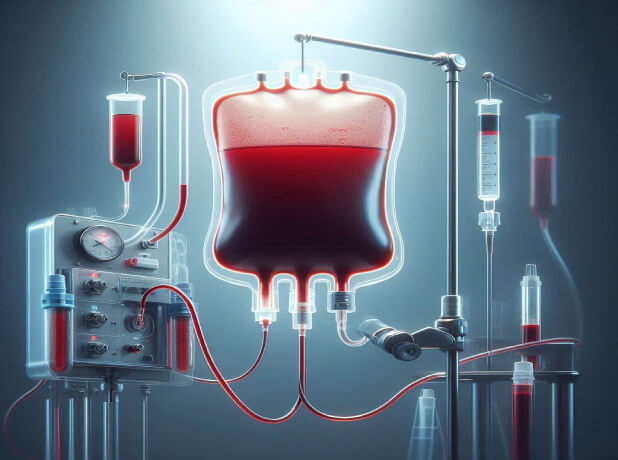

In modern surgical practice,managing perioperative blood loss typically exceeding 500ml to 1liter. is a critical factor impacting patient outcomes ,morbidity and resource mobilization.
TYPES OF TRANSFUSION
- Allogeneic(Homologous) blood transfusion involves the transfer of blood or blood components from a donor to a recipient,This standard procedure carries risks like transfusion-related adverse events, including fever and chills, and potential long-term effects such as immunomodulation that can affect immune function.transfusion transmissible infections(TTIs),alloimmunization,metabolic disturbances,coagulopathies. it also increases the economic and pyschological burden on patients and their families.
- Autologous blood transfusion is the process of collecting blood from an individual and transfusing back to the same person when a requirement for blood or blood components arises.can avoid these serious adverse effects,alleviate blood shortages and save blood resources
- FOUR METHODS OF AUTOLOGOUS TRANSFUSION
- Preoperative(pre-deposit) autologous donation(PAD)
- Acute normovolemic hemodilution(ANH),
- Intraoperative cell salvage(ICS)
- Post-operative cell salvage.
*ANH and cell salvage are becoming more cost-effective alternatives to PAD. (PAD should be reserved for those patients for whom there is limited availability of compatible blood (eg, patients with IgA deficiency, multiple red cell alloantibodies, or antibodies to a high-frequency antigen) or when sufficient time for regeneration of the collected red cell mass is attainable after collection.
Intraoperative cell salvage:
cell salvaging or intraoperative autologous transfusion is a technique where a patient’s own lost blood during surgery is collected ,filtered and washed to remove contaminants, and then returned to the patient’s circulation through a Vein.

surgical application and consideration.
-indicated in a wide array of procedures where signifacant blood loss is anticipated,typically exceeding 500ml to 1liter.
1.orthopedic surgery-major joint arthroplasty(especially rivisions and bilateral procedures)spinal surgery and major pelvic surgery are indicated for ICS.
2.cadiothoracic and vascular surgery
3.trauma surgery
4.Obstetric surgery: Used in cases with a high risk of postpartum hemorrhage, such as placenta accreta spectrum disorders
5.Malignancy: While there were historical concerns about re-infusing tumor cells, evidence suggests that using a leucocyte-depletion filter can effectively remove malignant cells. Avoiding the immunomodulatory effects of allogeneic blood may, in some cases, offer a net benefit.
Benefits for the patient
For surgeons and patients, the advantages of cell salvage are numerous and well-documented:
Reduces or eliminates donor transfusions: This is the primary benefit, thereby removing the risks of transfusion-related infections, immune reactions, and alloimmunization.
Superior red blood cell quality: Salvaged RBCs are fresher than stored donor blood and have normal levels of 2,3-diphosphoglycerate (2,3-DPG), which facilitates optimal oxygen delivery to tissues. Stored blood has reduced levels of 2,3-DPG, which can impair oxygen release.
Readily available blood source: The patient’s own blood is immediately available in the operating room, which is particularly beneficial in the event of unexpected massive hemorrhage.
Resource conservation: Minimizes the demand for scarce and expensive donor blood products.
Acceptable for Jehovah’s Witnesses: For patients whose religious beliefs prohibit donor blood, the continuous, closed-loop nature of the cell salvage system can be an acceptable alternative, provided the setup and procedure align with their beliefs.
Victor ongeri: cardiovascular Perfusionist, member of IAPAE, Author, Researcher, Artist-Trombonist.