


Abstract In recent decades, the use of veno-arterial extracorporeal membrane oxygenation (VA-ECMO) has increased. In acute cardiogenic shock, VA-ECMO implantation can serve as a bridging solution to facilitate recovery, provide..
Read More
Abstract Background: Veno-Arterial Extracorporeal membrane oxygenation (VA-ECMO) provides temporary cardiopulmonary support in the setting of refractory cardiogenic shock. Mechanical ventilation and sedation often accompanies VA-ECMO support and carry the increased risk..
Read More
Abstract Terminal heart failure presents challenges, requiring cardiac transplantation, or mechanical circulatory support. Limited donor organ availability has made mechanical support crucial. Advances in centrifugal-flow systems, compared to axial-flow, have..
Read More
Abstract There is insufficient data on the outcomes of donation after circulatory death (DCD) multiorgan transplant that includes heart. The primary objective of this study is to compare the overall..
Read More
Abstract Utilization of 10ºC static storage safely extended both ischemic time and travel radius in heart transplantation. A 57-year-old man with ischemic cardiomyopathy, a left ventricular assist device (LVAD), and..
Read More
Abstract The complement system is a set of over 50 proteins that constitutes an essential part of the innate immune system. Complement system activation involves an organized proteolytic cascade. Overactivation..
Read More
Tuscany Normothermic Regional Perfusion Mobile Teams for Controlled Donation After Circulatory Death
Abstract Introduction To facilitate the implementation of controlled donation after circulatory death (cDCD) programs even in hospitals not equipped with a local extracorporeal membrane oxygenation (ECMO) team, some countries have..
Read MoreAbstract Objective Bleeding after cardiac surgery leads to poor outcomes. The objective of the study was to build the PeriOperative Bleeding Score in Cardiac surgery (POBS-Card) to predict bleeding after..
Read More
Abstract Data on perioperative extracorporeal membrane oxygenation (ECMO) in liver transplantation (LT) are scarce. ECMO has been used preoperatively, intraoperatively, and postoperatively for a variety of indications at our center...
Read More
Abstract Heart transplantation and left ventricular assist devices (LVADs) have emerged as crucial interventions for end-stage heart failure, dramatically improving patient outcomes. This narrative review examines their historical context, indications,..
Read More
Abstract Patients on left ventricular assist devices (LVAD) are prone to excessive hemostasis disturbances due to permanent contact of artificial pump surfaces with blood components. We aimed to investigate if..
Read More
Abstract Axillary artery intra-aortic balloon pump (axIABP) placement has been implemented as a bridging solution before heart transplantation. This study evaluates complications associated with axIABP support and describes an approach..
Read More
Abstract Background. The pulmonary assist system (PAS) is a wearable respiratory support system that is currently under development for patients with chronic lung disease as a bridge to lung transplantation..
Read More
Abstract Background We sought to characterize the association between venovenous (VV-ECMO) bridging duration and outcomes in patients listed for . Methods A retrospective observational study was conducted using the Organ Procurement and..
Read More
Abstract Purpose of review Although lung transplantation stands as the gold standard curative therapy option for end-stage lung disease, the scarcity of available organs poses a significant challenge in meeting..
Read More
Abstract Heart failure (HF) is a frequent and severe condition. It is estimated that one in four patients will die within a year following hospitalization for acute decompensation, with significant..
Read More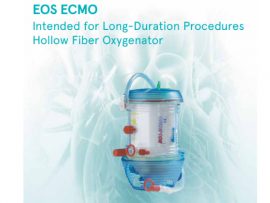
Abstract Venovenous bypass (VVB) is a technique used in liver transplantation (LT) to maintain hemodynamic stability and abdominal organ perfusion and thereby improve patient outcomes. Despite its perceived benefits, VVB..
Read More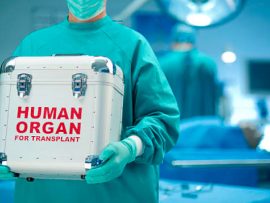
Abstract Objective The mismatch between the demand for and supply of organs for transplantation is steadily growing. Various strategies have been incorporated to improve the availability of organs, including organ..
Read More
Abstract Acute myocardial infarction-related cardiogenic shock (AMI-CS) carries a dismal prognosis. Short-term mortality is in the range of 40–50% []. Until recently, only treatment of the culprit lesion by percutaneous..
Read More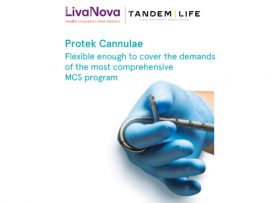
Abstract OBJECTIVES Dual-lumen cannulas for veno-venous (VV) extracorporeal membrane oxygenation (ECMO) support are typically inserted in the right internal jugular vein (RIJV); however, some scenarios can make this venous route..
Read More
Abstract Importance Centralizing deceased organ donor management and organ recovery into donor care units (DCUs) may mitigate the critical organ shortage by positively impacting donation and recipient outcomes. Objective To compare donation..
Read More
Abstract Background and Aims: The practice of intraoperative blood salvage and autotransfusion (IBSA) during deceased donor liver transplantation (DDLT) for hepatocellular carcinoma (HCC) can potentially reduce the need for allogeneic..
Read More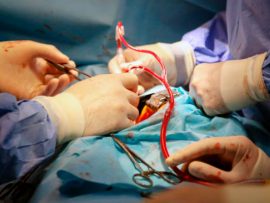
Abstract Thoracoabdominal normothermic regional perfusion (TA-NRP) is increasingly implemented in donation after circulatory determination of death (DCD). Thoracoabdominal normothermic regional perfusion allows thoracic and abdominal organs to be perfused with..
Read More
Abstract Introduction Pump-controlled retrograde trial off (PCRTO) is described as an effective weaning strategy for veno-arterial extracorporeal membrane oxygenation (ECMO) in the guidelines. Contrastingly, there is no established weaning strategy..
Read More
Abstract Despite technological advances in left ventricular assist device (LVAD) technology, which have made survival competitive with heart transplantation at 2 years, right ventricular failure (RVF), with an incidence of..
Read More
Abstract Objectives Heart donation after circulatory death was recently reintroduced in the United States with hopes of increasing donor heart availability. We examined its national use and outcomes. Methods The..
Read More
Abstract Background. Withdrawal of life-sustaining therapy (WLST) performed in the circulatory determination of death (DCD) donors leads to cardiac arrest, challenging the utilization of the myocardium for transplantation. The rapid..
Read More
Abstract Acute myocardial infarction-related cardiogenic shock (AMI-CS) carries a dismal prognosis. Short-term mortality is in the range of 40–50% [1]. Until recently, only treatment of the culprit lesion by percutaneous..
Read More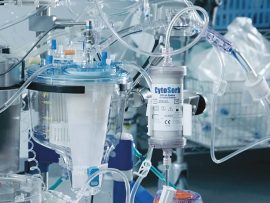
Abstract Background Extracorporeal blood purification has been widely used in intensive care medicine, nephrology, toxicology, and other fields. During the last decade, with the emergence of new adsorptive blood purification..
Read More
Abstract Venovenous bypass (VVB) is a technique used in liver transplantation (LT) to maintain hemodynamic stability and abdominal organ perfusion and thereby improve patient outcomes. Despite its perceived benefits, VVB..
Read More