


Abstract Extracorporeal circulation (ECC) procedures, such as cardiopulmonary bypass (CPB) and extracorporeal membrane oxygenation (ECMO), take over the function of one or more organs, providing clinicians time to treat underlying pathophysiological..
Read More
Abstract Extracorporeal membrane oxygenation (ECMO) augments cardiopulmonary function in critically ill children through use of large vessel cannulation and an external pump-oxygenator system. While advances in ECMO have allowed more children..
Read More
Abstract Extracorporeal membrane oxygenation (ECMO) is increasingly used in COVID-19-related pulmonary failure and the number of patients recovering from COVID-19 is growing. Here, we assess survival and recovery 6 months after ECMO for COVID-19. From April 2020 to..
Read More
Abstract Background Safe and timely liberation from veno-venous extracorporeal membrane oxygenation (V-V ECMO) would be expected to reduce the duration of ECMO, the risk of complications, and costs. However, how..
Read More
Abstract The use of intermittent hemodialysis (iHD), and continuous renal replacement therapy (CRRT), along with extracorporeal membrane oxygenation (ECMO) in patients with acute kidney injury (AKI) and end-stage renal disease (ESRD) is..
Read More
Abstract Refurbishing single use extracorporeal membrane oxygenation (ECMO) oxygenators for in vitro research applications is common. However, the refurbishment protocols that are established in respective laboratories have never been evaluated. In the present study, we aim at proving..
Read More
Abstract Introduction Limb ischemia is a severe complication of peripheral veno-arterial extracorporeal life support (V-A ECLS). Several techniques have been developed to prevent this, but it remains a major and..
Read More
Abstract Objective There is limited evidence on standardized protocols for optimal neurological monitoring methods receiving (ECMO). We previously introduced protocolized noninvasive multimodal neuromonitoring using serial , electroencephalography, ultrasound, and . The purpose of this study..
Read More
Abstract Background Extracorporeal membrane oxygenation (ECMO) in critically ill patients serves as a management option for end-stage cardiorespiratory failure in medical and surgical conditions. Patients on ECMO are at a..
Read More
Impact of Drainage Cannula Size and Blood Flow Rate on the Outcome of Patients Receiving Venovenous ECMO for ARDS: An ELSO Registry Analysis
Read More
Abstract Patients receiving venovenous extracorporeal membrane oxygenation (VV-ECMO) often require extended periods of ventilation. We examined the role of tracheostomy on outcomes of patients supported with VV-ECMO. We reviewed all patients at our institution..
Read More
Abstract Introduction: Simulation training offers an authentic team-based learning opportunity without risk to real patients. The Educational Corner at the annual congress of the European Branch of Extracorporeal Life..
Read More
Abstract Percutaneous cannulation improved femoro-femoral veno-arterial Extracorporeal Membrane Oxygenation (VA-ECMO) results, reducing infectious complications, but remains limited by vascular complications related to the arterial decannulation. Several techniques were described to perform a percutaneous decannulation..
Read More
Abstract Prognostic modelling techniques have rapidly evolved over the past decade and may greatly benefit patients supported with ExtraCorporeal Membrane Oxygenation (ECMO). Epidemiological and computational physiological approaches aim to provide..
Read More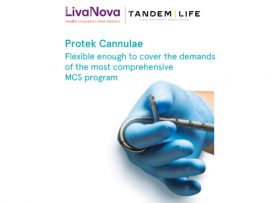
Abstract The ProtekDuo® is a dual lumen cannula that can be used in numerous configurations to treat cardiogenic shock and hypotension. Its default function is as a temporary percutaneous right..
Read More
Abstract Background Fluid overload is a serious complication in the treatment of infants with extracorporeal membrane oxygenation (ECMO). Volume overload leads to prolonged ECMO therapy if left untreated. The renal..
Read More
Abstract Background Transport with extracorporeal membrane oxygenation (ECMO) in the hospital setting can become a challenge as well as in the out-of-hospital setting. In particular, the management of intra-hospital transport..
Read More
Abstract Extracorporeal membrane oxygenation (ECMO), in conjunction with its life-saving benefits, carries a significant risk of acute brain injury (ABI). Hypoxic-ischemic brain injury (HIBI) is one of the most common..
Read More
Abstract Objectives: The CytoSorb therapy in COVID-19 (CTC) registry evaluated the clinical performance and treatment parameters of extracorporeal hemoadsorption integrated with veno-venous extracorporeal membrane oxygenation (VV ECMO) in critically ill COVID-19..
Read More
Abstract Background: Acute myocarditis can result in severe hemodynamic compromise requiring venoarterial extracorporeal membrane oxygenation (VA-ECMO). Outcomes and factors associated with mortality among myocarditis patients are not well described in..
Read More
Abstract Objectives The management of traumatic cardiac injury (TCI) may require a prompt treatment, including the use of cardiopulmonary bypass (CPB) followed by surgical repair. This study evaluated the surgical..
Read More
Abstract Although the global pandemic is officially over, it has left a permanent mark on the health care landscape, reshaping the dynamics of hospitals in the United States. While staffing..
Read More
Abstract Background Despite the demonstrated benefits of rehabilitation, active physical therapy and early mobilization are not universally performed during critical illness, especially among patients receiving extracorporeal membrane oxygenation (ECMO), with..
Read More
Abstract In this retrospective observational cohort study, we aimed to describe the rate of extracorporeal membrane oxygenation (ECMO) circuit change, the associated risk factors and its relationship with patient characteristics and outcome..
Read More
Abstract Background Obesity is an important health problem in cardiac surgery and among patients requiring postcardiotomy venoarterial extracorporeal membrane oxygenation (V-A ECMO). Still, whether these patients are at risk for..
Read More
Abstract Extracorporeal life support with venoarterial extracorporeal membrane oxygenation (VA-ECMO) is used to assist circulation in patients with severe cardiogenic shock or cardiac arrest. The vasoactive-inotropic score (VIS) is a standardized calculation of vasoactive medication support which uses..
Read More
Abstract Aim Extracorporeal membrane oxygenation (ECMO) provides temporary support in severe cardiac or respiratory failure and can be deployed in children who suffer cardiac arrest. However, it is unknown if..
Read More
Abstract Validation of a real-time monitoring device to evaluate the risk or occurrence of neurologic injury while on extracorporeal membrane oxygenation (ECMO) may aid clinicians in prevention and treatment. Therefore,..
Read More
Abstract BACKGROUND: We analyzed bleeding and thrombotic complications in COVID-19–associated ARDS requiring extracorporeal membrane oxygenation (ECMO). METHODS: This was a single-center observational study of adult subjects undergoing ECMO for COVID-19 (n = 67)..
Read More
Abstract Because of its rapid onset and offset of action, and its ability to be fully and rapidly reversed with protamine when anticoagulation control is needed, unfractionated heparin (UFH) remains..
Read More