


Abstract Introduction Veno-arterial extracorporeal membrane oxygenation (V-A ECMO) improves end-organ perfusion in cardiogenic shock but may increase afterload, which can limit cardiac recovery. Left ventricular (LV) unloading strategies may aid..
Read More
Abstract Limb ischaemia is a clinically relevant complication of venoarterial extracorporeal membrane oxygenation (VA ECMO) with femoral artery cannulation. No selective distal perfusion or other advanced techniques were used in..
Read More
Abstract Extracorporeal Membrane Oxygenation (ECMO) is a technology that offers organ support for critically ill patients with respiratory and/or cardiac failure. Despite improvements in recent years in technology and the..
Read More
Abstract We read with great interest Staudacher et al.’s illustra- tive cases of beta-blocker therapy on V-V ECMO [1]. The authors’ excellent work reminds us not to focus on the..
Read More
Abstract Extracorporeal membrane oxygenation (ECMO) cannulas inserted through the femoral vein can stray into the ascending lumbar vein. No case has been reported in which the cannula has penetrated the..
Read More
Abstract Right heart failure (RHF) management after left ventricular assist device (LVAD) implantation includes inotropes, right ventricular mechanical support, and heart transplantation. The purpose of this study is to compare..
Read More
Abstract When determining extracorporeal oxygen transfer (VMLO2) during venovenous extracorporeal membrane oxygenation (VV ECMO) dissolved oxygen is often considered to play a subordinate role due to its poor solubility in..
Read More
Abstract The utilization of temporary mechanical circulatory support (tMCS) has increased significantly over the last 40 years for stabilization of salvageable patients; however, there has not been much improvement in..
Read More
Abstract Introduction: The organization of primary Extracorporeal membrane oxygenation (ECMO) transport is highly variable. Methods: To present the experience of the first mobile pediatric ECMO program in Spain, we designed a prospective..
Read More
Abstract Few data describe pediatric patients who receive massive transfusion for life-threatening hemorrhage (LTH) while on extracorporeal membrane oxygenation (ECMO). We present a retrospective secondary analysis of a multicenter prospective..
Read More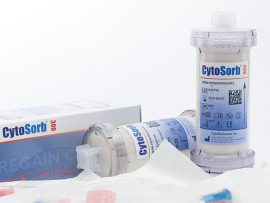
Abstract Background: The purpose of this investigation was to evaluate the impact of venoarterial extracorporeal membrane oxygenation (VA–ECMO) integrated hemoadsorption on the reversal of multiorgan and microcirculatory dysfunction, and early..
Read More
Abstract Introduction By using a novel survey our study aimed to assess the challenges ECMO and Critical Care (CC) teams face when initiating and managing patient's ECMO support. Methods A..
Read More
Abstract Objective Although (ECLS) has increasingly been used for the of patients with (CS), the outcomes of those successfully weaned from support remain poorly defined. Methods Of 510 venoarterial ECLS CS patients at..
Read More
Abstract We read with great interest the article by Zhang and colleagues : a single-center experience showing that although 48.8% of all extracorporeal membrane oxygenation (ECMO) patients are successfully decannulated..
Read More
Significant advancements in preservation techniques could liberate more hearts for transplantation. More than five decades after the first human-to-human heart transplant, over 5,000 heart transplants are performed annually worldwide. However,..
Read More
Abstract Bedside ultrasound represents a well-suited diagnostic and monitoring tool for patients on extracorporeal membrane oxygenation (ECMO) who may be too unstable for transport to other hospital areas for diagnostic..
Read More
Abstract Background Reliable predictors of outcomes in venoarterial extracorporeal membrane oxygenation (VA-ECMO) therapy are limited. While elevated lactate levels over time have been linked to outcomes in cardiogenic shock (CS),..
Read More
Abstract Venoarterial extracorporeal membrane oxygenation (VA-ECMO) shunts venous blood to the systemic arterial circulation to provide end-organ perfusion while increasing afterload that may impede left ventricle (LV) ejection and impair..
Read More
Abstract OBJECTIVES Dual-lumen cannulas for veno-venous (VV) extracorporeal membrane oxygenation (ECMO) support are typically inserted in the right internal jugular vein (RIJV), however some scenarios can make this venous route..
Read More
Abstract OBJECTIVE: To examine characteristics associated with formal ethics consultation (EC) referral in pediatric extracorporeal membrane oxygenation (ECMO) cases, and document ethical issues presented. DESIGN: Retrospective cohort study using mixed..
Read More
Abstract Purpose: Venoarterial extracorporeal membrane oxygenation (V-A ECMO) can be used to support severely ill patients with cardiogenic shock. While age is commonly used in patient selection, little is known..
Read More
Abstract Veno-arterial extracorporeal membrane oxygenation (VA-ECMO) is a powerful hemodynamic support strategy for patients with cardiogenic shock and out-of-hospital cardiac arrest (OHCA). Given that significant proportions of patients presenting with..
Read More
Abstract Continuous negative abdominal pressure (CNAP) therapy effectively provides respiratory support in patients with respiratory failure and severe obesity; however, its use in clinical practice remains limited. In this case,..
Read More
Abstract Extracorporeal Cardiopulmonary Resuscitation (ECPR) is an emerging approach to cardiac arrest. We present two contrasting cases from a high-volume extracorporeal membrane oxygenation (ECMO) center (defined as greater than 30..
Read More
Abstract Background Extracorporeal membrane oxygenation (ECMO) not only significantly improves survival rates in severely ill neonates but also is associated with long-term neurodevelopmental issues. To systematically review the available literature..
Read More
Abstract Patients requiring extracorporeal life support (ECLS) post-Norwood operation constitute an extremely high-risk group. We retrospectively described short-term outcomes, functional status, and assessed risk factors for requiring ECLS post-Norwood operation..
Read More
Abstract Background The utilization of extracorporeal life support (ECLS) for intraoperative support during lung transplantation has increased over the past decade. Although veno-arterial extracorporeal membrane oxygenation (VA-ECMO) has recently emerged..
Read More
Abstract Problem Despite advances in Venoarterial Extracorporeal Membrane Oxygenation (VA-ECMO), a significant mortality rate persists due to complications. The non-physiological blood flow dynamics of VA-ECMO may lead to neurological complications..
Read More
Abstract Septic shock, a global health concern, boasts high mortality rates. Research exploring the efficacy of venoarterial extracorporeal membrane oxygenation (VA-ECMO) in septic shock remains limited. Our study aimed to..
Read More
Abstract The use of extracorporeal membrane oxygenation (ECMO) to support patients with cardiac arrest, cardiogenic shock, and acute respiratory distress syndrome is rising worldwide.1 While ECMO may save the lives of..
Read More