


Abstract Five times of cardiac reoperations for PVE are a complex operation with significant risk. Due to the difficulty of aortic cross-clamping, mitral valve replacement (MVR) is performed under beating..
Read More
Abstract Introduction: According to different authors, cardiac surgery-associated acute kidney injury (CSA-AKI) incidence can be as high as 20–50%. This complication increases postoperative morbidity and mortality and impairs long-term kidney..
Read More
Abstract Background: The during (CPB) to improve Recovery in Infants with (NITRIC) trial, a 1320-patient, multicentre, , is aiming to improve survival free of ventilation after CPB by using nitric oxide delivered into the of the..
Read More
Abstract Cardiothoracic surgery using cardiopulmonary bypass (CPB) triggers an inflammatory state that may be difficult to differentiate from infection. Heparin-binding protein (HBP) is a candidate biomarker for sepsis. As data..
Read More
Abstract Introduction: According to different authors, cardiac surgery-associated acute kidney injury (CSA-AKI) incidence can be as high as 20–50%. This complication increases postoperative morbidity and mortality and impairs long-term kidney..
Read More
Abstract OBJECTIVES The use of cardiopulmonary bypass (CPB) in cardiac surgery is a major risk factor for postoperative bleeding. We hypothesized that consumptive coagulopathy and haemodilution influence the coagulation factors;..
Read More
Abstract Objective: This study aimed to investigate the correlation between the number of bypassed vessels, the duration of Cardiopulmonary bypass, blood transfusion requirements, revision rates, and mortality outcomes. The objective..
Read More
Abstract Cardiopulmonary bypass (CPB) provides cerebral oxygenation and blood flow (CBF) during neonatal congenital heart surgery, but the impacts of CPB on brain oxygen supply and metabolic demands are generally..
Read More
Abstract Background: This study investigated the clinical outcomes at the minimum and maximum levels of hematocrit (HCT) during cardiopulmonary bypass (CPB) in low-risk patients undergoing coronary artery bypass graft (CABG)..
Read More
Abstract Objective: Postoperative delirium (POD) is strongly associated with poor early and long-term prognosis in cardiac surgery patients with cardiopulmonary bypass (CPB). This study aimed to develop dynamic prediction models for..
Read More
Abstract BACKGROUND: Arterial hyperoxemia may cause end-organ damage secondary to the increased formation of free oxygen radicals. The clinical evidence on postoperative lung toxicity from arterial hyperoxemia during cardiopulmonary bypass..
Read More
Abstract Introduction Individualized heparin and protamine management is increasingly used as a strategy to reduce coagulation activation and bleeding complications. While it is associated with increased heparin requirements during Cardiopulmonary..
Read More
Abstract The venous system constitutes a vital component of the human circulatory system, facilitating the return of deoxygenated blood from tissues and organs back to the heart. During cardiac surgeries..
Read More
Abstract Background. Pulmonary hypertension (PH) is a common complication of congenital heart disease (CHD). With early surgical intervention, outcomes have improved over the last two decades. Persistent PH, however, may..
Read More
Abstract Background Heparin resistance is a common complication of surgical patients requiring anticoagulation, such as those undergoing cardiopulmonary bypass (CPB). Treatments to address heparin resistance include supplementation of antithrombin (AT)..
Read More
Abstract Purpose: This study aimed to evaluate the relationship between intra-abdominal pressure (IAP), renal perfusion indices, and postoperative acute kidney injury (AKI) in cardiac patients. Methods: In a prospective cohort..
Read More
Abstract Background Neurologic impairments are a significant concern for survivors after cardiac surgery with (CPB). We have previously shown that mesenchymal stromal cell (MSC) delivery through CPB has the potential to mitigate the effects..
Read More
Abstract Background: Cardiopulmonary bypass (CPB) techniques are becoming minimally invasive in clinical practice. The literature describes various extracorporeal techniques which seek to eliminate air-blood contact and reduce both hemodilution and the..
Read More
Abstract Patients undergoing coronary revascularization with extracorporeal circulation or cardiopulmonary bypass (CPB) may develop several biochemical changes in the microcirculation that lead to a systemic inflammatory response. Surgical incision, post-CPB..
Read More
Abstract Objective. To evaluate the effect of NO added to the sweep gas of the oxygenator during cardiopulmonary bypass (CPB) on the liver and kidneys in pigs. Methods. An experiment..
Read More
Abstract Hemolysis is a complication of cardiopulmonary bypass (CPB). Carboxyhemoglobin (COHb) and methemoglobin (MetHb) were suggested as potential hemolysis biomarkers. This retrospective study was based on a prospective registry aimed..
Read More
Abstract Objective We designed a simplified total arch reconstruction (s-TAR) technique which could be performed under mild hypothermia (30–32 °C) with distal aortic perfusion. This study aimed to compare its efficacy..
Read More
Abstract Background The use of cardiopulmonary bypass (CPB) is almost inevitable in cardiac surgery. However, it can cause complications, including hemolysis. Until now, there have not been any standards for..
Read More
Abstract The 2 hypnotic agents currently used for the maintenance of general anesthesia during cardiopulmonary bypass (CPB) are propofol and sevoflurane. Propofol can be administered directly into the cardiotome of..
Read More
Abstract Background Impairment of cerebral autoregulation (CA) has been observed in patients undergoing cardiopulmonary bypass (CPB), but little is known about its risks and associations with outcomes. The cerebral oximetry..
Read More
Abstract Background Few studies have considered outcomes among low body mass index (BMI) cohorts undergoing coronary artery bypass grafting (CABG). This study aims to investigate the effects of low body..
Read More
Abstract Objectives Colloids are added to the priming solution of the cardiopulmonary bypass (CPB) pump to maintain colloid osmotic pressure and prevent fluid overload. This study aimed to compare the..
Read More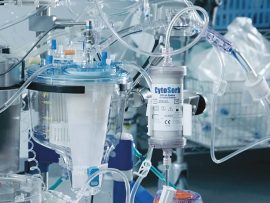
Abstract Introduction: Cardiopulmonary bypass (CPB) is a vital component of many cardiac surgeries, but it can trigger systemic inflammatory responses, leading to post-operative complications. The CytoSorb filter, a cytokine adsorber, has..
Read More
Abstract Background Heparin rebound is a common observed phenomenon after cardiac surgery with CPB and is associated with increased postoperative blood loss. However, the administration of extra protamine may lead..
Read More
Abstract Although surgical techniques and perioperative care have made significant advances, perioperative mortality in cardiac surgery remains relatively high. Single- or multiple-organ failure remains the leading cause of postoperative mortality...
Read More