


Abstract Hypoxemic arrests due to severe traumatic pulmonary injury may not respond to usual medical support. Extracorporeal life support (ECLS) can be life-saving; adequate flows are needed in this setting..
Read More
Abstract Purpose. Cardiac surgery is characterized by a high risk of complications related to perioperative bleeding. Guidelines suggest the use of local algorithms based on perioperative point-of-care tests to assess and..
Read More
Abstract Pediatric patients, especially neonates and infants, undergoing cardiac surgery, are at particularly high risk for developing surgical bleeding. After separation from cardiopulmonary bypass (CPB), excessive bleeding in children frequently..
Read More
Abstract Viscoelastic hemostatic assay (VHAs) are whole blood point-of-care tests that have become an essential method for assaying hemostatic competence in liver transplantation, cardiac surgery, and most recently, trauma surgery..
Read More
Abstract Objectives Calcium and magnesium are concentration-dependent pro- and anticoagulant cofactors, and magnesium behaves similarly to calcium in the presence of citrate. The authors hypothesized that magnesium can cause clot..
Read More
Abstract BACKGROUND: Coronavirus disease 2019 (COVID-19) has a tremendous impact on the respiratory tract. In severe COVID-19 infections, patients may experience shock and multiple organ failure. We described 4 cases of..
Read More
Abstract Background The purpose of this study was to develop a swine model of surgically induced blood loss to evaluate the performances of a new autotransfusion system allowing red blood..
Read More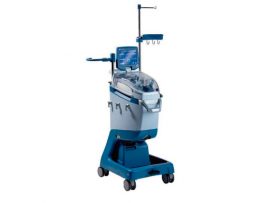
Abstract Objective Cell salvage (CS) reduces intraoperative . However, it may cause deformity of the red blood cells and loss of , which may lead to unwanted . Thus, we hypothesized that extensive..
Read More
Abstract Major blood loss remains common in cardiac surgery with an incidence of up to 15%. Bleeding leads to anemia and blood product transfusion, and can lead to the need..
Read More
Abstract The objective of this study was to determine whether treatment with human fibrinogen concentrate decreases the need for component blood therapy and blood loss in neonate and infant patients..
Read More
WHAT YOU WILL LEARN A cardiovascular perfusionist is an essential member of the cardiac surgical team who specializes in operating extracorporeal circulation equipment to support the patient during an open-heart..
Read More
Abstract The Impella CP (Abiomed Inc., Danvers, MA) is widely used in cardiac catheterization laboratories for patients presenting with cardiogenic shock, but it is also known to cause significant hemolysis. The risk..
Read More
Abstract Background: We aimed to evaluate the effect of third-generation hydroxyethyl starch (6% HES 130/0.4) on hemostasis and perioperative blood loss in patients undergoing off-pump coronary artery bypass (OPCAB) with..
Read More
Abstract Extracorporeal membrane oxygenation (ECMO) requires anticoagulation to prevent clotting when the patient’s blood contacts the circuit. Unfractionated heparin (UFH) usually prevents clotting but can cause life-threatening bleeding. An anticoagulant..
Read More
Abstract Introduction The activated clotting time (ACT) is a useful marker of unfractionated heparin (UFH) activity during cardiopulmonary bypass (CPB) or cardiac catheterization. Emicizumab, recently approved for bleeding prevention in..
Read More
Abstract Bleeding during cardiac surgery, liver transplant, trauma and post partum hemorrhage are often multifactorial and these factors are dynamic as new factors crop up during the course of management...
Read More
Abstract We have read with interest the report of ELSO-registry data published by Nunez and coworkers in Intensive Care Medicine analyzing risk factors for bleeding and thrombotic events (BTE) on..
Read More
Abstract Background Severe acute respiratory syndrome coronavirus 2 (SARS-Cov-2)-induced infection, the cause of coronavirus disease 2019 (COVID-19), is characterized by acute clinical pathologies, including various coagulopathies that may be accompanied..
Read More
Abstract Extracorporeal carbon dioxide removal (ECCO2R) has gained widespread use as a supposedly less invasive alternative for hypercapnic respiratory failure besides venovenous extracorporeal membrane oxygenation (VV ECMO). Despite technological advances,..
Read More
Abstract Introduction (ECMO) can be life-saving, but suffers from in the circuit with associated risks of occlusion, and . The formation of thrombin is the key step to thrombus formation and two factors are..
Read More
Abstract Known limitations of unfractionated heparin (UFH) have encouraged the evaluation of anticoagulant aptamers as alternatives to UFH in highly procoagulant settings such as cardiopulmonary bypass (CPB). Despite progress, these..
Read More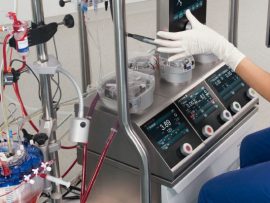
Blood Protection Method: Retrograde Autologous Prime In order to carry out open heart surgery, the functions of the heart and lungs must be stopped and the blood inside the..
Read More
Abstract Objectives The (COVID-19) pandemic has been associated with cases of refractory (ARDS) sometimes requiring support with (ECMO). can be used for in patients on ECMO support, but its efficacy and safety in patients with..
Read More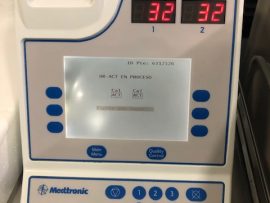
Abstract Objective Bleeding and thrombosis are common complications during Extracorporeal Membrane Oxygenation (ECMO) support for COVID-19 patients. We sought to examine the relationship between inflammatory status, coagulation effects, and observed..
Read More
Abstract Background Patients with (COVID-19)-related (ARDS) increasingly receive (ECMO) support. While ECMO has been shown to increase risk of stroke, few studies have examined this association in COVID-19 patients. Objective We conducted a..
Read More
Abstract The dramatic increase in the use of extracorporeal membrane oxygenation (ECMO) over the last decade with the concomitant need for ECMO competent perfusionists has raised questions of how well..
Read More
Abstract Cardiac surgery-associated acute kidney injury and brain injury remain common despite ongoing efforts to improve both the equipment and procedures deployed during cardiopulmonary bypass (CPB). The pathophysiology of injury..
Read More
Abstract Extracorporeal membrane oxygenation (ECMO) is a therapy used in severe cardiopulmonary failure. Blood is pumped through an artificial circuit exposing it to nonphysiologic conditions, which promote platelet activation and..
Read More
Abstract Anticoagulation is necessary for most pediatric and adult extracorporeal membrane oxygenation (ECMO) patients to prevent circuit clotting. Inherently, the most common side effect of anticoagulation is bleeding. Anticoagulation during..
Read More
Always check the apex, even if you don't see any regional wall motion abnormalities! This was an LV apical thrombus resolved after anticoagulation. LV thrombus can occur within 24 h after..
Read More