


Abstract Pediatric Literature As the practice of ultrafiltration arose from pediatric cardiac surgery, much of the evidence to support MUF is from low-powered pediatric studies. Some early, single-center literature, as..
Read More
Abstract Hemodilution and Volume Overload The use of CPB necessitates priming of the CPB circuit, which is typically accomplished using 1-to-2 liters of a crystalloid solution. In addition, 1-to-3 liters..
Read More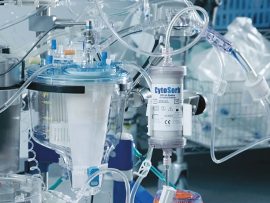
Abstract Background The purpose of this study was to analyze the results of Cytosorb (CytoSorbents, Monmouth Junction, NJ) adsorption during emergency open heart operations in patients at high risk of..
Read More
Abstract Objective There is limited evidence on standardized protocols for optimal neurological monitoring methods receiving (ECMO). We previously introduced protocolized noninvasive multimodal neuromonitoring using serial , electroencephalography, ultrasound, and . The purpose of this study..
Read More
Abstract Background We used sodium citrate as an alternative anticoagulation agent to heparin in the procedure of autologous blood transfusion with patients with postoperative haemorrhage after CPB. The aim of..
Read More
Abstract Background Heparin-induced thrombocytopenia (HIT) is a common differential diagnosis in cardiothoracic surgery. The latex immunoturbidimetric assay (LIA) is an enhanced immunoassay that has recently been introduced for the detection..
Read More
Abstract Background Fibrinogen γ-chain peptide-coated, adenosine 5'-diphosphate (ADP)-encapsulated liposomes (H12-ADP-liposomes) are potent hemostatic adjuvants that promote platelet thrombi formation at bleeding sites. Although we have reported the efficacy of these..
Read More
Abstract Because of its rapid onset and offset of action, and its ability to be fully and rapidly reversed with protamine when anticoagulation control is needed, unfractionated heparin (UFH) remains..
Read More
Abstract Hemorrhage remains a major complication of anticoagulants, with bleeding leading to serious and even life-threatening outcomes in rare settings. Currently available anticoagulants target either multiple coagulation factors or specifically..
Read More
Abstract Background Cell salvage reduces allogenic blood transfusion requirements in surgery. We present a pilot study exploring the impact of anticoagulant choice, citrate or heparin, on the quality of cell..
Read More
Abstract Background Anticoagulation is critical in patients supported on extracorporeal membrane oxygenation (ECMO). The appropriate monitoring strategies for heparin remain unclear. Objectives This systematic review aimed to compare the accuracy..
Read More
Abstract A neonate with pulmonary hypertension was supported with extracorporeal membrane oxygenation (ECMO). During ECMO support, the patient developed Enterococcus faecalis bacteremia, treated with targeted antibiotics. Despite the maximum dose of antibiotics, routine blood..
Read More
Abstract Bleeding is a leading cause of perioperative mortality []. In a perioperative setting, damage control surgery with massive transfusion protocols (MTPs) are therapeutic approaches used clinically to manage patients..
Read More
Abstract Artificial lung membrane as extracorporeal blood-gas barriers could execute similar functions as human alveoli, whereby accomplish blood gas exchange process, providing imperative life support for patients with cardiopulmonary failure...
Read More
Abstract Many young adults require heart valve replacements. Current options for valve replacement in adults include mechanical valves, bioprosthetic valves, or the Ross procedure. Of these, mechanical and bioprosthetic valves..
Read More
Abstract Objective No recent prospective studies have analyzed the accuracy of standard coagulation tests and thromboelastography (TEG) to identify patients with excessive microvascular bleeding following cardiopulmonary bypass (CPB). The aim..
Read More
Abstract Inherited and acquired coagulopathy are frequently associated with major bleeding in severe trauma, cardiac surgery with cardiopulmonary bypass, and postpartum hemorrhage. Perioperative management is multifactorial and includes preoperative optimization..
Read More
Abstract The aim of this experimantal study which is applied on rats, is to determine the differences on the clotting factors over the application of low and high intraabdominal pressure..
Read More
Abstract BACKGROUND: Postoperative use of platelet function testing to rule out microvascular bleeding due to platelet dysfunction after cardiac surgery still lacks strong reference data and reliable cutoff values, yielding..
Read More
Abstract The common conception of “heparin rebound” invokes heparin returning to circulation in the after apparently adequate intraoperative reversal with . This is believed to portend increased and provides the rationale for administering..
Read More
Abstract Viscoelastic coagulation tests have been increasingly used for hemostasis management in cardiac surgery. The ClotPro system is a novel viscoelastic device based on principles of rotational thromboelastometry. We aimed..
Read More
Abstract BACKGROUND Unbalanced fluid solutions cause metabolic acidosis and could be associated with impaired coagulation and increased blood loss. OBJECTIVE To investigate whether the use of a balanced colloid compared..
Read More
Abstract Extracorporeal membrane is a technique that provides short-term supports to the heart and lungs. It removes CO2 from the blood and provides enough oxygen, which is a huge help in the..
Read More
Abstract The temporal trends in haematological parameters and their associations with blood product transfusion requirements in patients supported with extracorporeal membrane oxygenation (ECMO) are poorly understood. We performed a retrospective..
Read More
Abstract Background Despite systemic anticoagulation and antithrombotic surface coating, oxygenator dysfunction remains one of most common technical complications of Extracorporeal membrane oxygenation (ECMO). Several parameters have been associated with an..
Read More
Abstract Surgical pulmonary embolectomy is a procedure that is often used to rescue patients with massive pulmonary embolism (PE) and circulatory collapse that have failed or may not be ideal..
Read More
Abstract Objectives In our center, an unusual rate of patients had abnormalities of hemostasis in immediate postoperative period of cardiac surgery. Our objectives were to identify the cause of these..
Read More
Abstract Background The management of the oxygenator can be prolonged in the long-term procedures especially during extracorporeal membrane oxygenation (ECMO) for bridge to transplant or bridge to recovery. Long-term use..
Read More
Abstract The use of extracorporeal membrane oxygenation (ECMO) circuit obligates the administration of systemic anticoagulation to avoid patient and circuit thrombosis. Identifying an optimal approach for achievement of target pharmacologic..
Read More
Abstract Purpose Anemia and red cell transfusion contribute to morbidity and mortality of surgery. The concept of patient blood management to mitigate preoperative anemia, optimize coagulation, conserve red cells intraoperatively..
Read More