


Congenital (MS) results from a variety of anatomic anomalies in the pediatric population, and it is commonly associated with parachute (PMV),, an abnormality in which the mitral valve (MV) chordae insert into a..
Read More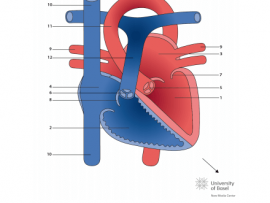
In levocardia, the heart is predominantly in the left hemithorax with a leftward apex. In , the heart is predominantly in the right hemithorax. Primary dextrocardia is defined as a condition in..
Read More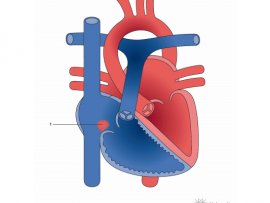
Inferior sinus venosus defects (SVDs) are rare imperfections located in the inferior portion of the atrial septum, leading to an overriding inferior vena cava (IVC) and an interatrial connection. These..
Read More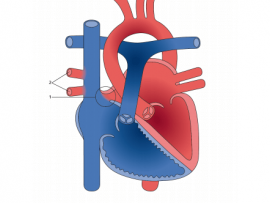
Partial anomalous venous connection (PAPVC) is a rare congenital heart disease where the blood flow from one or more pulmonary veins (but not all) returns to the right atrium or systemic venous circulation and is..
Read More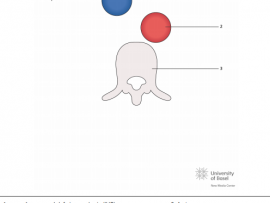
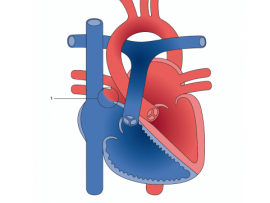
Surgical repair of sinus venosus defect (SVD) with partial anomalous pulmonary venous connection (PAPVC) to the superior vena cava (SVC) or the right atrium (RA) should avoid long term complications..
Read More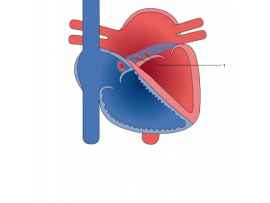
Sinus venosus defects (SVDs), originally described in 1858, represent about 2%–10% of all atrial septal defects. The remainder is composed of ostium secundum (70%), ostium primum (20%) and unroofed coronary sinus (<1%)..
Read More
The unroofed coronary sinus is a spectrum of cardiac anomalies in which part or all of the common wall between the coronary sinus and the left atrium is absent. Most..
Read More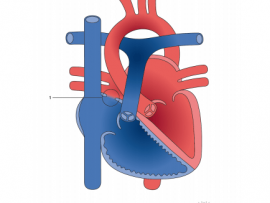
What is it? A "hole" in the wall that separates the top two chambers of the heart. This defect allows oxygen-rich blood to leak into the oxygen-poor blood chambers in..
Read More
Educational video. Axillary approach has many advantages in congenital heart surgery - cosmetical, physical, psychological benefits for children.
Read More
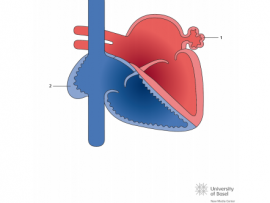
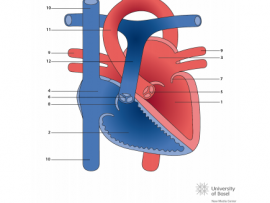
Visceroatrial situs refers to the position and configuration of the cardiac atria, the tracheobronchial tree, and the thoracoabdominal viscera. Accurate determination of situs is essential because anomalies of situs are..
Read More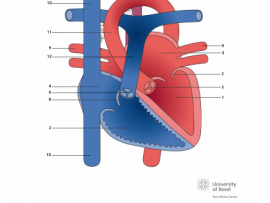
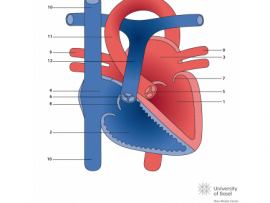
Congenital absence of pulmonary valve syndrome (APV) represents a fascinating and unique variant of congenital heart disease. It was Chever in 1847 who first described this unique structural heart defect...
Read More