


Abstract Background: Congenital heart surgeries are associated with post-bypass renal and cardiac dysfunctions. The use of low-dose vasopressin has been found to be beneficial in adult cardiac surgeries. Objective: To..
Read More
Abstract Study Design. A retrospective, propensity-matched observational study. Objective. To assess the impact of cell saver (CS) homologous transfusion on perioperative medical complications in adult patients undergoing spinal deformity surgery...
Read More
Abstract Objectives Perioperative transfusion thresholds have garnered increasing scrutiny as restrictive strategies have been shown to be noninferior. The study authors used data from a statewide academic collaborative to test..
Read More
Abstract Background A multidisciplinary Quality Assurance/Performance Improvement study to identify the incidence of “heparin rebound” in our adult cardiac surgical population instead detected a thromboelastometry pattern suggestive of initial protamine..
Read More
Abstract Background: Patient blood management (PBM) is a multidisciplinary and patient-centered treatment approach, comprising the detection and treatment of anemia, the minimization of blood loss, and the rational use of allogeneic..
Read More
Abstract Background Evidence-based recommendations for transfusion in patients with venoarterial extracorporeal membrane oxygenation (VA ECMO) are scarce. The current literature is limited to single-center studies with small sample sizes, therefore..
Read More
Abstract Objective Despite inherent comorbidities, obese cardiac surgical patients paradoxically had shown lower morbidity and mortality, although the nature of this association is still unclear. Thus, the authors intended in..
Read More
Abstract Objectives Viscoelastic assays, such as rotational (ROTEM), are used increasingly in cardiac surgery to guide transfusion decisions. After separation from (CPB), achieving rapidly is the main goal before chest closure. The authors hypothesized..
Read More
Abstract OBJECTIVES: This narrative review article seeks to highlight the effects of citrate on physiology during massive transfusion of the bleeding patient. DATA SOURCES: A limited library of curated articles..
Read More
Abstract ABO blood group has been shown to be a major determinant of plasma von Willebrand factor (vWF) levels. O blood group is associated with the lowest vWF levels and..
Read More
Abstract Aim: In current practice, fast-track protocols are gaining importance in patients undergoing cardiac surgery. For this purpose, besides different application techniques, biomarkers are frequently examined in the peri-operative period...
Read More
Abstract Background Bleeding and thrombosis induce major morbidity and mortality in patients under extracorporeal membrane oxygenator (ECMO). Circuit changes can be performed for oxygenation membrane thrombosis but are not recommended..
Read More
Abstract Cold agglutinin disease is a type of autoimmune haemolytic anaemia caused by autoantibodies that bind to red blood cell antigens at a cold temperature and causes extravascular haemolysis and..
Read More
Abstract Background Thrombocytopenia, hemorrhage and platelet transfusion are common in patients supportedwith venoarterial extracorporeal membrane oxygenation (VA ECMO). However, current literature is limited to smallsingle‑center experiences with high degrees of..
Read More
Abstract Artificial intelligence has the potential to improve the care that is given to patients; however, the predictive models created are only as good as the base data used in..
Read More
Abstract Introduction Cardiac output (CO) is a key determinant of oxygen delivery. Low cardiac output syndrome (LCOS) causes organ dysfunction, prolonged hospital stay, and reduces survival in perioperative settings and..
Read More
Abstract Aim Aim of this study was to describe and analyse associations of incidents and their improvement actions in hospital setting. Methods It was a retrospective document analysis of incident reporting systems’..
Read More
Abstract With the implementation of the new allocation system in the United States on October 18, 2018, patients requiring temporary mechanical circulatory support (tMCS) have the highest priority, a shorter..
Read More
Abstract Background: The use of autologous blood transfusion in digestive tract surgeries, whether after preoperative blood collection or intraoperative blood salvage, is an alternative to allogeneic blood, which brings with..
Read More
Abstract Objective There are no reports from Japan showing the effects of using the thromboelastography algorithm on transfusion requirements after Intensive Care Unit (ICU) admission, and post-implementation knowledge regarding the..
Read More
Abstract Sickle cell disease (SCD) is a collection of inherited hemoglobin disorders that results in chronic hemolytic anemia, vaso-occlusion, pain, and end organ damage. Surgery in the SCD population requires..
Read More
Abstract Objective This study aimed to investigate the blood protective effect of autologous platelet-rich plasma in aortic root reconstruction under longtime cardiopulmonary bypass. Method Patients who underwent aortic root reconstruction..
Read More
Abstract Cardiopulmonary bypass is an integral and indispensable part of surgical repair of congenital heart defects. While the complications and morbidity secondary to the use of cardiopulmonary bypass has decreased..
Read More
Abstract Objectives Viscoelastic tests allow a reduction in blood product transfusion. Three modern devices are currently available (rotational [ROTEM] sigma, [TEG] 6S, and Quantra). No study has compared the performances of these..
Read More
Abstract Pediatric Literature As the practice of ultrafiltration arose from pediatric cardiac surgery, much of the evidence to support MUF is from low-powered pediatric studies. Some early, single-center literature, as..
Read More
Abstract Hemodilution and Volume Overload The use of CPB necessitates priming of the CPB circuit, which is typically accomplished using 1-to-2 liters of a crystalloid solution. In addition, 1-to-3 liters..
Read More
Abstract Introduction Despite the increasing amount of evidence supporting its use, cell salvage (CS) remains an underutilized resource in operative trauma care in many hospitals. We aim to evaluate the..
Read More
Abstract Hemotherapy is the treatment of diseases by the use of blood or blood products from blood donation (by others of for oneself). It is clear that blood components transfusion..
Read More
Abstract Background This study aimed to assess contemporary knowledge, attitudes and behaviors around transfusion of intraoperative salvaged blood (sRBCt) during hepato-pancreatico-biliary (HPB) operations. Findings are meant to inform the design..
Read More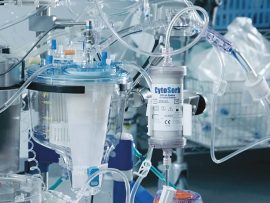
Abstract Background The purpose of this study was to analyze the results of Cytosorb (CytoSorbents, Monmouth Junction, NJ) adsorption during emergency open heart operations in patients at high risk of..
Read More