


Abstract We would like to express our gratitude to Aravind Bommiasamy and his coauthors for their detailed analysis on the physiological impacts of cardiac output (CO) on oxygen supply in..
Read More
Abstract Proteins on the surfaces of cells serve as physical connection points to bridge one cell with another, enabling direct communication between cells and cohesive structure. As biomedical research makes..
Read More
Abstract Background Cerebral microbleeds (CMBs) are common and varied in patients receiving extracorporeal membrane oxygenation (ECMO). Here, the authors describe CMB findings in patients receiving ECMO and their association with..
Read More
Abstract Introduction Hospital-based transfusion involves hundreds of daily medical decisions. Medical decision-making under uncertainty is susceptible to cognitive biases which can lead to systematic errors of reasoning and suboptimal patient..
Read More
Abstract Protamine sulfate is a standard agent used to reverse heparin anticoagulation during cardiovascular procedures such as coronary artery bypass grafting (CABG). Although rare, it can be associated with severe..
Read More
Abstract The therapeutic target of extracorporeal carbon dioxide removal (ECCO2R) is the elimination of carbon dioxide (CO2) from the blood across a gas exchange membrane without influencing oxygenation to a clinically relevant..
Read More
Abstract Background In an effort to enhance recovery after cardiac surgery, intraoperative extubation has been targeted as possibly beneficial. This multi-center cohort study aimed to assess this by evaluating the outcomes..
Read More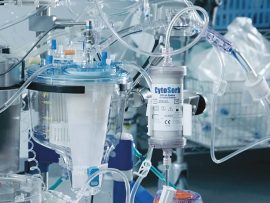
Giant Pheochromocytoma Resection Using Partial Cardiopulmonary Bypass and Blood Purification Therapy
Abstract A 44-year-old man was diagnosed with a giant pheochromocytoma in the right retroperitoneal cavity following treatment for heart failure. Subsequent to improvement in cardiac function, the patient underwent a..
Read More
Abstract Cardiopulmonary bypass (CPB) is essential for the conduct of open-heart procedures. While lifesaving, CPB can be associated with significant end-organ injuries believed to result from inflammatory responses triggered by..
Read More
Abstract Background: Magnesium administration is a common practice in cardiovascular surgeries utilizing cardiopulmonary bypass (CPB). However, concerns persist regarding the risk of hypermagnesemia, particularly in patients with kidney dysfunction. This..
Read More
Abstract Background This study was to analyze the roles of red blood cell distribution width (RDW), anion gap (AG) levels and their combined effects on the risk of acute kidney..
Read More
Abstract Established clinical monitoring techniques lack predictive capabilities, emphasizing the need for refinement in MO monitoring towards an early warning system. In this study, an MO was modified by integrating..
Read More
Abstract Background The impact of air bubbles into the cerebral circulation after open heart surgery has been a topic of discussion since the introduction of the heart-lung machine. The aim..
Read More
Abstract Objectives To summarize the evidence of the hemodynamic effects and vasopressor requirements of adult cardiac surgery patients with vasoplegic shock treated with hydroxocobalamin or methylene blue. Design Systematic review..
Read More
Abstract Objective Extracorporeal membrane oxygenation (ECMO) requires systemic anticoagulation to reduce the risk of thromboembolic events. Despite its historic role, activated clotting time (ACT) remains a widely used heparin monitoring..
Read More
Abstract Extracorporeal cardiopulmonary resuscitation (ECPR) is an advanced technique using extracorporeal membrane oxygenation (ECMO) to support patients with refractory cardiac arrest. Age significantly influences ECPR outcomes, with younger patients generally..
Read More
Abstract Introduction: Mannitol, an osmotic diuretic solution, is commonly utilized in priming cardiopulmonary bypass (CPB) and can impact kidney function. This study was conducted to investigate the impact of mannitol use..
Read More
Abstract Background Prophylactic corticosteroids have been widely used to mitigate the inflammatory response induced by cardiopulmonary bypass (CPB). However, the impact of this treatment on clinically important outcomes in infants..
Read More
Abstract The effect of nitric oxide (NO) supplied to the sweep gas of the oxygenator on the formation of gaseous microemboli during cardiopulmonary bypass has been studied in animal experiments..
Read More
Abstract Since its introduction, the number of heart surgeries has risen continuously. It is a high-risk procedure, usually involving cardiopulmonary bypass, which is associated with an inflammatory reaction that can..
Read More
Abstract Objective: Impella 5.5 (Abiomed, Danvers, MA, USA) is a temporary mechanical circulatory support device used for patients in cardiogenic shock. This review provides a comprehensive overview of the device’s..
Read More
Abstract The human immune system is composed of a distributed network of cells circulating throughout the body, which must dynamically form physical associations and communicate using interactions between their cell-surface..
Read More
Abstract The safe use of cardiopulmonary bypass (CPB) relies upon the ability to administer, monitor, and reverse anticoagulation. Although rare, the factor XII deficient patient creates a challenge for the..
Read More
Abstract Background We report a pediatric case where bilateral regional oxygen saturation (rSO2) measurements were useful in determining the selective cerebral perfusion (SCP) flow rate. Case presentation A 9-year-old Japanese..
Read More
Abstract Objective may influence candidacy for venovenous (VVECMO) support. Indeed, (BMI) >40 is considered to be a relative contraindication due to increased mortality observed in patients with BMI above this value. There..
Read More
Abstract Background Postoperative bleeding is associated with significant resource use and is an important contributor to other major adverse events in pediatric patients undergoing complex cardiac surgical procedures. Thromboelastography (TEG;..
Read More
Abstract Background: The incidence of hyperlactatemia due to hypoperfusion during cardiopulmonary bypass (CPB) increases morbidity. Carbon dioxide production during CPB is one of the lactate production markers, in addition to..
Read More
Abstract Background Thoracoabdominal normothermic (TA-NRP) has emerged as a powerful technique for optimizing from donation after circulatory death donors. Despite its rapid adoption, standardized guidelines for TA-NRP implementation are lacking, prompting the..
Read More
Abstract Background: This study aims to assess the outcomes and complications of patients who received veno-arterial extracorporeal membrane oxygenation (VA-ECMO) and intra-aortic balloon pump (IABP) support after cardiac surgery at..
Read More