
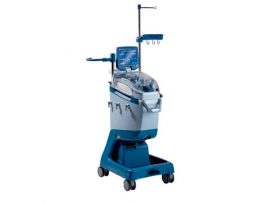

Abstract Intraoperative cell salvage (ICS) is a blood conservation technique utilized in major surgery, yet its application in oncologic procedures remains debated. Concerns persist about the theoretical risk of metastasis..
Read More
Abstract Thrombosis in extracorporeal membrane oxygenation (ECMO) circuit components remains a challenge. Besides blood state and surface properties, flow plays a critical role in hemostasis. In this work, we aimed..
Read More
Abstract There are limited data on the use of extracorporeal membrane oxygenation (ECMO) in high-risk pulmonary embolism (PE) patients. We analyzed the use of ECMO in high-risk PE patients (defined..
Read More
Abstract Abstract Objectives: To investigate whether severe hyperoxia predisposes to end-organ complications and whether these complications contribute to in-hospital mortality among cardiogenic shock (CS) patients supported in veno-arterial extracorporeal membrane..
Read More
Abstract Cardiogenic shock (CS) is a state of critical end-organ hypoperfusion caused by primary cardiac failure, in which the heart cannot generate sufficient output despite adequate preload and is associated..
Read More
Abstract Rigorous research in cardiovascular physiology and medicine has led to critical advancements in preventing, diagnosing, and treating cardiovascular disease; however, striking disparities persist in cardiovascular disease prevention, diagnosis, and..
Read More
Abstract Background Children undergoing cardiopulmonary bypass (CPB) surgery are vulnerable to bleeding and often require transfusions. Pathogen-reduced (PR) platelets may reduce microbial contamination but are associated with decreased platelet count..
Read More
Abstract Background Effective securement of extracorporeal membrane oxygenation (ECMO) cannulae, both at the insertion site and along the length of circuit tubing, may reduce the risk of cannula migration, dislodgement,..
Read More
Abstract Veno-arterial extracorporeal membrane oxygenation (V‑A ECMO) is a critical care therapy for patients with severe cardiorespiratory failure, and it is associated with high in‑hospital mortality rates. Causes are the..
Read More
Venoarterial extracorporeal membrane oxygenation (VA ECMO) provides temporary mechanical circulatory support for patients in refractory cardiogenic shock. Initiation of VA ECMO often results in increased left ventricular (LV) afterload as..
Read More
Abstract Background: To investigate the factors that influence blood transfusions after neonatal cardiac surgery and their association with prolonged mechanical ventilation (PMV) to provide a basis for optimizing blood transfusion..
Read More
Abstract Studies into the mechanisms of cardiopulmonary bypass-associated acute lung injury have not presented breakthroughs for many years, resulting in the stagnation of management strategies and clinical medicine measures. This..
Read More
Abstract Postoperative organ dysfunction remains a major challenge in adult cardiac surgery with cardiopulmonary bypass (CPB), frequently involving the kidneys, heart, and lungs. These complications are primarily driven by hemolysis,..
Read More
Abstract Background Veno-arterial extracorporeal membrane oxygenation (VA-ECMO) use for cardiogenic shock (CS) is increasing worldwide despite conflicting results from randomized trials, which focused on myocardial-infarction related CS (MI-CS). Methods We..
Read More
Abstract The emergence of large language models (LLMs) opens new horizons to leverage, often unused, information in clinical text. Our study aims to capitalise on this new potential. Specifically, we..
Read More
Abstract Background Cardioplegic arrest can be induced by various methods, fueling a long-standing controversy about their comparative merit. We aim to compare cardioplegic methods in coronary artery disease. Methods PubMed,..
Read More
Abstract Normothermic regional perfusion (NRP) is a strategy of postmortem reperfusion with warm oxygenated blood of a portion of the body applied in donors undergoing circulatory determination of death (DCDDs)...
Read More
Abstract Perioperative impairment of glycaemic control significantly increases the risk of major postoperative complications. The use of continuous glucose monitoring (CGM) has demonstrated benefits in glycaemic control, but its use..
Read More
Abstract The common carotid artery (CCA) is an easily accessible means of providing cerebral and systemic perfusion during complex aortic surgery. Our technique for using CCA perfusion through a graft..
Read More
Abstract Background The optimal low‐flow duration (LFD) for extracorporeal cardiopulmonary resuscitation (ECPR) and conventional cardiopulmonary resuscitation (CCPR) remains unclear. We evaluated the impact of LFD on neurological outcomes based on..
Read More
Abstract Objectives Our aim was to assess the association between mixed venous oxygen saturation (SvO2) and cardiac index (CI) among cardiac surgical patients during the initial 4 hours in the..
Read More
Abstract Background Acute kidney injury (AKI) is a frequent and severe complication following cardiac surgery, particularly in patients with impaired kidney function. The existing Kidney Disease: Improving Global Outcomes (KDIGO)..
Read More
Abstract Objectives To identify independent predictors of 30-day mortality, adverse discharge, and length of hospital stay following a perioperative stroke among cardiac surgical patients, and to measure trends in outcomes..
Read More
Abstract Introduction Cardiac surgery remains a high-risk procedure for bleeding despite advances in patient blood management. Conventional centrifugation-based autotransfusion devices primarily recover red blood cells, losing platelets and coagulation factors. The..
Read More
Abstract Mesenteric ischemia (Me-Is) is a severe complication with high mortality after cardiac surgery. We examined whether intestinal fatty acid binding protein (I-FABP) might serve as a biomarker for early..
Read More
Abstract Objective: To identify risk factors for bleeding and thrombotic complications during extracorporeal membrane oxygenation (ECMO) support in adults and to develop a predictive model based on these factors...
Read More
Abstract We read with great interest the article by Kowara et al.,[] which highlights the potential of PvCO2 × Ve/Q as a key predictive marker for hyperlactatemia during cardiopulmonary bypass (CPB). This..
Read More
Abstract Background Despite advancements in surgical techniques and intensive care management, the incidence of prolonged mechanical ventilation (PMV) following cardiac surgery remains a significant concern. Objectives Investigate the relationship between..
Read More
Abstract Cerebral embolic protection (CEP) devices may be a tool to mitigate the perioperative stroke risk in cardiac surgery. However, studies are limited. The aim of this study was to..
Read More
Abstract Many of the pivotal early achievements in cardiac surgery were possible because of research using canine models. Specific advances attributed to canine experiments include the use of hypothermia, cardiopulmonary..
Read More