


Abstract The overwhelming success of cardiac surgery is closely related to the development and use of extracorporeal perfusion. After the first successful treatment of a stab wound to the heart..
Read More
Abstract Background: From 1990-2005 at Ochsner Medical Center in New Orleans, LA, cardiopulmonary bypass (CPB) was used only when necessary during lung transplantation surgeries. Ochsner's lung transplant program was closed..
Read More
Spinal cord protection during thoracoabdominal aortic replacement: spinal cord perfusion maintenance
Abstract OBJECTIVES: Spinal cord protection during thoracoabdominal aortic surgery is challenging for surgeons. We performed thoracoabdominal replacement using a strategy for maintaining spinal cord perfusion pressure. Here, we report our..
Read More
Abstract Background: Cardiopulmonary bypass (CPB) is necessary for most cardiac surgery, which may lead to postoperative lung injury. The objective of this paper is to systematically evaluate whether ventilation during..
Read More
Abstract Perioperative anemia is an important risk factor for cardiac surgery-associated acute kidney injury (CSA-AKI). Nonetheless, the severity of the anemia and the time in the perioperative period in which..
Read More
Abstract AIM To evaluate the safety and efficacy of inhaled milrinone in acute respiratory distress syndrome (ARDS). METHODS Open-label prospective cross-over pilot study where fifteen adult patients with hypoxemic failure..
Read More
Abstract In science, a research paper is often the final result of a process of hard work, perseverance, skills, and good ideas. Accurate communication of new research findings in the..
Read More
Abstract Background Multiple randomized controlled trials of remote ischemic preconditioning (RIPC) prior to cardiac surgery have failed to demonstrate clinical benefit. The aim of this updated meta‐analysis was to evaluate..
Read More
Abstract Objective. The purpose of this study is to determine the changes in oxidative damage and antioxidant parameters in open heart surgeries with cardiopulmonary bypass (CPB) in preoperative and early..
Read More
Abstract Objectives Pulmonary dysfunction is a recognized postoperative complication that may be linked to use of cardiopulmonary bypass. The off-pump technique of coronary artery bypass aims to avoid some of..
Read More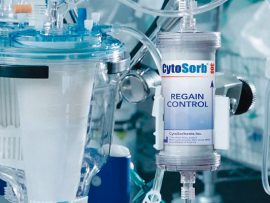
Abstract Background On-pump cardiac surgery triggers a significant postoperative systemic inflammatory response, sometimes resulting in multiple-organ dysfunction associated with poor clinical outcome. Extracorporeal cytokine elimination with a novel haemoadsorption (HA)..
Read More
Abstract Introduction: Cardiopulmonary bypass (CPB) can cause stress response that increases levels of cytokine and catecholamine in plasma, resulting in hyperglycemia. In adults, it has been demonstrated that remifentanil infusion..
Read More
Abstract OBJECTIVES: Extracorporeal membrane oxygenation (ECMO) is a lifesaving but expensive therapy in terms of financial, technical and human resources. We report our experience with a ‘basic’ ECMO support model,..
Read More
Abstract Background Coagulopathy is a major problem in surgery for cyanotic congenital heart disease. Tranexamic acid has been used both topically and systemically and plays a vital role in pediatric..
Read More
Abstract The protective effects of preprocedural esmolol on myocardial injury and hemodynamics have not, to date, been investigated in patients who were scheduled for cardiac surgeries under a cardiopulmonary bypass..
Read More
Abstract OBJECTIVE: Atrial fibrillation and neurocognitive decline are common complications after cardiopulmonary bypass. By utilizing genomic microarrays we investigate whether gene expression is associated with postoperative atrial fibrillation and neurocognitive..
Read More
Abstract BACKGROUND Tranexamic acid reduces the risk of bleeding among patients undergoing cardiac surgery, but it is unclear whether this leads to improved outcomes. Furthermore, there are concerns that tranexamic..
Read More
Abstract It is well described that patients with group 1 forms of pulmonary arterial hypertension have a high risk of mortality during pregnancy and in the early postpartum period. However,..
Read More
Abstract Main Objectives To estimate the incidence of active bleeding after cardiac surgery (AB) based on a definition directly related on blood flow from chest drainage; to describe the AB..
Read More
Abstract Introduction Patients subject to major surgery, suffering sepsis, major trauma, or following cardiopulmonary bypass exhibit a systemic inflammatory response. This inflammatory response involves a complex array of inflammatory polypeptide..
Read More
Abstract Background: Out-of-hospital cardiac arrest (OHCA) refractory to conventional high-quality cardiopulmonary resuscitation (CPR) may be rescued by extracorporeal CPR (eCPR) using veno-arterial extracorporeal membrane oxygenation (V-A ECMO). Even when trying..
Read More
Abstract Cardiac arrest is the most serious event among the complications associated with spinal anesthesia. Spinal anesthesia reduces the release of catecholamines and impairs neuroendocrine response following cardiac arrest, which..
Read More
Abstract Cardiogenic shock is an acute emergency, which is classically managed by medical support with inotropes or vasopressors and frequently requires invasive ventilation. However, both catecholamines and ventilation are associated..
Read More
V-A ECMO V-V ECMO Variation in V-V ECMO cannulae sites Central cannulation for V-A ECMO
Read More
Abstract Abstract: The article reviews cannulation strategy for different modes of extracorporeal life support. Technical aspects, pitfalls and complications are discussed for central and peripheral extracorporeal membrane oxygenation (VA, VV,..
Read More
Abstract In acute respiratory distress syndrome (ARDS) with refractory septic shock, isolated veno–venous (VV) or veno–arterial (VA) extracorporeal membrane oxygenation (ECMO) may lead to differential hypoxia or inadequate tissue perfusion..
Read More
Abstract Extracorporeal membrane oxygenation (ECMO) has emerged as an invaluable tool for bridging severe isolated or combined failure of lung and heart. Due to massive technical improvements, the application of..
Read More
The Relationship Between Oxygen Reserve Index and Arterial Partial Pressure of Oxygen During Surgery
Abstract BACKGROUND: The use of intraoperative pulse oximetry (Spo2) enhances hypoxia detection and is associated with fewer perioperative hypoxic events. However, Spo2 may be reported as 98% when arterial partial pressure..
Read More
Abstract Abstract: Here we report two cases of extracorporeal membrane oxygenation (ECMO) support in pediatric patients following orthotopic heart transplantation due to low cardiac output and inability to separate from..
Read More
Abstract Background Survival of children experiencing cardiac arrest refractory to conventional cardiopulmonary resuscitation (CPR) is very poor. We sought to examine current era outcomes of extracorporeal CPR (ECPR) support for..
Read More