

Abstract Surgical research has shifted from the laboratory focus of the mid to late 20th century to a more mixed economy of data science, collaborative and qualitative research, with a..
Read More
Abstract Background The optimal strategy for cerebral protection during repair of type A acute has yet to be determined. We sought to determine the impact of differing degrees of hypothermia in..
Read More
Abstract The objective of clinical research is to establish ethically and methodologically sound evidence that can aid clinical decision-making, inform ongoing research and add to the existing body of knowledge...
Read More
Abstract BACKGROUND Patients with three-vessel coronary artery disease have been found to have better outcomes with coronary-artery bypass grafting (CABG) than with percutaneous coronary intervention (PCI), but studies in which..
Read More
Abstract Background: Acute kidney injury (AKI) is associated with high morbidity and mortality; therefore, prevention is important. The aim of this study was to systematically assess AKI incidence after cardiac surgery..
Read More
Abstract Anesthesiologists are important components of volunteer teams which perform congenital cardiac surgery in low-resource settings throughout the world, but limited data exist to characterize the nature and breadth of..
Read More
Abstract Perioperative myocardial infarction is a serious complication affecting a significant portion of patients undergoing coronary artery bypass graft surgery. This may arise due to coronary graft thrombosis, a rare..
Read More

Abstract Background: The decision about whether to use venoarterial extracorporeal membrane oxygenation (VA-ECMO) in patients with cardiac graft dysfunction (GD) is usually made on a case-by-case basis and is guided by..
Read More
Abstract Introduction and objectives Lactate and its evolution are associated with the prognosis of patients in shock, although there is little evidence in those assisted with an extracorporeal venoarterial oxygenation..
Read More
Abstract Background Age over 70 years seems to confer poor prognosis for patients under mechanical circulatory support (MCS). Advanced age is usually a relative contraindication. Our objective was to assess the..
Read More
Abstract Stroke has potentially devastating consequences for patients receiving veno-arterial extracorporeal membrane support (VA-ECMO). Arterial cannulation sites for VA-ECMO include the ascending aorta, axillary artery, and femoral artery. However, the..
Read More
Abstract Background The VentriFlo® True Pulse Pump (VentriFlo, Inc, Pelham, NH, USA) is a new pulsatile blood pump intended for use during short-term circulatory support. The purpose of this study was..
Read More
Abstract Rapid reductions in PaCO2 during extracorporeal membrane oxygenation (ECMO) are associated with poor neurologic outcomes. Understanding what factors determine PaCO2 may allow a gradual reduction, potentially improving neurologic outcome. A simple..
Read More
Abstract Cardiogenic shock is an uncommon but serious complication of acute myocardial infarction. Temporary mechanical circulatory support devices are being used more often in this setting, and physicians are required..
Read More
Abstract OBJECTIVES: Patients in the pediatric cardiac ICU are frequently exposed to pharmacologic and environmental factors that predispose them to sleep disturbances and may increase the risk of delirium. In..
Read More
Abstract Surgical time-outs are designed to promote situation awareness, teamwork, and error prevention. The pre-incision time-out in particular aims to facilitate shared mental models prior to incision. Objective, unbiased measures..
Read More
Abstract The level of evidence of expert recommendations for starting extracorporeal cardiopulmonary resuscitation (ECPR) in refractory out-of-hospital cardiac arrest (OHCA) and in-hospital cardiac arrest (IHCA) is low. Therefore, we reported..
Read More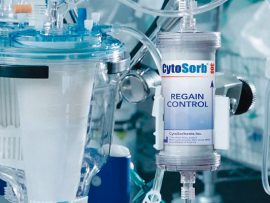
Abstract Drugs intoxications often lead to severe vasoplegia and cardiogenic shock, and VA-ECMO represents a viable therapy option. However, as cardiopulmonary support is not contributing to the removal of the..
Read More
Abstract Background SBP and DBP have important associations with cardiovascular events, but are seldom considered simultaneously. Objectives This study sought to simultaneously analyze systolic blood pressure (SBP) and diastolic blood..
Read More
Abstract Purpose Patients with (ECLS) are at risk for hemolysis-related complications. Therefore, monitoring of free hemoglobin (fHb) levels is indicated. Conventional methods for fHb are laborious and not always available. Here..
Read More
Abstract Newswise — November 22, 2021 – – with no increased risk of transmitting COVID-19 transmission to ECMO transport team members following standard precautions, reports a study in the , official journal of..
Read More
Abstract Background Whether perioperative glycemic control is associated with neurocognitive decline (NCD) after cardiac surgery was examined. Methods Thirty patients undergoing cardiac surgery utilizing cardiopulmonary bypass (CPB) were screened for..
Read More
Abstract Strong beliefs can influence the way we deal with emotionally charged topics. Researchers, editors, and reviewers are not an exception. Declaring such nonfinancial conflict of interest when handling or..
Read More
Abstract The number of patients using critical care is increasing as our populations live longer thanks to advances in medical therapies. This is reflected by an increase in both usage..
Read More
Abstract Objective To analyze Italian Cardiac Surgery experience during the pandemic of severe acute respiratory syndrome coronavirus 2 (SARS-CoV-2) identifying risk factors for overall mortality according to coronavirus disease 2019..
Read More
This article requires a subscription to view the full text. If you have a subscription you may use the login form below to view the article. Access to this article..
Read More
Abstract Purpose: Data regarding the incidence of a coagulable state following heat stroke as assessed by Sonoclot signature analysis are limited. Our purpose was to appraise coagulopathy using a dynamic test..
Read More
Abstract Introduction (ICU)-acquired weakness is developed by 40%–46% of patients admitted to ICU. Different studies have shown that Early Mobilisation (EM) is safe, feasible, cost-effective and improves patient outcomes in..
Read More
Abstract Background: Veno-arterial extracorporeal membrane oxygenation (VA-ECMO) is the rescue treatment proposed to patients with refractory cardiogenic shock. The VA-ECMO implantation promotes inflammation and ischemia-reperfusion injuries through the VA-ECMO flow, causing..
Read More