

Abstract Background Chronic obstructive pulmonary disease, cystic fibrosis and usual interstitial pneumonia are three most common indications for lung transplantation (LuTx) in Poland. As a result of irreversible destruction of..
Read More
Abstract Objective Venoarterial is a rescue therapy for patients in . We hypothesize that patients bridged to with extracorporeal membrane oxygenation have decreased survival. Methods The United Network of Organ Sharing database was..
Read More
Abstract Background and objectives The increment in a patient’s haemoglobin level is based upon the haemoglobin content of the transfused RBC units. The total haemoglobin present in the blood bags..
Read More
Abstract Background Gelatin has been used as a plasma volume expander because of its ability to preserve intravascular volume more effectively than crystalloids. However, gelatin may have detrimental effects on..
Read More
Abstract Background Erythrocyte transfusions are independently associated with acute kidney injury. Kidney injury may be consequent to the progressive hematologic changes that develop during storage. This study therefore tested the..
Read More
Abstract Intraoperative temperature regimen is usually planned preoperatively ‘in team’. Selecting and understanding the impact of the temperature regimen (normothermia, or mild, moderate or severe hypothermia) is usually related to..
Read More
Abstract Background Patients with coronary artery disease and concomitant heart failure (left ventricular ejection fraction < 35%) requiring myocardial revascularization are at risk of poor long-term prognosis and higher mortality. The benefits..
Read More
Abstract Purpose Hyperglycemia has been associated with postoperative morbidity in patients who undergo cardiac surgery. However, it remains unclear whether the duration of hyperglycemia is as important as its magnitude..
Read More
Abstract Respiratory failure and systemic inflammation are paramount features of severe SARS-CoV-2 disease (COVID-19). Extracorporeal membrane oxygenation (ECMO) therapy has a potential role in patients with refractory disease. An inflammatory..
Read More
Abstract Background Chronic thromboembolic pulmonary hypertension (CTEPH) is optimally treated by pulmonary thromboendarterectomy (PEA). Treatment effectiveness has been evaluated principally using single-center series. Data from the Society of Thoracic Surgeons..
Read More
Abstract Background Acute kidney injury (AKI) frequently complicates cardiac surgery and is more common among Black patients. We evaluated determinants of race-based differences in AKI rates. Methods Serum creatinine-based criteria..
Read More
Abstract Introduction The aim of the current study was to evaluate the impact of increased blood lactate levels during cardiopulmonary bypass (CPB) on immediate results in patients who underwent open..
Read More
Abstract The contribution of veno-venous (VV) extracorporeal membrane oxygenation (ECMO) to systemic oxygen delivery is determined by the ratio of total extracorporeal blood flow (Q˙EC) to cardiac output (Q˙). Thermodilution-based..
Read More
Abstract Verbal communication during coronary artery bypass graft (CABG) procedures is essential for safe and efficient cardiac surgery, yet sensitive to failure due to a current lack of standardization. The..
Read More
Abstract Background Cardiac surgery with cardiopulmonary bypass (CPB) is associated with coagulopathic bleeding. Impaired thrombin generation may be an important cause of coagulopathic bleeding but is poorly measured by existing..
Read More
Abstract Critically ill patients requiring catecholamine infusion may require extracorporeal membrane oxygenation (ECMO) support. Initiating ECMO support may affect the circulating catecholamine levels, which directly influences the circulatory support. We..
Read More
Abstract Atrioventricular disruption after a mitral valve replacement is a rare but fatal complication. A case of 72 year-old woman is presented. She had a medical history of aortic and..
Read More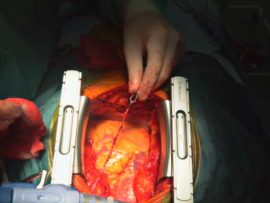
La vía clínica RICC pretende identificar, difundir y favorecer la implementación de las mejores actuaciones basadas en la evidencia científica para disminuir la variabilidad en la práctica clínica. La puesta..
Read More
Abstract ECMO is the most frequently used mechanical support for patients suffering from low cardiac output syndrome. Combining IABP with ECMO is believed to increase coronary artery blood flow, decrease..
Read More
Abstract Background: Cardiac surgery with cardiopulmonary bypass (CPB) is commonly associated with acute kidney injury, and microvascular endothelial inflammation is a potential underlying mechanism. We hypothesized that pro-inflammatory components of..
Read More
Abstract Acute aortic syndromes represent a spectrum of life-threatening aortic pathologies. Prompt diagnosis and proper management of these syndromes are important in reducing overall mortality and morbidity, which remains high...
Read More
Abstract Aim Patients with cardiogenic shock or ARDS, for example, in COVID-19/SARS-CoV-2, may require extracorporeal membrane oxygenation (ECMO). An ECLS/ECMO model simulating challenging vascular anatomy is desirable for cannula insertion..
Read More
Abstract Malignant hyperthermia (MH) is a life-threatening hypermetabolic disorder triggered by volatile anesthetics and/or succinylcholine. We report a case of a 58-year-old patient with a type-A aortic dissection. After induction..
Read More
Abstract Introduction Cardiac output/pulmonary blood flow measurement is an important way to assess patients during the perioperative period, as well as patients who are critically ill. Current methods of assessing..
Read More
Abstract Aim To characterize the association between diabetes and transfusion and clinical outcomes in cardiac surgery, and to evaluate whether restrictive transfusion thresholds are harmful in these patients. Materials and..
Read More
Abstract Objective To investigate the effects of different target hypothermia on the cardiovascular function and prognosis of rats after cardiopulmonary resuscitation. Methods A total of 44 male SD rats were..
Read More
Abstract Background Cardiopulmonary bypass is known to raise the risk of acute kidney injury (AKI). Previous studies have identified numerous risk factors of cardiopulmonary bypass including the possible impact of..
Read More
Abstract Background To investigate the impact of the dynamic oxygenation status on the incidence of acute kidney injury (AKI) in patients undergoing cardiopulmonary bypass. Methods This retrospective study was performed..
Read More
Abstract Background The impact of carotid stenosis (CS) in patients undergoing cardiac surgery remains controversial. The aim of this study was to evaluate the association between carotid stenosis and stroke..
Read More
Abstract This retrospective cohort study describes all children transported on extracorporeal life support (ECLS) by the Stollery Children’s Hospital Pediatric Transport team (SCH-PTT) between 2004 and 2018. We compared outcomes..
Read More