
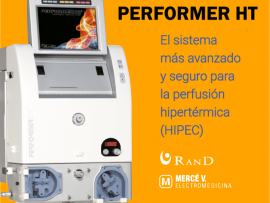

Abstract Hyperthermic intraperitoneal chemotherapy (HIPEC), a new stage IV cancer treatment method conceived about 20 years ago, is a global game-changer in improving survival rates, however, not many patients in..
Read More
Abstract Background Despite many reports of clinical outcomes in patients undergoing high-risk percutaneous coronary intervention (HRPCI) with hemodynamic support, little is known about whether this approach improves left ventricular ejection..
Read More
Abstract Platelets are the smallest of the blood cells and are known to be activated during cardiopulmonary bypass. They play a role in many associated complications. Both quantitative and qualitative..
Read More
Abstract By reason of surgical demand, the majority of cardiovascular procedures still depend on the use of cardiopulmonary bypass (CPB). Due to the nonphysiological state of CPB, it can cause..
Read More
Abstract Background To explore impact of various periods of ischemia and reperfusion on the severity of myocardial injury. Methods Langendorff model of isolated cardiac perfusion system was established in 56..
Read More
Abstract We aimed to investigate the prevalence and associated factors of newly diagnosed end-stage renal disease (ESRD) requiring renal-replacement therapy (RRT) among survivors of extracorporeal membrane oxygenation (ECMO) and determine..
Read More
Abstract Background: Cerebral injury is an important complication after cardiac surgery with the use of cardiopulmonary bypass. The rate of overt stroke after cardiac surgery is 1% to 2%, whereas..
Read More
Abstract The coronavirus disease 2019 (COVID-19) pandemic has been associated with the significant use of venovenous extracorporeal membrane oxygenation (VVECMO) globally. Identifying strategies to optimize care is essential to improving..
Read More
Abstract An extracorporeal membrane oxygenation (ECMO) program is an important component in the management of patients with COVID-19, but it is imperative to implement a system that is well-supported by..
Read More
Abstract OBJECTIVES Our goal was to compare the haemodynamic effects of different mechanical left ventricular (LV) unloading strategies and clinical outcomes in patients with refractory cardiogenic shock supported with venoarterial..
Read More
Abstract Importance Although durable left ventricular assist device (LVAD) therapy has emerged as an important treatment option for patients with advanced heart failure refractory to pharmacological support, outcomes, including survival, beyond..
Read More
Abstract Objective In chronic kidney disease (CKD), using cardiopulmonary bypass (CPB) may contribute to renal dysfunction. Off-pump coronary artery bypass grafting (OPCAB) is one technique that preserved renal function, but..
Read More
Abstract Critical illness is often complicated by acute kidney injury (AKI). In patients with severe AKI, renal replacement therapy (RRT) is deployed to address metabolic dysfunction and volume excess until..
Read More
Abstract Veno-venous Extracorporeal Membrane Oxygenation (ECMO) is used in the most severe cases of respiratory failure and further exacerbates the patients’ inflammatory status. Antithrombin is supplemented during ECMO for its..
Read More
Abstract Introduction Our study aim was to explore how different protamine-heparin ratios impacted enzymatic coagulation and acellular fibrin clot growth in plasma using an in vitro model. We hypothesized that..
Read More
Outcome of type and screen versus crossmatch in cardiovascular surgery patients: A comparative study
Abstract BACKGROUND: The need for an anti-human globulin (AHG) cross-match (XM) when the antibody screen (ABS) is negative is debatable and a matter of policy. AIM: (1) To compare the outcomes of..
Read More
Abstract Background are considered to be associated with cardiovascular disease. Nonetheless, the definite effect of on the clinical outcome of (CABG) is still undetermined. We evaluated whether ABO blood groups can predict..
Read More
Abstract The purpose of this document is to update the existing joint British Societies recommendations on multidisciplinary meetings (MDMs) published in 2015 to reflect changes in practice. We aim to..
Read More
Abstract OBJECTIVES: Superior vena cava oxygen saturation (SVC O2) monitoring is well described for early detection of hemodynamic deterioration after neonatal cardiac surgery but inferior vena cava vein oxygen saturation (IVC O2) monitoring data..
Read More
Abstract Importance Hyponatremia is the most common electrolyte disorder and it affects approximately 5% of adults and 35% of hospitalized patients. Hyponatremia is defined by a serum sodium level of less..
Read More
Centralized Organ Recovery and Reconditioning Centers
Read More
Abstract Cardiac myxomas (CM) are the most common type of primary cardiac tumours in adults, which have an approximate incidence of up to 0.2% in some autopsy series. The purpose..
Read More
Abstract Every year, are diagnosed with heart failure, and many are treated with stents. In a published in the New England Journal of Medicine, my colleagues and I discovered that these procedures..
Read More
Abstract Summary The retrograde valve-crossing of a stenotic aortic valve is a crucial step in the transcatheter aortic valve implantation procedure. In addition to being time-consuming and associated with..
Read More
Abstract Objectives A paucity of data supports the use of transesophageal echocardiography (TEE) for bedside extracorporeal membrane oxygenation (ECMO) cannulation. Concerns have been raised about performing TEEs in patients with..
Read More
Abstract Background and objective: In this clinical trial, we evaluated if a short-acting nucleoside, adenosine, as a high-dose bolus injection with blood cardioplegia induces faster arrest and provides better myocardial..
Read More
Implementing Nurse Extracorporeal Membrane Oxygenation Specialists to Maintain a Sustainable Program
Abstract Extracorporeal membrane oxygenation (ECMO) offers hope for patients with acute respiratory distress syndrome when other treatment methods fail. However, ECMO requires continuous hourly management leading to extremely high operating costs...
Read More
Abstract Introduction Extracorporeal circulation (ECC) in cardiac surgery is performed under systemic heparinization. Adequacy of heparin therapy and anticoagulation during ECC is assessed by activated clotting time (ACT), although there..
Read More
Impella 5.5 Support beyond 50 Days as Bridge to Heart Transplant in End-Stage Heart Failure Patients
Abstract Prolonged mechanical circulatory support (MCS) for severe left ventricular dysfunction in cardiogenic shock as a bridge to heart transplantation (HTx) generally requires a surgical procedure. Typically, a surgically implanted..
Read More
Abstract The increasing prevalence of chronic lung disease worldwide, combined with the emergence of multiple pandemics arising from respiratory viruses over the past century, highlights the need for safer and..
Read More