


Abstract 2021 and the COVID 19 pandemic have brought unprecedented blood shortages worldwide. These deficits have propelled national efforts to reduce blood usage, including limiting elective services and accelerating Patient..
Read More
Abstract Background: Transfusion rates in cardiac surgery are high. Aim: To determine if intraoperative autologous blood removal without volume replacement is associated with fewer homologous blood transfusions without increasing acute kidney injury...
Read More

Abstract Background: Postoperative complications following cardiac surgery are common and represent a serious burden to health services and society. However, there is a lack of consensus among experts on what..
Read More
Abstract Lung transplantation (LTx) historically was performed with cardiopulmonary bypass (CPB) or Off-pump. Recent data suggest an increased interest in extracorporeal membrane oxygenation (ECMO) as perioperative circulatory support by many..
Read More
Abstract One of the central missions of the World Medical Association (WMA) in its role as the global organization of physicians is to ensure the highest possible standard of ethical..
Read More
Abstract Platelets play a key role in maintaining hemostasis. However, dysregulated platelet activation can lead to pathological thrombosis or bleeding. Once a platelet gets activated, it will either become an..
Read More
Abstract The emergency department (ED) abounds with hazards that might lead to adverse events (AEs). Clinicians must make frequent, high-consequence decisions with high diagnostic uncertainty as part of ad hoc..
Read More
Abstract Aims The long-term outcomes of patients treated with extracorporeal cardiopulmonary resuscitation (ECPR) for refractory ventricular tachycardia/ventricular fibrillation (VT/VF) out-of-hospital cardiac arrest (OHCA) remain poorly defined. The purpose of this..
Read More
Abstract Background: This improvement report presents a hospital blood-management programme, a hospital-specific model that differs from patient blood managment and was aimed at improving operational standards of transfusion. We identified..
Read More
Abstract Purpose: This study reports on survival and health related quality of life (HRQOL) after extracorporeal membrane oxygenation (ECMO) treatment and the associated costs in the first year. Materials and..
Read More
Abstract Extracorporeal membrane oxygenation (ECMO) is a universally accepted and life-saving therapy for neonates with respiratory or cardiac failure that is refractory to maximal medical management. Early studies found unacceptable..
Read More
Abstract Extracorporeal membrane oxygenation (ECMO) poses unique thrombotic and hemorrhagic risks, and the optimal anticoagulant choice is unknown. We systematically searched Ovid EBM Reviews, Ovid Embase, Ovid Medline, Scopus, and..
Read More
Abstract OBJECTIVES In upper-income countries, infants undergo low-risk ventricular septal defect (VSD) repair. Children in low- and middle-income countries frequently present at older ages with elevated pulmonary vascular resistance..
Read More
Abstract Background Although the body of knowledge related to Cardiac Surgery Unit Advanced Life Support (CSU-ALS) guideline has grown over the last 10 years, there is no existing literature examining..
Read More
Abstract Cardiopulmonary bypass (CPB) is a common procedure carried out to provide a fluid free and motionless work field at the time of cardiac surgical procedures. To achieve CPB, cannulation..
Read More
Abstract Background Acute brain injury (ABI) remains common after extracorporeal cardiopulmonary resuscitation (ECPR). Using a large international multicenter cohort, we investigated the impact of peri-cannulation arterial oxygen (PaO2) and carbon..
Read More
Abstract Purpose The impact of body mass index (BMI) on outcomes in respiratory failure necessitating extracorporeal membrane oxygenation (ECMO) has been poorly described. We aimed to assess: (i) whether adults..
Read More
Abstract Purpose: This scoping review aims to identify and describe knowledge gaps and research priorities in veno-arterial extracorporeal membrane oxygenation (VA-ECMO). Methods: An expert panel was recruited consisting of eight..
Read More
Abstract Earlier this month, Professor David Kaye of The Alfred in Melbourne, Australia, presented late breaking science at the American Heart Association (AHA) 2022 meeting in Chicago from an ongoing..
Read More
Abstract Blood loss by hemorrhaging wounds accounts for over one-third of ∼5 million trauma fatalities worldwide every year. If not controlled in a timely manner, exsanguination can take lives within..
Read More
Abstract Objectives The objectives of this study were to evaluate the incidence and to identify risk factors for acute kidney injury (AKI) in neonates undergoing cardiopulmonary bypass (CPB) with a..
Read More
Abstract Aims Venoarterial extracorporeal membrane oxygenation (VA-ECMO) is currently one of the most used devices in refractory cardiogenic shock. However, there is a lack of evidence on how to set..
Read More
Abstract A nationwide trial has kicked off in the Netherlands as four Mobile Medical Teams join forces to offer extracorporeal cardiopulmonary resuscitation (ECPR) as rescue therapy for refractory out-of-hospital cardiac arrest...
Read More
Abstract The time between onset of cardiogenic shock and initiation of mechanical circulatory support is inversely related to patient survival as delays in transporting patients to the operating room (OR)..
Read More
Abstract Objectives: The Harlequin syndrome is a complication observed in patients receiving peripheral venoarterial extracorporeal membrane oxygenation. This condition is defined as a critical variation in the oxygen saturation between..
Read More
Abstract Changes in hemodynamics and coagulation hemostasis during the use of protamine sulfate to neutralize heparin in a ratio of 0.5:1 in coronary artery bypass graft surgery have been studied...
Read More
Abstract Purpose of review Regional anesthesia is gaining attention as a valuable component of multimodal, opioid-sparing analgesia in cardiac surgery, where improving the patient's quality of recovery while minimizing the harms..
Read More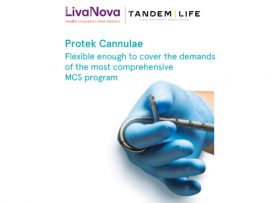
Abstract Dual lumen cannulas (DLCs) for venovenous extracorporeal membrane oxygenation (ECMO) therapy are introduced in the right internal jugular vein, passing through the superior vena cava and the right atrium (RA) down..
Read More
Abstract Background Although there have been several large reviews documenting the complications following intraoperative (TEE), most of these prior reports are almost 2 decades old and may not reflect current practices...
Read More