


Abstract Importance: Out-of-hospital cardiac arrest (OHCA) has poor outcome. Whether intra-arrest transport, extracorporeal cardiopulmonary resuscitation (ECPR), and immediate invasive assessment and treatment (invasive strategy) is beneficial in this setting remains uncertain...
Read More
Abstract Objectives To determine if decreases in the Karnofsky Performance Score (KPS) while on the waitlist predict decreased survival after lung transplantation (LTx). Design A retrospective evaluation of the United..
Read More
Abstract Recently three different neonatal extracorporeal membrane oxygenation (ECMO) circuits have been employed in our clinic. These circuits were compared for clotting and bleeding complications. Initially, we used an ECMO..
Read More
Abstract Hemolysis usually happens instantly when red blood cells (RBCs) rupture under a high shear stress. However, it is also found to happen gradually in the extracorporeal membrane oxygenation (ECMO)..
Read More
Abstract OBJECTIVES: Children presenting with acute myocarditis may experience rapid clinical deterioration requiring extracorporeal membrane oxygenation (ECMO); however, our understanding of best practices and timing of ECMO initiation are lacking...
Read More
Abstract Objectives: Extracorporeal membrane oxygenation (ECMO) systems have continued to evolve and improve with the development of smaller and portable systems. The Cardiohelp (Maquet Getinge Cardiopulmonary AG, Rastatt, Germany) portable..
Read More
Abstract OBJECTIVES: To describe the clinical characteristics and organ donation rate of patients supported by extracorporeal membrane oxygenation (ECMO) at the time of death. DESIGN: Retrospective observational study. Pearson chi-square..
Read More
Abstract In its ongoing, multidecade quest to optimize patient outcomes in adult and congenital cardiothoracic surgery, The Society of Thoracic Surgeons (STS) has emphasized several key strategies, including quality measurement,..
Read More
Abstract Objectives To determine in patients with acute respiratory distress syndrome (ARDS) on venovenous extracorporeal membrane oxygenation (VV ECMO) whether reducing driving pressure (ΔP) would decrease plasma biomarkers of inflammation..
Read More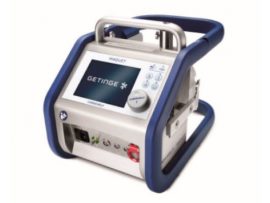
Abstract Background: The use of extracorporeal membrane oxygenation (ECPR) in refractory out-of-hospital cardiac arrest (OHCA) patients is usually implemented in-hospital. As survival in ECPR patients is critically time-dependent, alternative models..
Read More
Abstract Background Early detection of cardiac allograft rejection is crucial for post-transplant graft survival. Despite the progress made in immunosuppression strategies, acute cellular rejection remains a serious complication during and..
Read More
Abstract Cardiopulmonary bypass (CPB) depletes endogenous Vitamin C and generates oxidative stress in cardiac surgery. This study aimed to clarify whether Vitamin C supplementation reduces oxidant production and improves erythrocyte..
Read More
Abstract The recirculation of venovenous extracorporeal membrane oxygenation (VV-ECMO) will decrease the efficiency of respiratory support. We report a patient with refractory severe acute respiratory distress syndrome (ARDS). Even with..
Read More
Abstract For infants born at the border of viability, care practices and morbimortality rates vary widely between centers. Trends show significant improvement, however, with increasing gestational age and weight. For..
Read More
Abstract Cardiac surgery in Jehovah’s Witnesses (JW) patients who refuse blood transfusion is challenging requiring dedicated strategies. We aimed to analyze non-selected JW patients undergoing cardiac surgery and to compare..
Read More
Abstract Background Coagulopathy following cardiac surgery is associated with considerable blood product transfusion and high morbidity and mortality. The treatment of coagulopathy following cardiac surgery is challenging, with the replacement of..
Read More
Abstract Background Patients who receive extracorporeal membrane oxygenation (ECMO) support require substantial transfusions. Red blood cell (RBC) and platelet (PLT) transfusions have been reported to be associated with adverse outcomes..
Read More
Abstract Myocardial infarction (MI) is typically followed by numerous lethal complications. One such complication is left ventricular free wall rupture (LVFWR). We present the case of a middle-aged hypertensive patient..
Read More
Abstract Objective There is a paucity of sex-specific data on patients’ postcardiotomy venoarterial extracorporeal membrane oxygenation (VA-ECMO). The present study sought to assess this issue in a multicenter study. Design..
Read More
Abstract The Extracorporeal Life Support Organisation (ELSO) recommends initiating veno-venous extracorporeal membrane oxygenation (ECMO) with sweep gas flow rate (V˙sweep) of 2 L/min and extracorporeal circuit blood flow (Q˙ec) of 2 L/min...
Read More
Abstract Background:Electronic health records (EHRs) and poor system interoperability are well-known issues in the use of health information technologies in most high-income countries worldwide. Despite the abundance of literature exploring..
Read More
Abstract BACKGROUND: Pulse oximetry is the mainstay of patient oxygen monitoring. Measurement error from pulse oximetry is more common for those with darker skin pigmentation, yet this topic remains understudied, and..
Read More
Abstract Rational. Long-term outcomes of patients with COVID-19-related acute respiratory distress syndrome (ARDS) treated with extracorporeal membrane oxygenation (ECMO) are unknown. Methods. Multicenter, prospective study in patients who received ECMO..
Read More
Abstract Background Myocardial protection during operations with cardiopulmonary bypass (CPB) and aortic cross clamping is vital. For this purpose, Del Nido (DN) and Custodiol cardioplegia (CC) solutions are used for..
Read More
Abstract BACKGROUND: Highly performing healthcare organizations benefit from robust failure management systems. This involves the ability to respond and recover from critical events, as well avoiding harm in the first..
Read More
Abstract Alongside species mass extinction and biodiversity loss, climate change signifies humanity’s burdened entry into the Anthropocene []. During the past two centuries, humanity has burned increasing amounts of fossil..
Read More
Abstract AMIA has a longstanding interest and a professional obligation to promote a strong ethical framework for its members and the field of biomedical and health informatics. This white paper..
Read More
Abstract Introduction: Use of the ProtekDuo cannula has been described for right ventricular assist devices (RVADs) and extracorporeal membrane oxygenation (ECMO) systems. Case report: We describe remote cannulation and transport of two..
Read More
Abstract Fractures of extracorporeal membrane oxygenation (ECMO) cannulas are exceedingly rare due to their woven metal reinforcement. There are only a few cases reported in the literature. We present a 27-year-old..
Read More
Abstract We describe the development, implementation, and outcomes of an intensivist-led adult extracorporeal life support (ECLS) program using intensivists both to perform venovenous (V-V), venoarterial (V-A), and extracorporeal cardiopulmonary resuscitation..
Read More