


Abstract Introduction Low mean arterial pressure (MAP) periods occur frequently during cardiopulmonary bypass (CPB), and their management remains controversial. Our aim was to correlate MAP during CPB with the occurrence..
Read More
Abstract Background and objectives AKI is a common complication after pediatric cardiac surgery and has been associated with higher morbidity and mortality. We aimed to compare the efficacy of available pharmacologic..
Read More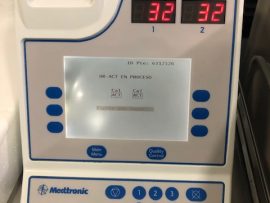
Abstract Introduction: The Activated Clotting Time (ACT) is commonly used to manage anticoagulation during cardiac surgery. The aim of this study was to compare the older manually operated Hemochron® Response and..
Read More
Abstract Background: Early identification of patients at risk for cardiac surgery-associated acute kidney injury (CS-AKI) based on novel biomarkers and tissue oxygen saturation might enable intervention to reduce kidney injury...
Read More
Abstract Background Early identification of patients at risk of AKI after cardiac surgery is of critical importance for optimizing perioperative management and improving outcomes. This study aimed to identify the..
Read More
Early biochemical markers in the assessment of acute kidney injury in children after cardiac surgery
Abstract Our aim was to evaluate biochemical markers in plasma (NGAL, CysC) and urine (NGAL, KIM-1) in children's early onset of acute kidney injury after congenital heart defect surgery using..
Read More
Abstract Background Cardiac-surgery associated acute kidney injury (CSA-AKI) remains an important and frequent complication in patients undergoing cardiac surgery and is associated with a poor short- and long-term prognosis. The..
Read More
Abstract Background Fluid administration is a key tool in the maintenance of normovolemia in patients with cardiac surgery. The trials that evaluated the safety of 6% hydroxyethyl starch (HES) 130/0.4..
Read More
Abstract Background: The aim of this study was to determine epidemiology and outcomes of acute kidney injury (AKI) in patients on extracorporeal membrane oxygenation (ECMO) and to assess if age modifies..
Read More
Abstract BACKGROUND: Prospective, single-center trials have shown that the implementation of the Kidney Disease: Improving Global Outcomes (KDIGO) recommendations in high-risk patients significantly reduced the development of acute kidney injury..
Read More
Abstract Decision-making surrounding extracorporeal membrane oxygenation initiation and decannulation has become a key challenge in critical care. Nuanced communication skills and transparent discussions about prognosis are imperative during this lifesaving,..
Read More
Abstract The coronavirus disease 2019 (COVID-19) pandemic began in the United States around March 2020. Because of limited access to extracorporeal membrane oxygenation (ECMO) in the authors’ region, a mobile..
Read More
Abstract OBJECTIVES Older patients have a higher cardiac surgery-associated acute kidney injury (CSA-AKI) related mortality. Low oxygen delivery (DO2) during cardiopulmonary bypass (CPB) is a risk factor for..
Read More
Abstract Background Blood pressure variability (BPV), defined as the degree of variation between discrete blood pressure readings, is associated with poor outcomes in acute care settings. Acute kidney injury (AKI)..
Read More
Abstract Purpose Acute kidney injury (AKI) has been reported to be one of the most common complications in patients receiving extracorporeal membrane oxygenation (ECMO), yet variations in AKI between different..
Read More
Abstract Objectives Forced-diuresis during cardiopulmonary bypass (CPB) can be associated with significant electrolyte shifts. This study reports on the serum electrolyte changes during balanced forced-diuresis with the RenalGuard® system (RG)..
Read More
Abstract Extracorporeal membrane oxygenation (ECMO) is a temporary life support system used to assist patients with life-threatening severe cardiac and/or respiratory insufficiency. Patients requiring ECMO can be considered the sickest..
Read More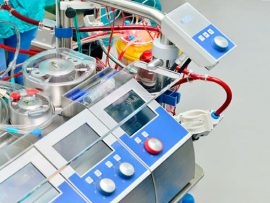
Abstract Background Acute kidney injury (AKI) is a well-known complication after cardiac surgery and cardiopulmonary bypass (CPB). In the present secondary analysis of a blinded randomized controlled trial, we evaluated..
Read More
Abstract In low- and middle-income countries (LMICs), 93% of the population lacks safe, timely, and affordable access to cardiac surgical care when needed. As countries slowly build or expand local,..
Read More
Abstract Background: Acute kidney injury (AKI) is a common and serious complication faced by children following ventricular septal defect (VSD) surgery with cardiopulmonary bypass (CPB). The objective of this study was..
Read More
Abstract Background: Cardiac surgery–associated acute kidney injury (AKI) is an adverse outcome that increases morbidity and mortality in patients undergoing cardiac surgical procedures. To date, the use of serum creatinine..
Read More
Abstract Objectives (AKI) is common after cardiac surgery. We quantified the mortality and costs of varying degrees of AKI using a population-based cohort in Alberta, Canada. Methods A cohort of..
Read More
Abstract Background Acute kidney injury (AKI) is a common complication of cardiac surgery. An intraoperative monitor of kidney perfusion is needed to identify patients at risk for AKI. The authors..
Read More
Abstract Background Acute kidney injury (AKI) is common after cardiac surgery requiring cardiopulmonary bypass. Renal hypoxia may precede clinically detectable AKI. We compared the efficacy of two indices of renal..
Read More
Abstract FOR MORE THAN a year, patients around the world have dealt with the effects of coronavirus disease 2019 (COVID-19) infection, including acute respiratory distress syndrome (ARDS). Most patients with..
Read More
Abstract Background Three-dimensional printing is a process enabling computer-assisted conversion of imaging data from patients into physical “printed” replicas. This has been extrapolated to reconstructing patient-specific cardiac models in . The..
Read More
Abstract Background Acute kidney injury (AKI) is one of the most serious perioperative complications. 20% to 40% of high-risk patients who undergo non-cardiac surgery have AKI and those with AKI..
Read More
Abstract Background Oxygen delivery during cardiopulmonary bypass (CPB) is closely related to postoperative acute kidney injury (AKI). The value of critical indexed oxygen delivery (DO2i) is a key indicator to..
Read More
Abstract During cardiopulmonary bypass (CPB), high flows can allow an adequate perfusion to kidneys, but, on the other hand, they could cause emboli production, increased vascular pressure, and a more..
Read More
Abstract Introduction Novel biomarkers of acute kidney injury (AKI) are being developed and commercialized. However, none are universally available. The aim of this preliminary prospective observational study was to explore the..
Read More