
Aorta & Aortic Valve replacement through ministernotomy
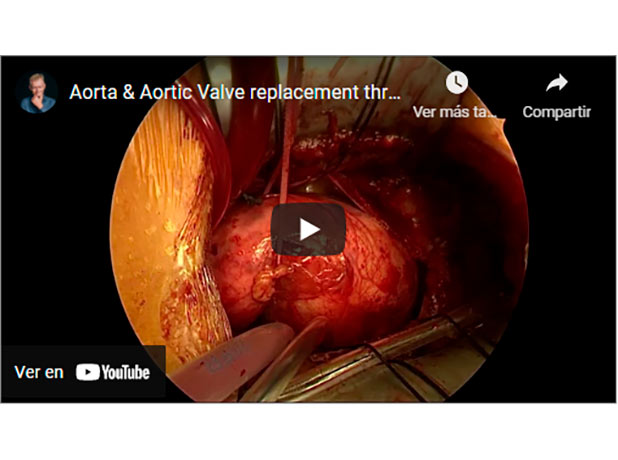

An aortic valve replacement is a type of open heart surgery used to treat problems with the heart’s aortic valve.
The aortic valve controls the flow of blood out from the heart to the rest of the body.
An aortic valve replacement involves removing a faulty or damaged valve and replacing it with a new valve made from synthetic materials or animal tissue.
It’s a major operation that isn’t suitable for everyone and can take a long time to recover from.
Aneurysms of the ascending aorta and aortic sinuses may result in symptoms related to the aortic regurgitation (leaking aortic valve) that develops as a result of the progression of the aortic enlargement. The usual early symptom is shortness of breath with walking or exercise. These symptoms can progress to severe shortness of breath with limited exercise and finally lead to congestive heart failure.
Ascending aorta replacement is performed when there is aneurismal enlargement or dissection of the aortic root. The ascending aorta is very often involved in this process, and it is replaced at the same time as the aortic root.
Ascending aortic replacement is performed for aneurysms or dissections that are located exclusively in the ascending aorta. If the aortic arch or aortic root are involved in the process, they can be replaced at the same time. Often aortic valve replacement or coronary artery bypasses can be performed at the same time if needed.