


Abstract Objectives Coronary artery bypass grafting shows impaired outcomes in women compared to men. Investigation of sex-related outcome differences mostly comprises different operative strategies, potentially hampering interpretation of data. We..
Read More
Abstract Background Neonates with enterovirus myocarditis may require extracorporeal membrane oxygenation (ECMO). The contemporary prognosis and risk factors for mortality of neonates with enterovirus myocarditis supported on ECMO is unknown...
Read More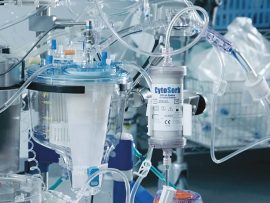
Abstract Cardiopulmonary bypass (CPB) induces inflammation partly via leukocyte activation. We conducted a first-in-human pilot study assessing the feasibility and perioperative safety of a novel activated leukocyte adsorption device during..
Read More
Abstract Background Primary graft dysfunction (PGD) remains the leading cause of early morbidity and mortality after heart transplantation. Despite consensus definitions, clinicians still rely on subjective, indirect assessments of graft..
Read More
Abstract Background Pediatric patients undergoing cardiac surgery are at risk for developing positive cumulative fluid balance (CFB). Our goal was to study postoperative CFB in this population, its explanatory variables,..
Read More
Abstract Venoarterial extracorporeal membrane oxygenation (VA-ECMO) is increasingly used for providing adequate organ support in cardiogenic shock. While the intervention provides circulatory and respiratory support in the critical stage, it..
Read More
Abstract Objective Severe anaphylaxis is a rare but life-threatening condition that may require extracorporeal life support (ECLS). A systematic review was conducted to evaluate the outcomes of patients receiving ECLS..
Read More
Abstract Objectives Core temperature is routinely used to guide hypothermic circulatory arrest (HCA) for acute type A aortic dissection (ATAAD). However, it remains unclear whether impaired carotid artery flow alters..
Read More
Abstract BACKGROUND: Acute normovolemic hemodilution (ANH) is endorsed by contemporary patient blood management guidelines as a cost-effective strategy for reducing allogeneic transfusion in cardiac surgery. However, evidence remains inconsistent due..
Read More
Abstract Background This study aimed to evaluate in-hospital mortality and to identify predictors of mortality in coronary artery bypass grafting (CABG) patients receiving veno-arterial extracorporeal membrane oxygenation (VA-ECMO) support. Methods..
Read More
Abstract Background Use of extracorporeal membrane oxygenation (ECMO) for cardiorespiratory failure has increased substantially. While long-term outcomes for psychological health are increasingly assessed and addressed in critical care survivorship research,..
Read More
Abstract Background: The clinical benefits of pulsatile perfusion during cardiopulmonary bypass (CPB) remain a subject of debate. This study aimed to compare clinical outcomes between pulsatile and non-pulsatile perfusion during..
Read More
Abstract Objectives To determine whether individualized heparin dosing guided by a heparin dose-response (HDR) curve is noninferior to conventional weight-based dosing in achieving target activated clotting time (ACT) of ≥480..
Read More
Abstract Background Extracorporeal membrane oxygenation (ECMO) is a critical life-support intervention for patients with severe respiratory and circulatory failure. Nevertheless, identifying the optimal timing of ECMO initiation and its correlation..
Read More
Abstract The expanding use of extracorporeal cardiopulmonary resuscitation (ECPR) has introduced new clinical scenarios at the intersection of extracorporeal life support and organ donation. Current donor classification systems do not..
Read More
Abstract Background: Simulation-based education (SBE) is increasingly used in training students in allied healthcare, yet data on its role in United States (U.S.) perfusion programs are limited. This study surveyed perfusion..
Read More
Abstract Background Human factors (HF) are integral to patient safety. Simulation-based education (SBE) is widely used to teach HF, yet facilitators conceptualise HF in varied ways. This study explored facilitators’..
Read More
Abstract Simulation is an excellent educational methodology for healthcare learners to practice skills for medical scenarios that are low in frequency but high in emotional intensity. However, these educational experiences..
Read More
Abstract Background: Hemodilution during cardiopulmonary bypass (CPB) is a standard perfusion strategy used to reduce blood viscosity and enhance microcirculatory flow. The hemodilution rate, expressed as hemoglobin (Hb) concentration, is..
Read More
Abstract This study describes the development and preliminary validation of an integrated clinical decision support application (Cardiac Critical Care Advisor Pro, CCA Pro v6.0) that combines viscoelastic coagulation analysis, arterial..
Read More
Abstract Background Extracorporeal Cardiopulmonary Resuscitation (ECPR) is increasingly considered for prehospital cardiac arrest management; however, its impact on resuscitation performance remains unclear. This study aimed to determine whether integrating an..
Read More
Abstract Background Children undergoing high-risk cardiac surgery face significant postoperative morbidity and mortality risk, and early recognition of impaired systemic perfusion is critical. Current monitoring modalities, such as lactate, central..
Read More
Abstract Platelets play a pivotal role in hemostasis, where their activation is tightly regulated by biochemical agonists such as thrombin, collagen, and adenosine diphosphate, all of which signal through calcium-mediated..
Read More
Abstract Background The clinical impact of early spontaneous breathing during veno-venous extracorporeal membrane oxygenation (VV ECMO) for acute respiratory distress syndrome (ARDS) is unclear, balancing potential benefits (reducing sedation and..
Read More
Abstract Objective Post-cardiopulmonary bypass (post-CPB) vasoplegia syndrome (VS) is associated with a dysregulated inflammatory response and a higher morbidity and mortality, but the molecular pathways involved have been incompletely identified...
Read More
Central and Mixed Venous Oxygen Saturation in Cardiac Surgery: A Systematic Review and Meta-analysis
Abstract Central venous oxygen saturation (ScvO2) and mixed venous oxygen saturation (SvO2) are widely used markers of tissue perfusion. Their role in cardiac surgery remains uncertain. This study conducted a..
Read More
Abstract Perioperative bleeding remains a major complication in cardiac surgery and is associated with increased morbidity, mortality, and transfusion requirements. While patient blood management strategies and goal-directed hemostatic therapies have..
Read More
Abstract As ECMO continues to grow beyond the CVOR, a growing number of physicians outside cardiac surgery are being asked to cannulate. This expansion is an important step toward building..
Read More
Abstract Background The use of extracorporeal membrane oxygenation (ECMO) has expanded for severe respiratory and circulatory failure. Acute kidney injury (AKI) is one of the most frequent complications. Up to..
Read More
Abstract Background Postoperative recovery in older adults undergoing cardiac surgery is a complex and multidimensional process associated with clinical, psychological, and nutritional factors; however, these factors are often addressed separately..
Read More