


Abstract Molecular oxygen is typically delivered to patients via oxygen inhalation or extracorporeal membrane oxygenation (ECMO), potentially resulting in systemic hyperoxia from liberal oxygen inhalation or localized hyperoxia in the..
Read More
Abstract Background Cardiac surgery–associated (AKI) is associated with increased postoperative morbidity and mortality. Evidence suggests an association between perioperative administration and decreased incidence of postoperative AKI in cardiac surgery patients; however, an effect..
Read More
Abstract Background The use of extracorporeal membrane oxygenation (ECMO) for patients with acute respiratory distress syndrome (ARDS) has increased substantially. With modern trials supporting its efficacy, ECMO has become an..
Read More
Abstract Cardiac surgery (CS) with extracorporeal circulation (ECC), induces intense oxidative stress (OS) and systemic inflammatory response (SIR), which may seriously affect postoperative lung function. We aimed to test if..
Read More
Abstract Background: Cardiogenic shock in children still carries a high mortality risk despite advances in medical therapy. The use of temporary mechanical circulatory supports is an accepted strategy to bridge patients..
Read More
Abstract Extracorporeal Cardiopulmonary Resuscitation (ECPR) has potential benefits compared to conventional Cardiopulmonary Resuscitation (CCPR) in children. Although no randomised trials for paediatric ECPR have been conducted, there is extensive literature..
Read More
Abstract Objective Enhanced recovery after cardiac surgery is a multidisciplinary clinical that relies on a bundle of interventions, aiming to reduce the stress response to surgery and promote early recovery of..
Read More
Abstract Weaning and liberation from VA ECMO in cardiogenic shock patients comprises a complex process requiring a continuous trade off between multiple clinical parameters. In the absence of dedicated international..
Read More
Abstract Background and purpose Current information on the latest rehabilitative practices is limited, with previous reviews only covering data up to October 2021, and some considering only patients on awake..
Read More
Abstract Objectives To investigate the effect of retrograde autologous priming (RAP) on coagulation function using rotation thromboelastometry (ROTEM) in patients undergoing valvular cardiac surgery. Design A prospective, randomized, patient- and outcome assessor-blinded study...
Read More
Abstract Anticoagulation for Subclinical Atrial Fibrillation Recently, the ARTESIA study addressed this question in a randomized trial of 4,012 patients with subclinical atrial fibrillation identified by an implanted device, and..
Read More
Abstract Introduction Extracorporeal membrane oxygenation (ECMO) may act as a driver or propagator of systemic inflammation. In turn, cytokine release can modify thromboelastographic (TEG) tests which are commonly used for..
Read More
Abstract Extracorporeal membrane oxygenation (ECMO) continues to be an indispenable tool in critical care settings, in particular in patients with severe respiratory and/or cardiac failure. The COVID-19 pandemic highlighted the..
Read More
Why choose smartcanula? The venous smartcanula is a disposable, wall-less canula, for less invasive canulation in conjunction with extracorporeal circulation. The smartcanula principle: “collapsed canula insertion and expansion in situ”...
Read More
Abstract Circulating venous blood outside the body, through an artificial lung (membrane oxygenator), andreturning oxygenated blood to the patient is extracorporeal gas exchange. Oxygen and carbondioxide exchange in a membrane..
Read More
Abstract Prevention of limb ischemia in patients with venoarterial extracorporeal membrane oxygenation (VA-ECMO) is primarily achieved through the use of distal perfusion catheters (DPC). Our objective was to assess the..
Read More
Abstract Nowadays, the necessity of having a cardioplegia circuit capable of being adapted in order to administer different types of cardioplegia is strategically fundamental, both for the perfusionist and for..
Read More
Abstract Over the past decade, veno-arterial extracorporeal membrane oxygenation (VA-ECMO) has expanded rapidly as a salvage strategy to provide temporary circulatory and respiratory support allowing cardiac function recovery or bridging..
Read More
Abstract BACKGROUND: Vasoplegia is common after cardiac surgery, is associated with hyperreninemia, and can lead to acute kidney stress. We aimed to conduct a pilot study to test the hypothesis..
Read More
Abstract Background and objectives Venovenous Extracorporeal Membrane Oxygenation (VV ECMO) provides respiratory support to patients with severe lung disease failing conventional medical therapy. An essential component of the ECMO circuit..
Read More
Abstract Introduction Due to the risk of thrombosis, nearly all children supported by extracorporeal membrane oxygenation (ECMO) receive systemic anticoagulation. While heparin has traditionally been used, there are reports of..
Read More
Find the latest publications about
Read More
You can meet us and learn more about SmartCanula at these events. We are waiting for you! SECCE (National Cardiac Surgery Congress) – 2024, June 5-7 – Madrid, Spain..
Read More
Abstract Background The impact of mechanical ventilation on the survival of patients supported with veno-venous extracorporeal membrane oxygenation (V-V ECMO) due to severe acute respiratory distress syndrome (ARDS) remains still..
Read More
Abstract The objective was to investigate the outcomes of concomitant venoarterial extracorporeal membrane oxygenation (ECMO) and left ventricular unloading with Impella (ECPELLA) compared with ECMO alone to treat patients affected..
Read More
PRO Building solid evidence in intensive care medicine is challenging, mostly due to patient heterogeneity and concomitant treatment interactions. In the context of acute respiratory distress syndrome (ARDS), only two..
Read More
Abstract During veno-venous extracorporeal membrane oxygenation (V-V ECMO), blood is drained from the central venous circulation to be oxygenated and decarbonated by an artificial lung. It is then reinfused into..
Read More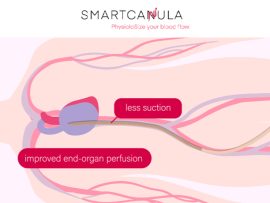
[pdf-embedder url="https://perfusfind.com/wp-content/uploads/2024/05/2023_smartcanula_Marketing-Broschure-2023-10-30_compressed.pdf" title="2023_smartcanula_Marketing Broschure 2023 10 30_compressed"]
Read More
Abstract Venoarterial extracorporeal membrane oxygenation (VA ECMO) has become a standard of care for severe cardiogenic shock, refractory cardiac arrest and related impending multiorgan failure. The widespread clinical use of..
Read More
Abstract Introduction Veno-arterial extracorporeal membrane oxygenation (V-A ECMO) improves end-organ perfusion in cardiogenic shock but may increase afterload, which can limit cardiac recovery. Left ventricular (LV) unloading strategies may aid..
Read More