


Abstract Objectives There is accumulating evidence that blood pressure management might be associated with end-organ dysfunction after cardiac surgery. This study aimed to investigate the impact of intraoperative hypotension (IOH)..
Read More
Abstract Background Patients’ race and/or ethnicity are increasingly being associated with differential surgical access and outcomes in cardiac surgery. However, deriving evidence-based conclusions that can inform surgical care has been..
Read More
Abstract Objective Compared with fresh frozen plasma (FFP), Omniplasma has been attributed to an increased coagulation potential and an increased fibrinolytic potential. This study aimed to compare Omniplasma and FFP..
Read More
Abstract Background Although cardiogenic shock requiring extracorporeal life support (ECLS) after cardiac surgery is associated with high mortality, the impact of sex on outcomes of post-cardiotomy ECLS remains unclear with..
Read More
Abstract Organ transplantation is a triumph of modern medicine which represents a culmination of science and imagination, saving thousands of lives a year. However, transplantation is severely limited by suitable..
Read More
Abstract OBJECTIVES: We planned to synthesize evidence examining the potential efficacy and safety of performing physical rehabilitation and/or mobilization (PR&M) in adult patients receiving extracorporeal life support (ECLS). DATA SOURCES: ..
Read More
Abstract Background Pulmonary shunt refers to the passage of venous blood into the arterial blood system bypassingthe alveoli-blood gas exchange. Pulmonary shunt is defined by a drop in the physiologic..
Read More
Abstract Background Reduced oxygen delivery (DO2) during cardiopulmonary bypass (CPB) was proposed as a risk factor for the development of postoperative neurological complications (PONCs), including cerebrovascular accidents (CVA), delirium, and..
Read More
Abstract BACKGROUND: Transfusion of packed red blood cells (pRBCs) is still associated with risks. This study aims to determine whether renal function deterioration in the context of individual transfusions in..
Read More
Abstract Severe right heart failure, often overlooked and challenging to manage, has prompted a growing interest in innovative approaches to provide functional support. This study uses experimentation in large porcine..
Read More
Abstract Objective: The term “myocardial protection” covers many mechanisms that protect myocardial tissue during cardiac surgery. This includes forms of cardioplegic protection. Two different forms of myocardial protection have been combined..
Read More
Abstract Purpose The purpose of this study was to compare techniques for securing the aortic extracorporeal membrane oxygenation (ECMO) cannula, using in vitro models. Methods Two models were studied: a tissue model..
Read More
Abstract Aims This study evaluated how well serial pulse pressure (PP) and PP adjusted by the vasoactive inotropic score (VIS) predicted venoarterial extracorporeal membrane oxygenation (VA-ECMO) weaning success and clinical..
Read More
Abstract Purpose This is the first of three parts of the clinical practice guideline from the European Society of Intensive Care Medicine (ESICM) on resuscitation fluids in adult critically ill..
Read More
Abstract Patients undergoing veno-arterial extracorporeal membrane oxygenation (VA-ECMO) typically suffer from cardiogenic pulmonary edema and lung atelectasis, which can exacerbate right ventricular (RV) dysfunction through an increase in lung elastance..
Read More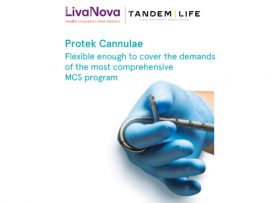
Abstract This chapter provides an in-depth analysis of the ProtekDuo® (LivaNova, London) dual-lumen cannula’s application in extracorporeal membrane oxygenation (ECMO), focusing on the procedural techniques of cannulation, weaning, and decannulation...
Read More
Abstract Introduction A radical paradigm shift in the treatment of premature infants failing conventional treatment is to recreate fetal physiology using an extracorporeal Artificial Placenta (AP). The aim of this..
Read More
Abstract Aim Venoarterial extracorporeal membrane oxygenation (VA-ECMO) has become a common intervention for patients with cardiogenic shock (CS), often complicated by cardiac arrest (CA). Moderate hypothermia (MH) has shown promise..
Read More
Abstract In patients on veno-arterial extracorporeal membrane oxygenation (ECMO) premembranous venous oxygen saturation (Spm-vO2) is continuously displayed on the ECMO console. However, the concordance between Spm-vO2 and mixed venous oxygen saturation..
Read More
Abstract OBJECTIVES: Cardiac surgery-associated acute kidney injury (CS-AKI) is associated with adverse outcomes. Single-center studies suggest that the prevalence of CS-AKI is high after the Norwood procedure, or stage 1..
Read More
Abstract Physiological hemostasis is a balance between pro- and anticoagulant pathways, and in sepsis, this equilibrium is disturbed, resulting in systemic thrombin generation, impaired anticoagulant activity, and suppression of fibrinolysis,..
Read More
Abstract The use of checklists in surgery is a best practice. There is a plethora of evidence that suggests using the WHO Surgical Safety Checklist (SSC) reduces complications such as pneumonia, intraoperative..
Read More
Abstract The physiologic impact of pulsatile flow (PF) on end-organ perfusion during cardiopulmonary bypass (CPB) is controversial. Using an intra-aortic balloon pump (IABP) to maintain PF during CPB for patients..
Read More
Abstract Background Organizational factors may influence surgical outcomes, regardless of extensively studied factors such as patient preoperative risk and surgical complexity. This study was designed to explore how operating room..
Read More
Abstract Background Primary malignant cardiac tumors are rare in clinic, and surgical resection under cardiopulmonary bypass (CPB) remains the main treatment. The non-physiological perfusion process of CPB leads to contact activation,..
Read More
Abstract Cardiopulmonary bypass (CPB) is a common technique in cardiac surgery but is associated with acute kidney injury (AKI), which carries considerable morbidity and mortality. In this review, we explore..
Read More
Abstract This retrospective analysis of the Extracorporeal Life Support Organization (ELSO) registry evaluates the outcomes and identifies risk factors associated with conversion from initial venovenous extracorporeal membrane oxygenation (ECMO) support..
Read More
Abstract Bacground Off-pump coronary artery bypass graft (OPCABG) has a high incidence of postoperative systemic inflammation response syndrome (SIRS), and perioperative endothelial glycocalyx layer (EGL) disruption can be one of..
Read More
Abstract Background Skin mottling is a common manifestation of peripheral tissue hypoperfusion, and its severity can be described using the skin mottling score (SMS). This study aims to evaluate the..
Read More
Abstract Objective: Lower-limb ischemia is a complication of minimally invasive cardiac surgery with femoral cannulation. Herein, we verified our strategy using distal perfusion cannulation (DPC) against this complication. Methods: We..
Read More