


Abstract Objectives The objective of this systematic review was to clarify the status of near-infrared spectroscopy (NIRS) in monitoring perioperative renal regional tissue oxygen saturation (rSO2) and determine whether there..
Read More
Abstract Background and Objectives Neonatal cardiac surgery requires careful consideration of cardiopulmonary bypass (CPB) priming fluid composition due to small blood volume and immature physiology. This study investigated the impact..
Read More
Abstract Shifts from deep to moderate hypothermic circulatory arrest (HCA) in aortic arch surgery necessitate an examination of their differential impacts on neurocognitive functions, especially structured verbal memory, given its..
Read More
Abstract Introduction: Although decannulation from ECMO is usually irrevocable, in rare circumstances, ECMO will be reinitiated. Data on outcomes after re-cannulation of ECMO are limited,1 so we studied our experience with ECMO..
Read More
Abstract We convened a group of cardiac surgeons, intensivists, and anesthesiologists with extensive experience in minimally invasive cardiac surgery (MICS) and perioperative care to identify the essential elements of a..
Read More
Abstract Background Bleeding during cardiac surgery may be refractory to standard interventions. Off-label use of factor eight inhibitor bypass activity (FEIBA) has been described to treat such bleeding. However, reports..
Read More
Abstract Background: This review explores the potential benefits of combining totally endoscopic and robotic-assisted cardiac surgery with minimally invasive extracorporeal circulation (MiECC). Robotic techniques herald a new era of surgical..
Read More
Abstract Based on a voluntary registry, founded by the German Society for Thoracic and Cardiovascular Surgery (DGTHG) in 1980, a well-defined but limited dataset of all cardiac and vascular surgery..
Read More
Abstract Introduction Postmortem heart specimens are essential for education and research on the anatomy, morphology, and pathology of congenital heart defects. However, such specimens are rarely obtained these days, and..
Read More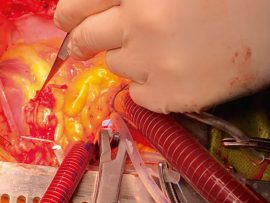
Paciente com 72 anos , 80 kg , 166 de altura, Asc 1.9 e 29 Imc . DM 2 . HAS . IAM csst . Obstrução Carotida E 60 %..
Read More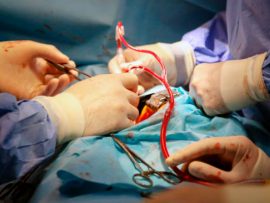
Paciente com 30 anos. Com 80 kg , 200 cm , Asc 2,1 e Imc 20 .História de HAS , Tabagismo e Marfan. Deu entrada no unidade com diagnóstico de..
Read More
Abstract Background Cardiovascular disease currently accounts for nearly half of non-communicable disease (NCDs).High rates of coronary heart disease in people of South Asian (Indian, Pakistani, and Bangladeshi) origin were first..
Read More
Abstract Medical errors are the third leading cause of death, right after cancer and heart diseases, causing around 250,000 deaths every year. Approximately 40% of these errors happen in the..
Read More
Abstract OBJECTIVES The optimal core temperature for hypothermic circulatory arrest during aortic arch surgery remains contentious. This study aims to evaluate patient outcomes under various temperatures within a large single-centre..
Read More
Abstract In high-risk high-stakes environments, such as the cardiac operating room (OR), the cognitive processes of each surgical team member, as well as alignments or misalignments between team members play..
Read More
Abstract In the 70-plus years of clinically applied cardiopulmonary bypass, the training of that specialist operator, or perfusionist, has been through several stages. Perfusion was not a field that was..
Read More
Abstract Guidelines informing energy and protein doses for critically ill patients are based largely on low-quality evidence and expert consensus recommendations [, ], but more recent randomized controlled trials (RCTs) have..
Read More
Abstract Background: Acute kidney injury (AKI) following cardiac surgery is a well-described phenomenon, usually associated with hemodynamic changes ultimately leading to ischemic injury to the kidneys. In this study, we assessed..
Read More
Abstract Background: Cesarean sections (C-section) often require blood transfusions in cases of severe bleeding, particularly challenging in Rh-negative pregnancies due to the scarcity of Rh-negative donors, with only approximately 0.3% of..
Read More
Abstract Objective Extracorporeal membrane oxygenation (ECMO) is a high-risk procedure with significant morbidity and mortality and there is an uncertain volume-outcome relationship, especially regarding long-term functional outcomes. The aim of..
Read More
Abstract Background: Venoarterial extracorporeal membrane oxygenation (VA-ECMO) has been increasingly used for refractory cardiogenic shock (CS). Although guidelines have downgraded the recommendations for intra-aortic balloon pump (IABP) in CS, escalation from..
Read More
Abstract Extracorporeal membrane oxygenation (ECMO) has emerged as an important intervention for children both preceding and following cardiac surgery. There is a notable lack of comprehensive information regarding neurodevelopmental outcomes...
Read More
Abstract We present a case of successfully treating an adult woman with a lethal bupropion overdose with VA-ECMO. The patient presented to the hospital with severe encephalopathy, which progressed to..
Read More
Abstract Background Venovenous extracorporeal membrane oxygenation (VV-ECMO) is associated with acute brain injury (ABI), including central nervous system (CNS) ischemia (defined as ischemic stroke or hypoxic-ischemic brain injury [HIBI]) and..
Read More
Abstract BACKGROUND: Continuous cardiac output monitoring is not standard practice during cardiac surgery, even though patients are at substantial risk for systemic hypoperfusion. Thus, the frequency of low cardiac output..
Read More
Abstract IMPORTANCE: Persistent hypothermia after cardiopulmonary bypass (CPB) in neonates with congenital heart defects (CHD) has been historically considered benign despite lack of evidence on its prognostic significance. OBJECTIVES: Examine..
Read More
Abstract Pediatric extracorporeal membrane oxygenation (ECMO) provides lifesaving cardiopulmonary support for patients with a multitude of clinical diagnoses, resulting from cardiac and/or respiratory failure refractory to conventional supports. The utilization..
Read More
Abstract Objective Postoperative delirium (POD), especially after cardiac surgery with cardiopulmonary bypass (CPB), is a relatively common and severe complication increasing side effects, length of hospital stay, mortality and healthcare resource..
Read More
Abstract Background The modality of thoracoabdominal aortic repair (TAAR) is mainly based on left heart bypass (LHB) in western countries, while in our team, it is mainly based on a..
Read More
Abstract Galactose-alpha-1,3-galactose (alpha-gal) is a carbohydrate expressed by all mammals except for humans and certain old-world primates. It can be found in a plethora of products derived from mammals, including..
Read More