


Abstract The aim of this study was to explore the association between arterial return cannula diameter and hemolysis during peripheral VA ECMO. We identified 158 adult patients who received peripheral..
Read More
Abstract Background A multidisciplinary Quality Assurance/Performance Improvement study to identify the incidence of “heparin rebound” in our adult cardiac surgical population instead detected a thromboelastometry pattern suggestive of initial protamine..
Read More
Valve and Accessories preparation Implant technique Collapsing steps video
Read More
Abstract BACKGROUND No international data are available on the night working conditions and workload of anaesthesiologists and their opinions about associated risks. OBJECTIVE The aim of this international survey was..
Read More
Abstract Background: Patient blood management (PBM) is a multidisciplinary and patient-centered treatment approach, comprising the detection and treatment of anemia, the minimization of blood loss, and the rational use of allogeneic..
Read More
Abstract BACKGROUND: Right ventricular failure (RVF) is a leading driver of morbidity and mortality after major cardiac surgery for advanced heart failure, including orthotopic heart transplantation and left ventricular assist..
Read More
Abstract Background Myocardial injury-related cardiogenic shock (MICS) is significantly associated with poor outcomes in patients after cardiac surgery. Herein, we aimed to investigate the risk factor for postoperative MICS. Methods..
Read More
Abstract Background Low cardiac power (product of flow and pressure) has been shown to be associated with mortality in patients with cardiogenic shock after acute myocardial infarction, but has not..
Read More
Abstract Replantation of amputated limbs after long ischemic hours almost always comes with reperfusion syndrome and poor outcomes. An ischemic time of greater than 6 h is often considered unsuitable for..
Read More
Abstract Objective: To investigate the changes and significance of perioperative expression levels of kidney injury molecule-1 (KIM-1), neutrophil gelatinase-related lipocalin (NGAL), and heme oxygenase-1 (HO-1) in patients with acute kidney injury..
Read More
Abstract Background Extubation during extracorporeal oxygenation (ECMO) in severe acute respiratory distress syndrome(ARDS) has not been well studied. Despite the potential benefits of this strategy, weaning from ECMO before libera‑tion..
Read More
Abstract The escalating concern of obesity in the United States isn’t merely a statistic; it’s a palpable crisis. As of 2017-2018, the CDC noted that . The ramifications of this startling..
Read More
Dynamic longitudinal increase in D-dimers: an early predictor of bleeding complications in ECMO
Read More
Abstract COVID-19 pandemic has seen an unprecedented number of patients presenting with acute respiratory distress syndrome to the intensive care units all over the world. Between August and November 2022,..
Read More
Abstract Background Although checklists can improve safety in the operating room (OR), compliance with their use is variable. Use of a forcing function, a principle of human factors engineering, has..
Read More
Abstract Background Oxylipins, the oxidative metabolites of polyunsaturated fatty acids (PUFAs), serve as key mediators of oxidative stress, inflammatory responses, and vasoactive reactions in vivo. Our previous work has established..
Read More
Prof. Elio Carvalho é Biomédico, Microbiologista e Perfusionista pela Unicamp, CLAP e SBCEC. É perfusionista do Hospital de Clínicas da Unicamp e Coordenador do Curso da Unicamp de Perfusionistas...
Read More
Abstract Introduction: Critically ill patients with inflammatory dysregulation and organ disfunction may benefit from blood purification, although the use of this technique has not been described in large case series. We..
Read More
Abstract Background Venoarterial (VA-ECMO) is increasingly used with despite the lack of evidence from adequately powered . Three trials reported so far were underpowered to detect a survival benefit; we therefore conducted an individual..
Read More
This video demonstrates an efficient method for aortic hemiarch replacement termed the seven-minute technique. Elective aortic hemiarch replacement under hypothermic circulatory arrest is commonly performed for ascending aortic aneurysms with..
Read More
Abstract Intraaortic balloon pump counterpulsation is the most common form of mechanical circulatory support used in patients with myocardial ischemia and cardiogenic shock. The physiologic principles of counterpulsation include diastolic..
Read More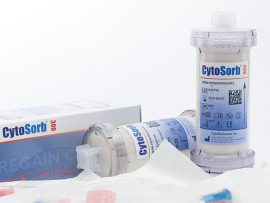
Abstract PRINCETON, N.J., Sept. 11, 2023 (GLOBE NEWSWIRE) -- (NASDAQ: CTSO), a leader in the treatment of life-threatening conditions in intensive care and cardiac surgery using blood purification via its..
Read More
Abstract Background Bleeding and thrombosis are common extracorporeal membrane oxygenation (ECMO) complications associated with increased mortality. Heparin is the most commonly used ECMO anticoagulant, employed in 94% of cases. Reduced..
Read More
Abstract Rationale: Patients with obesity are at increased risk for developing acute respiratory distress syndrome (ARDS). Some centers consider obesity a relative contraindication to receiving extracorporeal membrane oxygenation (ECMO) support,..
Read More
Abstract In patients with acute MI complicated by cardiogenic shock (AMICS) who are slated to undergo early revascularization, routine use of extracorporeal membrane oxygenation (ECMO) doesn’t reduce 30-day mortality. The..
Read More
Abstract Extracorporeal membrane oxygenation (ECMO) is a life-support technique used to treat cardiac and pulmonary failure, including severe cases of COVID-19 (coronavirus disease 2019) involving acute respiratory distress syndrome. Blood..
Read More
Abstract Children who experience cardiac arrest are one and a half times more likely to survive at a hospital capable of providing the life support system called ECMO, research suggests...
Read More
Abstract Background Venoarterial (VA-ECMO) is increasingly used with despite the lack of evidence from adequately powered . Three trials reported so far were underpowered to detect a survival benefit; we therefore conducted an individual..
Read More
Abstract Extracorporeal membrane oxygenation (ECMO) is a life-saving cardiopulmonary bypass device used on critically ill patients with refractory heart and lung failure. Patients supported with ECMO receive numerous drugs to..
Read More
Abstract Objectives This study aimed to evaluate whether a measure of subjective cognitive decline (SCD), the Patient-Reported Outcomes Measurement Information System (PROMIS) Applied Cognition-Abilities questionnaire, was associated with postoperative delirium...
Read More