

Process Overview
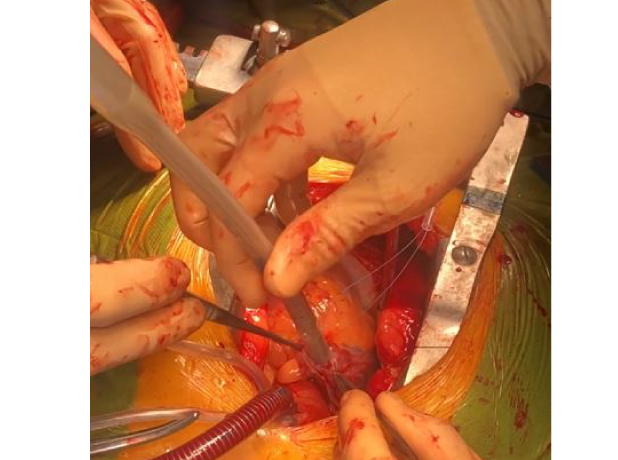
Blood is drained from the vena caval filters directly into a reservoir. Normally a single two-stage cannula is used (drains blood from the RA and the IVC), however if a bloodless heart is required, two cannulae (SVC and IVC) can be used instead. Venous return is dependent on the hydrostatic column between the heart and venous reservoir, fluid status, and placement of the cannulas – if venous return is insufficient, the bed height can be increased.
Depending on the needs of the surgeon, one or two venous cannulas may be placed. Most commonly one venous cannula is placed into the right atrium and threaded into the IVC. The major advantages of a single-cannula technique are speed and the use of fewer incisions. The major disadvantage of the single cannula is the inability to stop all blood from passing through the heart and lungs, as well as physical interference with the right atrium. In instances in which a completely bloodless field is desired (ex. valvular surgery), or in which access to the right atrium is necessary, two cannulas are used. When two cannulas are used, blood from the coronary sinus will bypass both cannulae, mandating either an atriotomy or placement of a vent. Note that femoral venous cannulas cannot completely drain systemic venous blood and therefore only partial CPB is possible using femoral access.
F: https://www.openanesthesia.org/technical_aspects_of_cardiopulmonary_bypass/