


Abstract The splanchnic circulation is a complex system. A number of important functions depend on its normal operation, including digestion and absorption within the gut, maintenance of the mucosal barrier,..
Read More
Abstract Background Critical illness is associated with uncontrolled inflammation and vascular damage which can result in multiple organ failure and death. Antithrombin III (AT III) is an anticoagulant with anti‐inflammatory..
Read More
Abstract Obesity is a frequent comorbidity among patients undergoing cardiac surgery with cardiopulmonary bypass (CPB). Cardiac surgery with CPB impairs microcirculatory perfusion, which is associated with multiple organ failure. As..
Read More
Abstract Objectives The aim of this study is to evaluate the possibility of the autologous platelet-rich plasma (PRP) collection from the cardiopulmonary bypass (CPB) circuit and to evaluate its effect..
Read More
Abstract The study by Grieshaber and colleagues, “Platelet-activating protamine-heparin-antibodies lead to higher protamine demand in patients undergoing cardiac surgery,” in this issue of the Journal, is a prospective study that joins other..
Read More
Abstract Objectives The authors evaluated the outcome of adult patients with coronavirus disease 2019 (COVID-19)–related acute respiratory distress syndrome (ARDS) requiring the use of extracorporeal membrane oxygenation (ECMO). Design Multicenter..
Read More
Abstract The use of pulsatile perfusion (PP) instead of Non‐Pulsatile Perfusion (NP) during cardiopulmonary bypass (CPB) continues to be a source of debate. The disagreements among the conclusions of the..
Read More
Abstract Objectives The aim of this study was to evaluate the analytical performance of the new epoc® point-of-care blood analysis system in patients. Design and methods The precision study was conducted..
Read More
Abstract Objectives Compare the effects on inflammatory (TNF-α, IL-6, IL-8 and IL-10) and immunologic (CD3+, CD4+, CD8+, CD11b+, CD16+/56+ T cells and total lymphocyte concentration) variables of hydroxyethyl starch 130/0.4, 4%..
Read More
Abstract In the field of free flap transfer in reconstructive surgery, the trans- or replanted tissue always undergoes cell damage during ischemia to a more or less strong extent. In..
Read More
Abstract Objectives (PCCs) are used to rapidly reverse by oral . They differ in the content of , endogenous anticoagulants, and heparin. The authors hypothesized that PCCs’ specific heparin content may compromise the effect...
Read More
Abstract Health care is embarking on a new era of increased transparency. In January 2015, the Society of Thoracic Surgeons (STS) began to publicly report outcomes of pediatric and congenital..
Read More
Abstract Objectives To determine the effect of (AKI) associated with cardiac surgery on long-term mortality. Design Systematic review and meta-analysis of 9 observational studies extracted from the MEDLINE and EMBASE electronic..
Read More
Abstract We developed a numerical model, based on multi-physics computational fluid dynamics (CFD) simulations, to assist the design process of a plastic hollow-fiber bundle blood heat exchanger (BHE) integrated within..
Read More
Abstract Impaired haemostasis has been reported in children with congenital heart disease undergoing cardiopulmonary bypass. As thrombin generation encompasses all phases of the coagulation process, this analysis might provide the best assessment..
Read More
Abstract Objective Cardiac surgery and are associated with release of and microcirculatory alterations that result in organ dysfunction. Near-infrared of tissue (StO2) and the test (VOT) were utilized in a study of elective cardiac surgical..
Read More
Abstract Coagulopathic complications during extracorporeal life support (ECLS) result from two parallel processes: 1) foreign surface contact and shear stress during blood circulation and 2) administration of anticoagulant drugs to..
Read More
Abstract To prevent embolic stroke during thoracic endovascular aortic repair, we have adopted the brain isolation technique since June 2014 in 9 selected high-risk patients (9/134: 6.7%) having ulcerated or..
Read More
Abstract Introduction: Extracorporeal life support (ECLS) patients are at risk for complications caused by gaseous microemboli (GME). GMEs can cause hypoxia, inflammation, coagulation, and end-organ damage. The objective of this..
Read More
Abstract Introduction: Arterial filter is the part of the cardiopulmonary bypass circuit where blood cells are exposed to high mechanical stress and where cellular aggregates may fasten in large quantities...
Read More
Abstract Background Cardiac surgery associated acute kidney injury (CS-AKI) is common in infants and associates with negative outcomes. Nadir indexed oxygen delivery (DO 2i) during cardiopulmonary bypass (CPB) is associated with..
Read More
Abstract Background Coronavirus disease 2019 (COVID-19) remains a worldwide pandemic with a high mortality rate among patients requiring mechanical ventilation. The limited data that exist regarding the utility of extracorporeal..
Read More
Abstract Importance Extracorporeal membrane oxygenation (ECMO) is a form of advanced life support that may be used in children with refractory respiratory or cardiac failure. While it is required infrequently, in..
Read More
Abstract Importance Extracorporeal membrane oxygenation (ECMO) is a form of advanced life support that may be used in children with refractory respiratory or cardiac failure. While it is required infrequently, in..
Read More
Abstract Abstract The aim of the study was to compare the potential of autotransfusion devices to reduce non-infectious complications related to transfusion of long-stored packed red blood cells (PRBC; n=..
Read More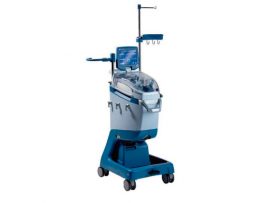
Abstract Background Removal of cytokines, chemokines, and microvesicles from the supernatant of allogeneic erythrocytes may help mitigate adverse transfusion reactions. Blood bank–based washing procedures present logistical difficulties; therefore, we tested..
Read More
Abstract BACKGROUND: The coronavirus disease 2019 pandemic continues to affect millions worldwide. Given the rapidly growing evidence base, we implemented a living guideline model to provide guidance on the management..
Read More
Abstract Background Cardiac surgery with cardiopulmonary bypass (CPB) is known to contribute towards the incidence of acute kidney injury (AKI) and peri-operative morbidity and mortality. There are several patient, anaesthetic..
Read More
Abstract A 74-year-old man with a history of diabetes mellitus, coronary artery disease, and previous myocardial infarction presents to the emergency department with cardiogenic shock. Cardiopulmonary resuscitation and emergency care..
Read More
Abstract The role of extracorporeal membrane oxygenation (ECMO) in the management of critically ill patients with COVID-19 is evolving. Extracorporeal support independently confers an increased predilection for thrombosis, which can..
Read More