
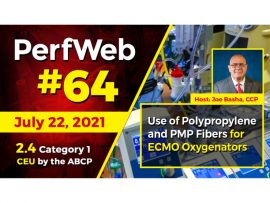

Learn about the construction on hollow fiber oxygenators and the use of these for ECMO and cardiac surgery. Learn the reason for fiber wetting and failure and how fiber construction..
Read More
PREÁMBULO Las Guías de Práctica Clínica resumen y evalúan toda la evidencia relevante sobre un tema particular para ayudar a los médicos a seleccionar la mejor estrategia posible de tratamiento..
Read More
Preamble Since 1980, the American College of Cardiology (ACC) and American Heart Association (AHA) have translated scientific evidence into clinical practice guidelines (guidelines) with recommendations to improve cardiovascular health. These..
Read More
1 Preamble Guidelines summarize and evaluate available evidence with the aim of assisting health professionals in proposing the best management strategies for an individual patient with a given condition. Guidelines..
Read More
The Task Force on the Management of Grown-up Congenital Heart Disease of the European Society of Cardiology (ESC) Endorsed by the Association for European Paediatric Cardiology (AEPC) Guidelines summarize and..
Read More
While ECMO can work miracles, restoring life and health to patients whose hearts have ceased to function, the technology can only help if a patient can be connected to the..
Read More
Abstract Background Cardiac surgery–associated acute kidney injury (CSA‐AKI) is a common complication with a poor prognosis. In order to identify modifiable perioperative risk factors for AKI, which existing risk scores are..
Read More
Abstract During cardiopulmonary bypass (CPB), gaseous microemboli (GME) are released into the patients’ arterial bloodstream. Gaseous microemboli may contribute to the adverse outcome after cardiac surgery. Recently, two oxygenator models..
Read More
Abstract BACKGROUND: The inflated costs and documented deleterious effects of excess perioperative transfusion have led to the investigation of targeted coagulation factor replacement strategies. One particular coagulation factor of interest..
Read More
Abstract Purpose Postoperative cognitive dysfunction (POCD) occurs frequently after cardiac surgery. The pathophysiology of POCD remains elusive, but previous work showed that intravenous lidocaine may be protective against POCD, possibly..
Read More
Abstract Introduction: Re-transfusion of lipid particles and activated leucocytes with shed mediastinal blood (SMB) can aggravate cardiopulmonary bypass-associated inflammation and increase the embolic load. This study evaluated the fat and..
Read More
Abstract Introduction Percutaneous mechanical circulatory support (MCS) strategies have been in the clinical arena for approximately half a century, with the main aim of providing adequate systemic tissue perfusion, while..
Read More
Abstract Objectives: Recent analyses show higher mortality at low-volume centers providing extracorporeal membrane oxygenation. We sought to identify factors associated with center volume and mortality to explain survival differences and..
Read More
Abstract Sonoclot analyzer has been widely used in many countries. But the reference intervals provided by the manufacturer were derived from only 45 participants, and there was no cut-off value..
Read More
Abstract The effect of obesity on allogeneic intraoperative blood product transfusion in patients undergoing coronary artery bypass graft surgery (CABG) is poorly understood. We analyzed the influence of obesity on..
Read More
Abstract BACKGROUND We sought to assess predictability of excessive bleeding using thrombelastography (TEG), multiplate impedance aggregometry, and conventional coagulation tests including fibrinogen in patients undergoing coronary artery bypass graft (CABG)..
Read More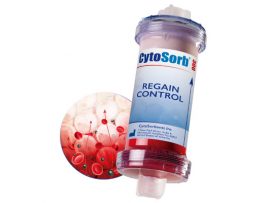
This case reports on a 36-year-old female patient (relevant previous diseases: hereditary sensorimotor polyneuropathy with initial diagnosis in the ‘90s), who presented for a liver consultation. [pdf-embedder url="https://perfusfind.com/wp-content/uploads/2021/03/caso-cyto_compressed.pdf" title="caso cyto_compressed"]
Read More
Abstract Objective Pediatric surgery for congenital tracheal stenosis continues to be a therapeutic challenge, and it often requires cardiopulmonary bypass (CPB) or extracorporeal membrane oxygenation (ECMO) for intra-operative extracorporeal cardiorespiratory..
Read More
Abstract Background: Extracorporeal membrane oxygenation (ECMO) offers therapeutic options in refractory respiratory and/or cardiac failure. Systemic anticoagulation with heparin is routinely administered. However, in patients with heparin-induced thrombocytopenia or heparin..
Read More
Abstract Objective The single-crossclamp technique for coronary artery bypass grafting is recognized to reduce manipulation of the ascending aorta, and thereby improve neurological outcomes. However, there is a perceived disadvantage..
Read More
Abstract Introduction This study was planned to investigate the impact of severe bleeding and on the development of stroke after . Methods This includes 2357 patients undergoing isolated CABG from the prospective European (E-CABG)..
Read More
Abstract Complications from systemic inflammation are reported in neonates following exposure to cardiopulmonary bypass. Although the use of asanguinous primes can reduce these complications, in neonates, this can result in..
Read More
Abstract Background The impact of levosimendan treatment on clinical outcome in patients undergoing extracorporeal membrane oxygenation (ECMO) support after cardiovascular surgery is unknown. We hypothesized that the beneficial effects of..
Read More
Abstract Background: Veno-arterial (V-A) extracorporeal membrane oxygenation (ECMO) is increasingly being used for patients with refractory cardiopulmonary failure. This study evaluates the short-term (to discharge) and longer-term (1 year) survival..
Read More
Abstract Background: In this experimental study, we primarily aimed to show the hemodynamic effects and superiority of this newly designed cannula for perfusion compared to standard subclavian cannulation. The new..
Read More
Abstract OBJECTIVES The effect on postoperative health-related quality of life (HRQoL) after coronary artery bypass grafting (CABG) surgery with conventional cardiopulmonary bypass (cCPB) and off-pump surgery has been investigated extensively;..
Read More
Abstract Background We aimed to evaluate the results of the combined use of rapid-deployment valves, percutaneous cardioplegia delivery and left heart venting during minimally invasive aortic valve replacement surgery. Methods..
Read More
Abstract Patients with ascending aortic aneurysm undergoing complex surgical procedures are at increased risk of early postoperative excessive blood loss. The aim of this study was to analyze safety and..
Read More
Abstract Deficiency in 25-hydroxyvitamin D (25OHD) is associated with increased morbidity and mortality in the critically ill. Children who underwent surgery for congenital heart disease under cardiopulmonary bypass (CPB) are..
Read More
Abstract Objective To evaluate parameters of the test (VOT) before, during, and after pulsatile (CPB). Design Prospective, . Setting Single-center university hospital. Participants Adult patients undergoing elective cardiac surgery with pulsatile CPB. Interventions..
Read More